For years, astronomers have suspected that the red supergiant Betelgeuse, a star visible to the naked eye, wasn’t alone. Now, evidence from the Hubble Space Telescope and ground-based observatories has definitively confirmed the existence of a companion star, named Siwarha, orbiting Betelgeuse. This discovery isn’t just about finding another star; it’s about understanding how massive stars live, change, and ultimately explode as supernovae.
The Mystery of Betelgeuse’s Fluctuations
Betelgeuse is a peculiar star, known for its dramatic shifts in brightness and unpredictable behavior. Unlike distant points of light, its proximity to Earth allows for detailed study, yet its volatility has long puzzled scientists. The presence of an unseen companion was proposed as a possible explanation, but until now, it remained unproven.
Hubble Detects the Companion’s Trail
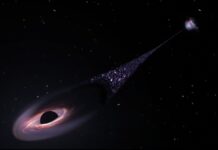
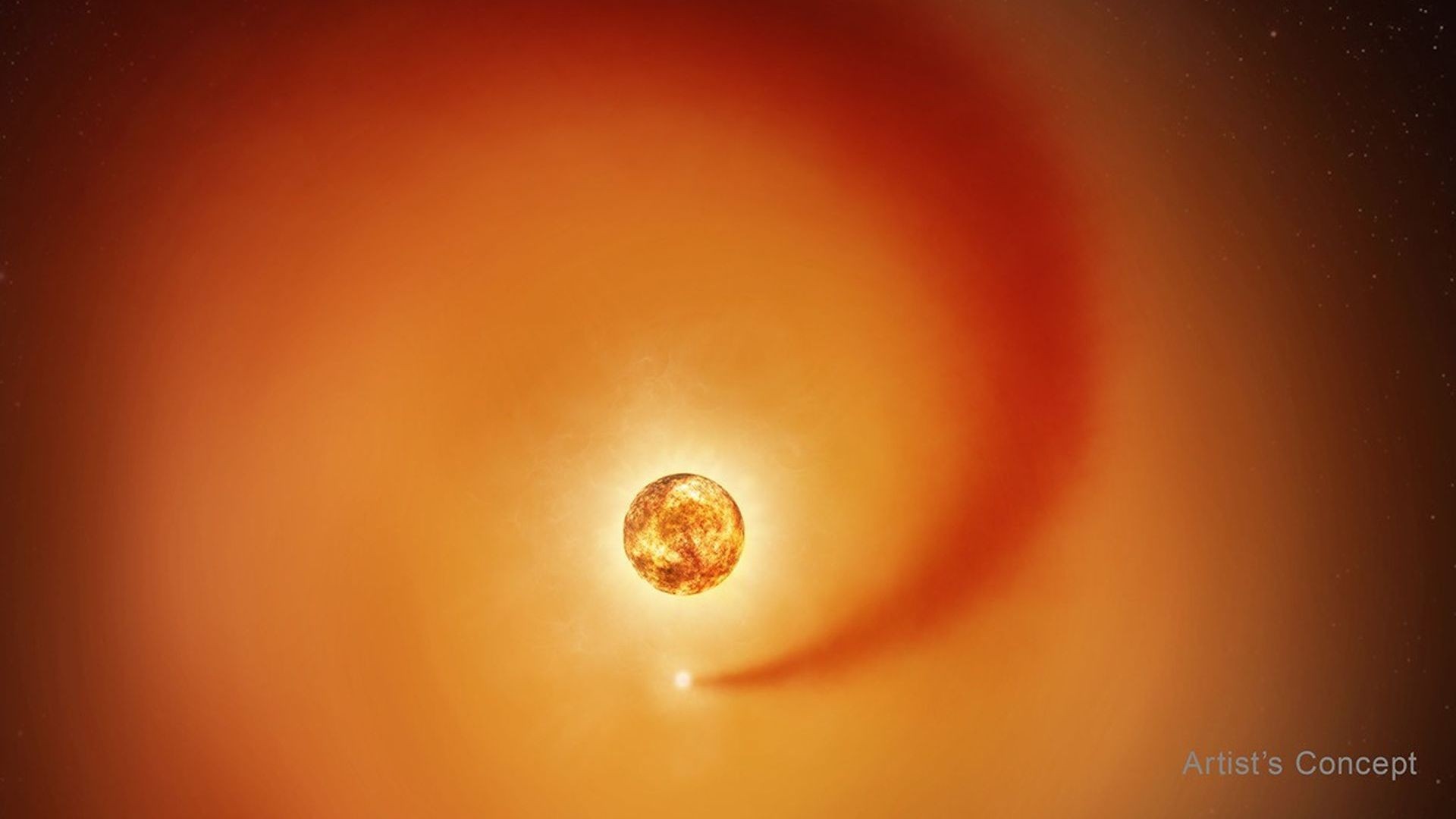
New observations reveal a distinct “wake” – a dense trail of material – left by Siwarha as it orbits Betelgeuse. This wake is visible because it alters the star’s atmospheric spectrum in a predictable pattern. Every six years, when Siwarha passes between Betelgeuse and Earth, the wake becomes detectable, changing the colors emitted by the star’s surrounding gases.
“It’s a bit like a boat moving through water,” explains study lead Andrea Dupree. “The companion star creates a ripple effect in Betelgeuse’s atmosphere that we can actually see in the data.”
Why This Matters: Stellar Evolution in Real-Time
This is the first direct evidence of Betelgeuse’s hidden companion, providing a unique opportunity to study stellar evolution up close. Understanding how Siwarha interacts with Betelgeuse can shed light on how giant stars shed material and eventually end their lives in spectacular supernova explosions.
The next opportunity to observe Siwarha’s wake will be in 2027, and researchers are already preparing to gather more data. The findings were presented at the 247th meeting of the American Astronomical Society and will be published in The Astrophysical Journal.
This discovery transforms Betelgeuse from a puzzling anomaly into a living laboratory, allowing scientists to witness firsthand the complex processes that govern the lives of massive stars.