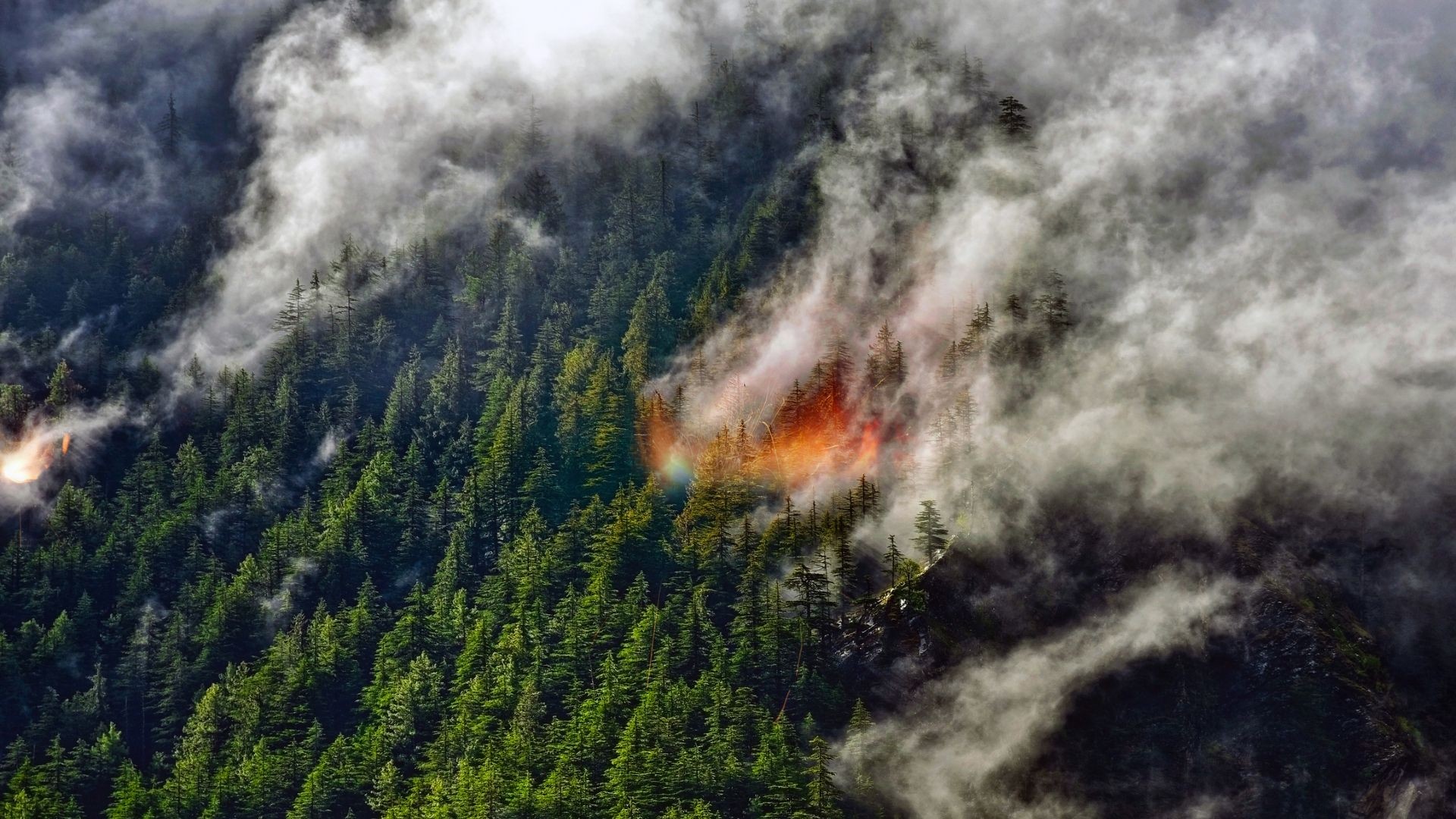
Recent research reveals that intense wildfires are lofting smoke particles miles into the atmosphere, where they unexpectedly cool the surrounding air – a phenomenon largely unrepresented in current climate predictions. A team of atmospheric scientists from Harvard University made the first direct measurements of five-day-old wildfire smoke in the upper troposphere, approximately nine miles above Earth’s surface, and found unexpectedly large aerosol particles.
Unexpected Particle Size and Cooling Effect
The team flew a NASA ER-2 aircraft directly into a smoke plume from a New Mexico wildfire just days after ignition. Instruments onboard measured particle size, concentration, and chemical composition. Researchers detected aerosols around 500 nanometers wide—roughly twice the size of typical wildfire particles at lower altitudes. These larger particles appear to reflect sunlight back into space more efficiently than smaller ones, increasing outgoing radiation by 30% to 36%.
This increased reflection creates a measurable cooling effect that is not accounted for in current climate models. The study suggests that the slow mixing of air at high altitudes allows smoke particles to collide and coagulate, forming these larger, more reflective aerosols.
Implications for Climate Modeling
The findings raise questions about how wildfires influence regional and global weather patterns. Study co-author John Dykema suggests that these large smoke particles could alter atmospheric circulation through localized heating, potentially shifting jet streams.
“We don’t currently have enough information to say which way these effects could go, but it’s clear that high-altitude wildfire smoke is more complex than we previously thought.”
The study, published in Science Advances on December 10, underscores the need for refining climate models to include these high-altitude aerosol effects. Current models may underestimate the cooling impact of large wildfire smoke plumes, potentially skewing long-term climate projections.
Why This Matters
Wildfires are increasing in frequency and intensity worldwide due to climate change, making this research particularly relevant. Accurately representing the impact of wildfire smoke in climate models is crucial for predicting future temperature trends, precipitation patterns, and overall atmospheric stability. The discovery of this cooling effect highlights the need for further investigation into the complex interplay between wildfires and atmospheric processes.
The study’s findings challenge the assumption that wildfires always have a net warming effect on the climate, suggesting that their influence is more nuanced and requires more accurate modeling.