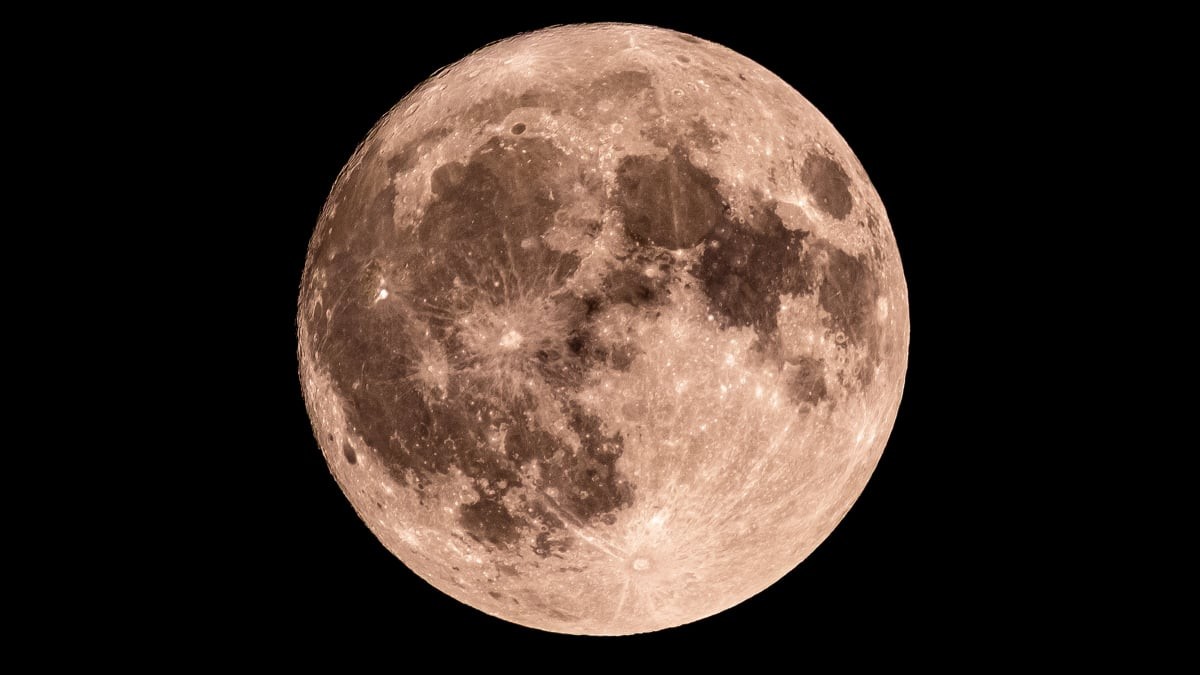
As of today, January 14, 2025, the Moon is in its Waning Crescent phase. Approximately 17% of its surface is illuminated, making it visible as a thin sliver in the night sky. This marks the final stage of the current lunar cycle before the New Moon appears.
Understanding the Waning Crescent
The Waning Crescent appears shortly before the New Moon, and it is best observed just after sunset or before sunrise. Because of the Moon’s position relative to Earth and the sun, it appears as a diminishing arc of light.
For observers, several features are visible even with basic equipment. The Aristarchus Plateau is a prominent dark area on the left side of the Moon (in the Northern Hemisphere; reversed in the Southern Hemisphere). More detailed observation with binoculars or a telescope can reveal the Grimaldi Basin, a large lunar crater.
Lunar Cycle Basics
The Moon’s phases are determined by its orbit around Earth and how sunlight reflects off its surface. The complete cycle, from New Moon to New Moon, takes approximately 29.5 days. This is why the lunar calendar doesn’t perfectly align with the solar calendar.
The eight distinct phases are:
- New Moon: The Moon is between Earth and the Sun, rendering its visible side dark.
- Waxing Crescent: A small sliver of light appears on the right side (Northern Hemisphere).
- First Quarter: Half of the Moon is lit on the right side.
- Waxing Gibbous: More than half of the Moon is lit, approaching fullness.
- Full Moon: The entire face of the Moon is illuminated.
- Waning Gibbous: Light begins to recede from the right side.
- Third Quarter (Last Quarter): Half of the Moon is lit on the left side.
- Waning Crescent: A thin sliver remains on the left side before disappearing.
When to Expect the Next Full Moon
The next Full Moon will occur on February 1, 2025. The previous Full Moon was on January 3, 2025. Observing the full cycle helps track the Moon’s predictable yet consistent changes in the night sky.
The Moon’s phases are fundamental to understanding not just astronomy, but also cultural and historical timekeeping. Many ancient calendars were based on these cycles, and even today, they influence certain traditions and beliefs.