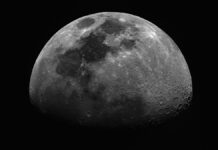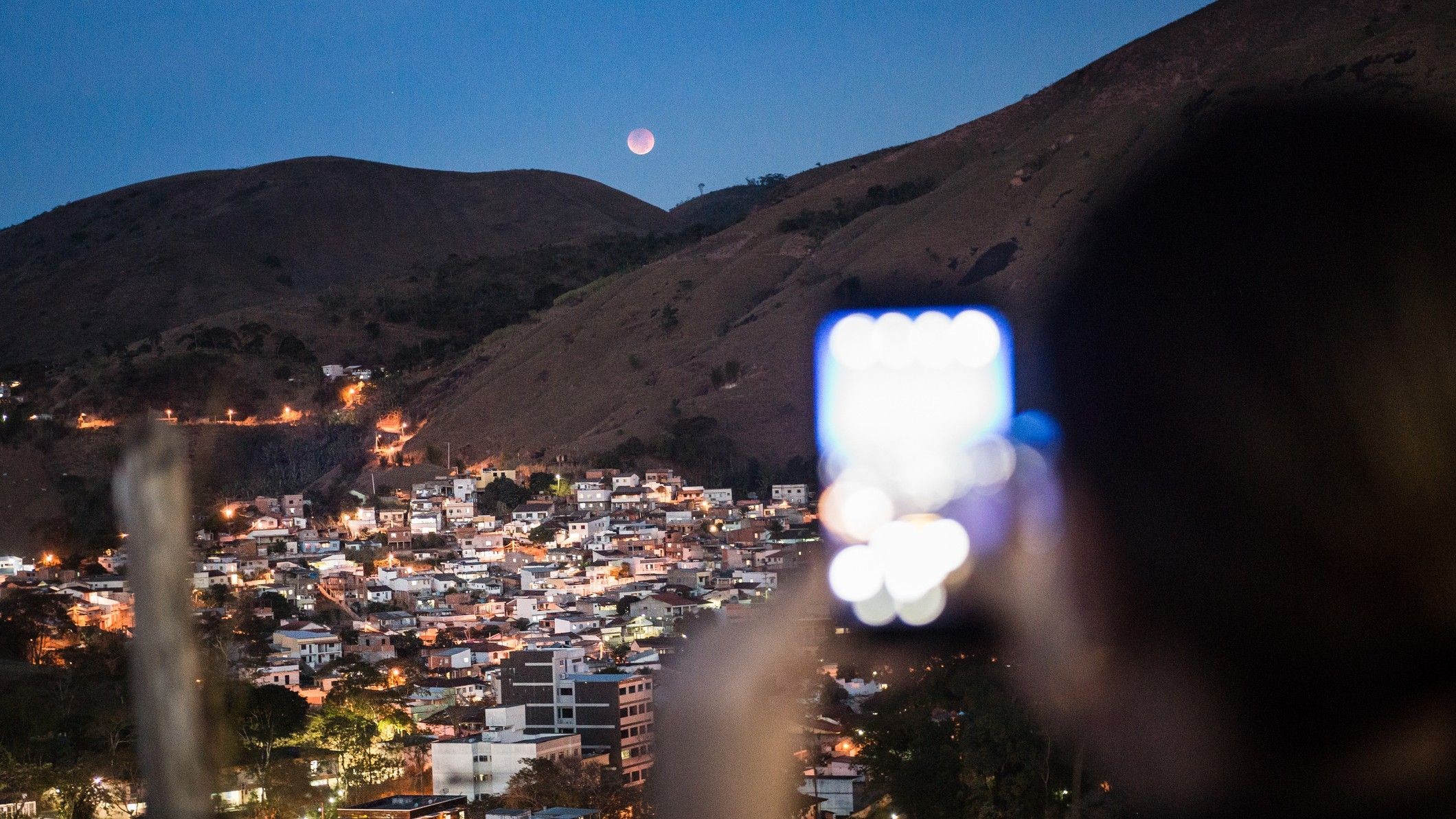
On March 3, 2026, North America will witness a rare celestial event: a total lunar eclipse, often called a “blood moon.” This will be the only such eclipse visible in the region until late 2028, making it a significant opportunity for photographers and skywatchers alike. The moon will pass through Earth’s shadow, turning a striking coppery-red color for nearly an hour. Capturing this spectacle requires minimal equipment but careful preparation.
Why this matters: Lunar eclipses are fully natural events, visible to the naked eye. They provide a safe and accessible way to experience astronomy without specialized equipment. The 2026 eclipse is particularly noteworthy as it’s the last one for several years, making it a prime target for astrophotography enthusiasts.
Timing and Location: The First Steps
The eclipse will occur at the same global time (08:44 and 14:22 GMT) but viewing conditions vary drastically by location. Western North America, the Pacific region, New Zealand, Australia, and East Asia will have the clearest views. Totality—the peak of the eclipse when the moon glows red—will be visible at the following times:
- Eastern Time: 6:04–7:02 a.m. EST (moon sets during totality)
- Central Time: 5:04–6:02 a.m. CST
- Mountain Time: 4:04–5:02 a.m. MST
- Pacific Time: 3:04–4:02 a.m. PST
- Alaska Time: 2:04–3:02 a.m. AKST
- Hawaii Time: 1:04–2:02 a.m. HST
The event lasts over five hours, including partial and penumbral phases. Check Time and Date for precise timing in your area.
Important note: The farther east you are in the U.S., the more likely the moon will set during totality.
Finding the Best Viewing Spot
The best views will be in the western U.S., where the moon will be lower on the horizon during totality. Choose a location with a clear, unobstructed view to the west. Elevated spots and open fields are ideal. Scout the location beforehand to avoid last-minute surprises.
Climate vs. Weather: Historical climate data suggests the southwestern U.S. (Arizona, California) typically has the clearest skies. However, local weather forecasts (Windy, Clear Outside) are crucial for short-term predictions. Be prepared to relocate if cloud cover threatens your view.
Camera Settings and Techniques
You don’t need professional gear. A smartphone or basic camera with manual settings will suffice.
Focus: Practice focusing on the moon before the eclipse. Use auto-focus, then switch to manual (live view) for fine adjustments. Mark your focus point for quick reference.
Exposure: The moon’s brightness will change during the eclipse. Start with ISO 400, a wide aperture (f/2.8–f/11), and adjust shutter speed in 5-second increments.
- Early phases: 1/250s or faster.
- Totality: 1–2 seconds, ISO 800–1600.
- Bracketing: Take multiple exposures (0.5s, 1s, 2s) at the same ISO and aperture for maximum detail.
Smartphone Photography: Use a tripod or stable surface. Avoid zooming; instead, frame the moon with landscapes, buildings, or trees. Use timed exposures and shoot in RAW format if available.
Final Preparations
Beyond the camera, bring warm clothes, fully charged batteries, extra SD cards, and a reliable shutter release. Enable Long Exposure Noise Reduction on your camera. Frame the moon in one corner of the viewfinder to prevent it from drifting out of view during long exposures.
The moon will move from top-left to bottom-right during the eclipse, so anticipate this movement when composing your shot.
In conclusion, photographing the 2026 lunar eclipse is straightforward with the right preparation. By focusing on timing, location, and camera settings, you can capture the beauty of this rare celestial event. The eclipse will be a spectacular sight to behold and document.