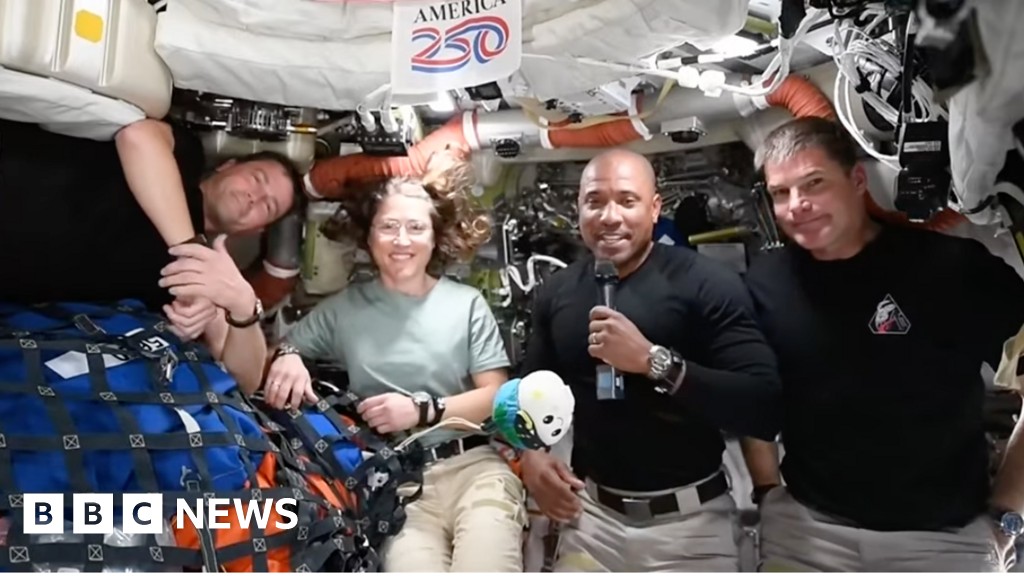
The crew of the Artemis II mission is currently making their way back to Earth, carrying with them unprecedented data and personal stories from their journey around the Moon. After completing a groundbreaking lunar flyby, the four astronauts aboard the Orion spacecraft are scheduled to splash down off the coast of San Diego on Friday at approximately 20:00 EDT.
Breaking Records and Exploring the Unknown
The mission has already secured its place in history by surpassing long-standing milestones. On Monday, the Orion spacecraft broke the record for the furthest distance traveled by humans, exceeding the 248,655-mile (400,000 km) mark previously held since 1970 by the Apollo 13 mission.
While the mission was not designed for a lunar landing, its scientific value is immense. The crew traveled around the lunar far side —the hemisphere that remains permanently hidden from Earth. While satellites have mapped this region from a distance, these astronauts provided the first human perspective of its vast craters and lava plains.
Moments of Solitude and Connection
During a recent virtual press conference from NASA’s Johnson Space Center, the crew shared intimate details about the psychological and emotional realities of deep-space travel.
- The Silence of Space: When asked about a 40-minute period of “profound solitude” during which contact with Earth was lost, Commander Reid Wiseman noted that the crew used the time for both science and reflection. “We took about three or four minutes… as a crew to really reflect on where we were,” he shared, noting they even shared snacks to maintain morale.
- Personal Tributes: For Wiseman, the mission’s most poignant moment was not scientific, but deeply personal: the naming of a lunar crater after his late wife, Carroll.
- A Unique Perspective: Pilot Victor Glover described seeing a lunar eclipse from beyond the far side of the Moon as the “greatest gift” of the mission.
The Weight of the Mission
The crew emphasized that while much of the data has been transmitted, the most valuable scientific findings are still physically on board.
“There’s so much data that you’ve already seen, but all the good stuff is coming back with us,” said Victor Glover.
Astronaut Christina Koch highlighted the inherent difficulty of such endeavors, noting that deep-space exploration requires a willingness to accept “inconvenience, sacrifice, and risk.” This sentiment underscores the broader trend in modern space exploration: moving beyond low-Earth orbit requires a fundamental shift in how humans manage isolation and physical hardship.
Conclusion
The Artemis II mission represents a significant leap in human capability, bridging the gap between the Apollo era and a future of sustained lunar presence. As the crew prepares to return, they bring back not just scientific data, but a renewed human connection to the lunar landscape.