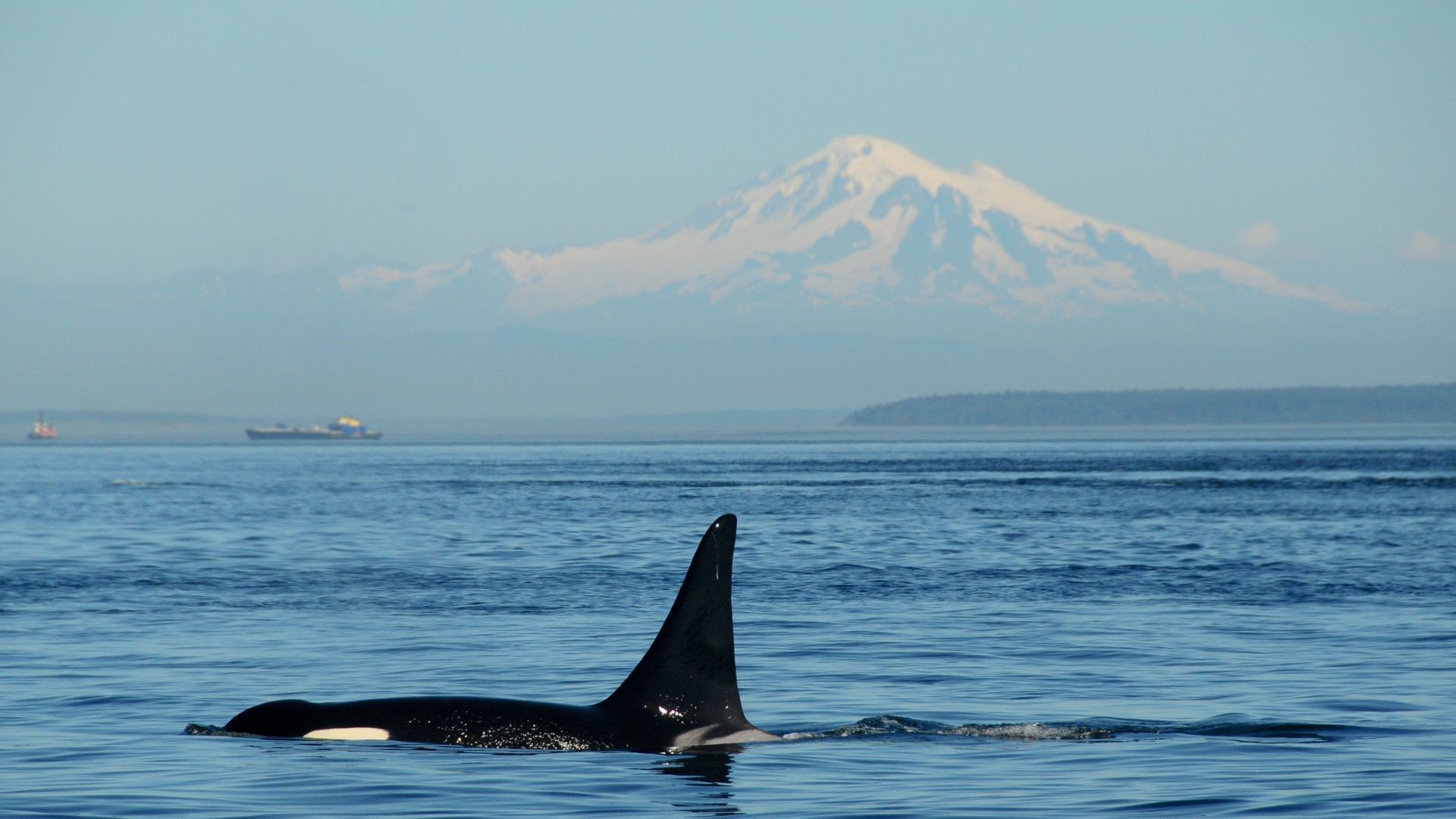
Recent discoveries of chewed-up orca fins on Russian beaches confirm a disturbing but crucial aspect of killer whale behavior: cannibalism. Scientists believe this predation, primarily by “Bigg’s” or transient orcas, may explain why other orca populations, like the fish-eating “Resident” orcas, live in exceptionally tight-knit family groups.
The Evidence: Fins Tell a Grim Story
Researchers led by Olga Filatova at the University of Southern Denmark analyzed dorsal fins washed ashore on Bering Island, Russia. These fins bore unmistakable tooth marks consistent with killer whale bites. Initially, such markings were common on remains of whales hunted by Bigg’s orcas, known for preying on marine mammals. However, in 2022 and 2024, researchers found fins belonging to southern resident orcas—a population famed for its salmon-rich diet and social bonding—with the same predatory damage.
Genetic testing confirmed the identity of the preyed orcas, making it clear that killer whales do occasionally consume their own kind. While scavenging cannot be entirely ruled out, Filatova points out that fresh whale carcasses typically sink quickly, making predation the more likely scenario.
Why Orcas Live in Groups: A Defense Against Predators
The discovery suggests that Bigg’s orcas occasionally target Resident orcas. The Resident orcas, which live in large, stable family groups, may have evolved this social structure as a defensive measure against predation. Just like many land animals form herds for protection, these close-knit orca families may work together to ward off attacks.
“At least now we know that cannibalism happens, but I think it is not super common,” Filatova said.
Evidence supports this theory: Resident orcas have been observed chasing away smaller groups of Bigg’s orcas, and Bigg’s orcas have been seen avoiding areas occupied by larger Resident pods. This behavior implies a functional defense strategy.
A Complex Relationship: Not Just Cannibalism
The implications go beyond just predation. Orcas are highly intelligent and exhibit complex social behaviors. The fact that Bigg’s orcas sometimes kill newborn calves without consuming them, seemingly to manipulate mating opportunities, reveals a darker side of their aggression.
Other species, such as long-finned pilot whales, also form tight groups to defend against orcas, suggesting a common evolutionary pressure. Some researchers, like Michael Weiss at the Center for Whale Research, suggest that the marks on fins could also be from intra-species aggression rather than predation.
The Bigger Picture: A Deep Evolutionary History
The researchers theorize that this predation pressure may have driven the formation of tight-knit social structures in Resident orcas around 100,000 years ago, as different orca populations began to interact. Filatova suggests that, from an orca’s perspective, eating another orca might not even be considered cannibalism, given the limited social interaction between different orca types.
The evidence of cannibalism in orcas highlights the brutal realities of natural selection, where survival often depends on aggression and adaptation. The tight social structures of some killer whale populations may be a direct response to the threat posed by their own kind.