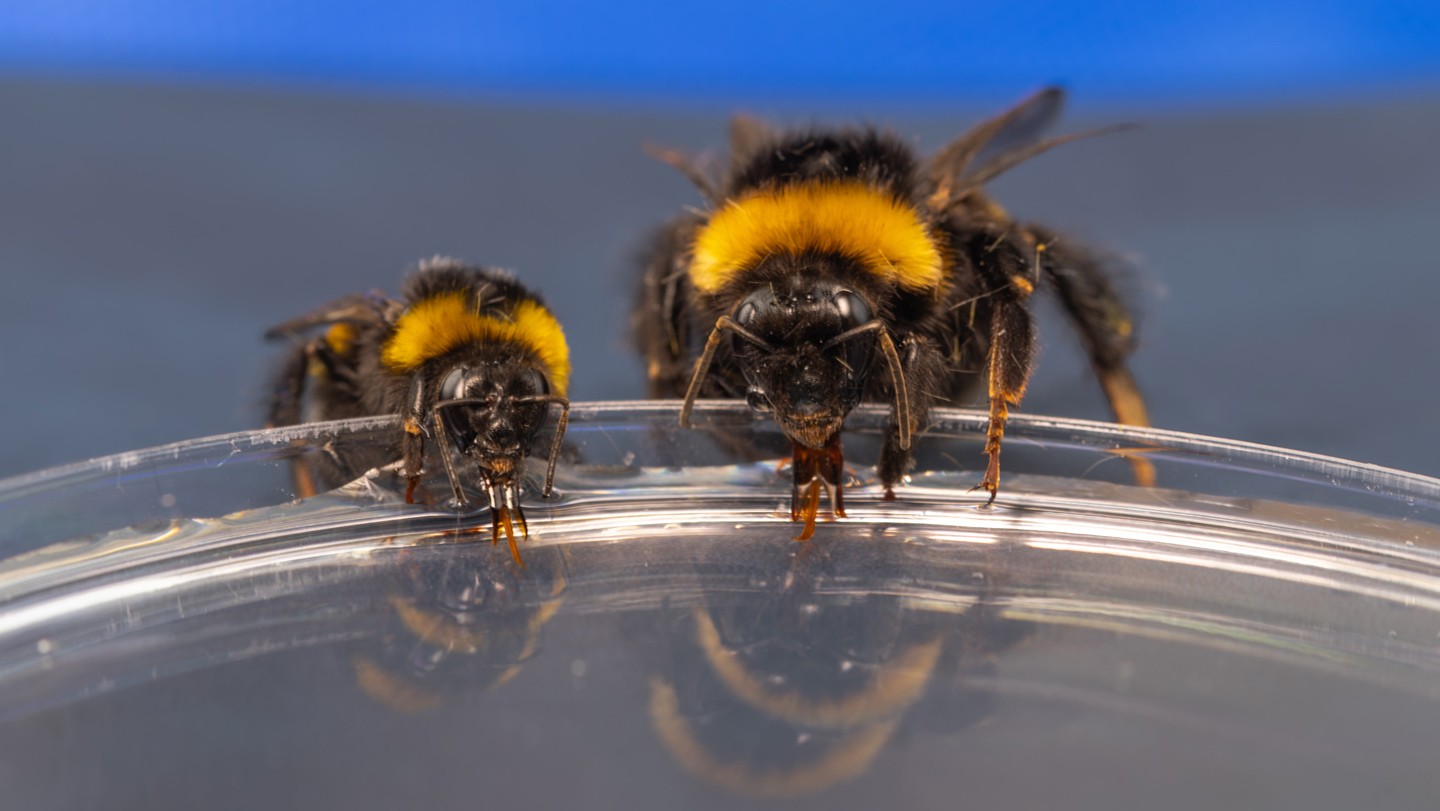
Bumblebee queens are less efficient at collecting nectar than worker bees, not because of laziness, but due to a physical limitation: their tongues have fewer hairs. New research published in the Proceedings of the National Academy of Sciences reveals this previously unknown factor in the division of labor within bumblebee colonies.
The Foraging Divide Explained
For decades, it’s been observed that queen bumblebees initially forage for nectar themselves when emerging from hibernation, but quickly transition to relying on their worker bees for this task. The assumption was primarily behavioral – queens focus on laying eggs while workers handle resource collection. However, this study adds a critical physiological component.
Researchers examined the tongues of Bombus terrestris bumblebees, finding that queens consistently have longer tongues but with significantly sparser hair coverage compared to workers. High-speed video confirmed that these less-hairy tongues trap less nectar during feeding.
How Tongue Hair Impacts Efficiency
Bumblebee tongues aren’t just long; they’re covered in microscopic hairs that act like a sponge. These hairs trap nectar through surface tension, maximizing collection. According to Zexiang Huang of Sun Yat-Sen University, “Many closely spaced hairs create countless tiny gaps that hold nectar by surface tension.” Queens’ tongues, with their reduced hair density, are simply less effective at this process.
This isn’t just a minor difference; it means queens physically struggle to gather nectar as efficiently as workers. The longer tongue length doesn’t compensate for the lack of hair.
Implications for Bee Breeding and Pollination
The findings have broader implications. Understanding how tongue microstructure affects nectar harvesting could help predict which bee species are best suited for pollinating specific crops. Bee breeders and apiaries could use this knowledge to select for more efficient foraging traits.
The study underscores that foraging efficiency in bumblebees is a complex interplay between behavior and physical anatomy, not just a matter of queenly preference. The tongue’s structure is a previously overlooked, but vital, factor in how these colonies function.