Researchers have discovered that microbes exposed to microgravity in the International Space Station (ISS) undergo significant mutations, some of which enhance their ability to combat antibiotic-resistant bacteria on Earth. This finding presents a novel pathway for developing more effective treatments against infections that are increasingly untreatable with conventional drugs.
The Evolutionary Arms Race in Orbit
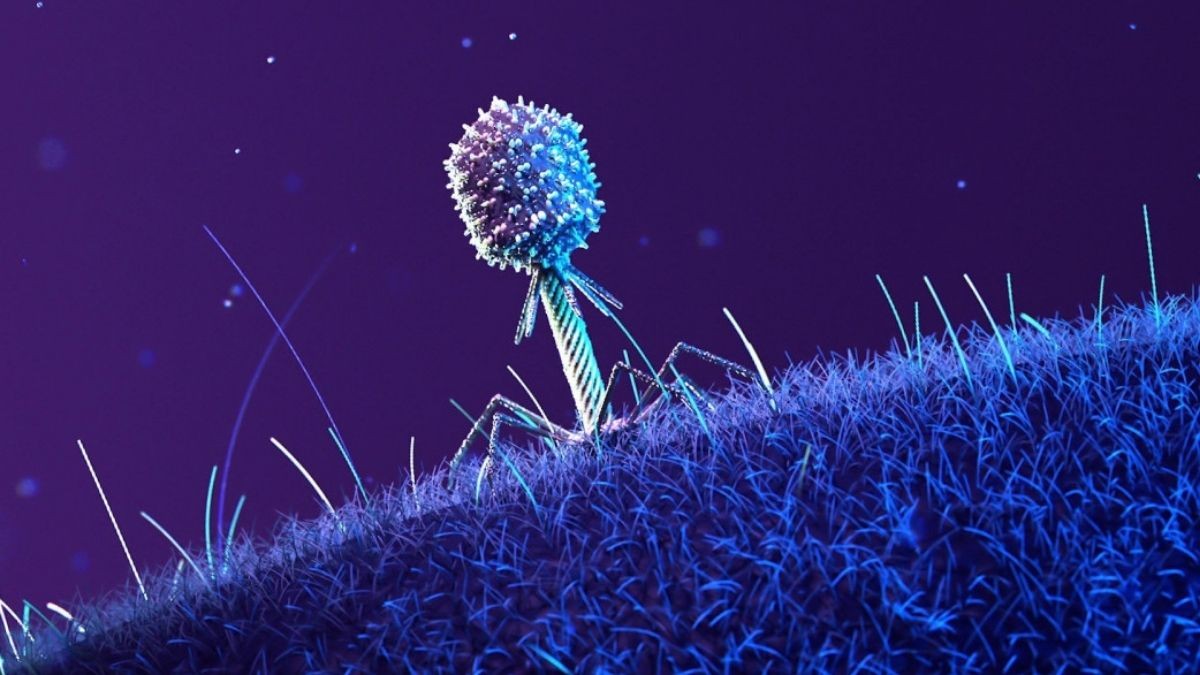
For decades, scientists have observed the evolutionary “arms race” between Escherichia coli bacteria and its viral predator, the T7 bacteriophage. This ongoing struggle has been studied extensively in terrestrial labs, but never under the unique conditions of spaceflight. In 2020, researchers from the University of Wisconsin-Madison and Rhodium Scientific Inc. launched a controlled experiment aboard the ISS, sending both organisms into orbit to observe their adaptation.
The experiment mirrored identical studies conducted on Earth, allowing for a direct comparison of evolutionary trajectories. The results revealed that the absence of gravity fundamentally alters how phages and bacteria interact. In microgravity, the infection rate slows, and both organisms evolve in distinct ways compared to their Earth-bound counterparts.
Key Adaptations in Space
Bacteria incubated in space exhibited mutations primarily in genes linked to stress response and nutrient regulation. Their surface proteins also underwent changes, suggesting an adaptation to the unique stresses of the space environment. The phages, in turn, evolved counter-mutations to maintain their ability to infect the bacteria.
Crucially, the team identified specific space-induced phage mutations that demonstrated remarkably increased effectiveness against antibiotic-resistant strains of E. coli responsible for urinary tract infections (UTIs). Over 90% of UTI-causing bacteria are now resistant to antibiotics, making phage therapy a viable alternative.
From Space Lab to Earth-Bound Solutions
By analyzing these space-driven adaptations, researchers were able to engineer phages with superior activity against drug-resistant pathogens back on Earth. This means that the harsh conditions of space may provide a unique evolutionary pressure cooker for accelerating the development of new antimicrobial strategies.
“Space offers a natural laboratory for studying microbial evolution in ways that are simply not possible on Earth,” researchers state. “The adaptations we observed could lead to the next generation of phage-based therapies.”
The findings highlight the potential of space research to address pressing terrestrial health challenges. As antibiotic resistance continues to escalate, understanding how microbes evolve in extreme environments may be critical for staying ahead of the curve.