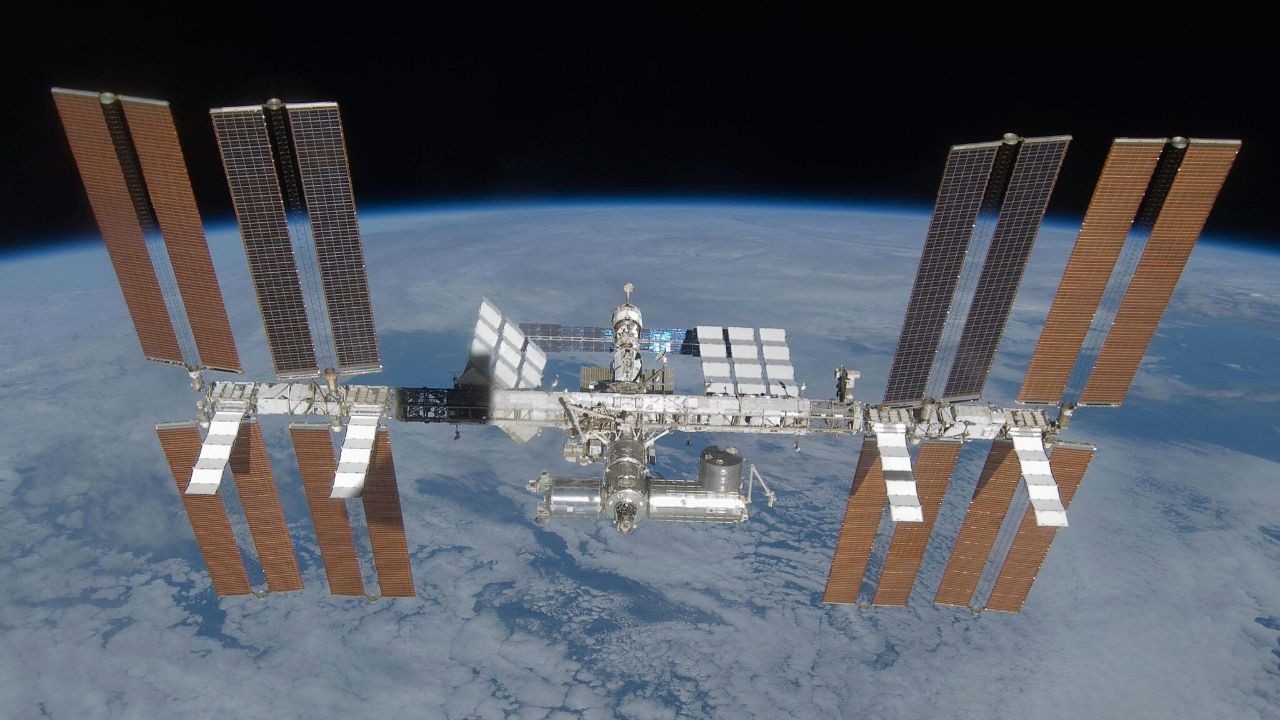
While human astronauts prepare for the monumental Artemis missions to the Moon, a much smaller crew is preparing for a different kind of journey. On April 11, a SpaceX Falcon 9 rocket will launch a Northrop Grumman Cygnus XL cargo vehicle to the International Space Station (ISS), carrying a specialized payload of microscopic organisms: worms.
The Biological Model: Why C. elegans?
The mission features dozens of Caenorhabditis elegans, a species of tiny, soil-dwelling worms measuring just 1 millimeter in length. Though they may seem insignificant, these worms are a cornerstone of biological research. Because their genetic makeup is well-understood and they are easy to study, they serve as an ideal “proxy” for understanding more complex biological processes.
The experiment is housed in a compact pod (roughly 10 x 10 x 30 cm) designed by researchers from the University of Exeter and the University of Leicester. This pod will provide a controlled environment, managing temperature, atmosphere, and even food and water via an agar carrier to ensure the worms’ survival.
Real-Time Monitoring in Microgravity
The experiment is designed to be highly efficient and autonomous, minimizing the workload for the ISS crew. The process will follow a specific sequence:
1. Acclimation: The pod will first spend time inside the ISS to allow the organisms to adjust to the station’s environment.
2. External Exposure: The pod will then be mounted on an experimental platform outside the station for up to 15 weeks.
3. Automated Observation: Using miniature, automated cameras, researchers will capture real-time microscopic fluorescent signals from the worms’ cells.
By monitoring these biological signals in real-time, scientists can observe exactly how cells and genes react to the harsh environment of space without needing constant manual intervention from astronauts.
The Stakes: Preparing for Deep Space Exploration
This research is not merely a curiosity; it is a critical component of the roadmap for long-duration space travel. As space agencies look toward establishing permanent bases on the Moon and potentially Mars, the biological risks become much more acute.
Current data shows that astronauts in orbit face significant health challenges, including:
– Muscle and bone density loss due to microgravity.
– Vision impairment and changes in red blood cell counts.
– DNA damage and increased cancer risks caused by high levels of cosmic radiation.
“To do that safely, we need to understand how the body responds to the extreme conditions of deep space,” says Tim Etheridge, a life sciences researcher at the University of Exeter.
By studying how these tiny organisms adapt to radiation and microgravity, scientists hope to identify biological mechanisms that can be used to develop preventative medical strategies and new pharmaceutical solutions for humans.
Conclusion
By using low-cost, highly efficient biological models like C. elegans, researchers are gathering the essential data needed to safeguard human health. This mission represents a vital step in transforming deep-space exploration from a high-risk endeavor into a sustainable reality for future lunar and Martian pioneers.