


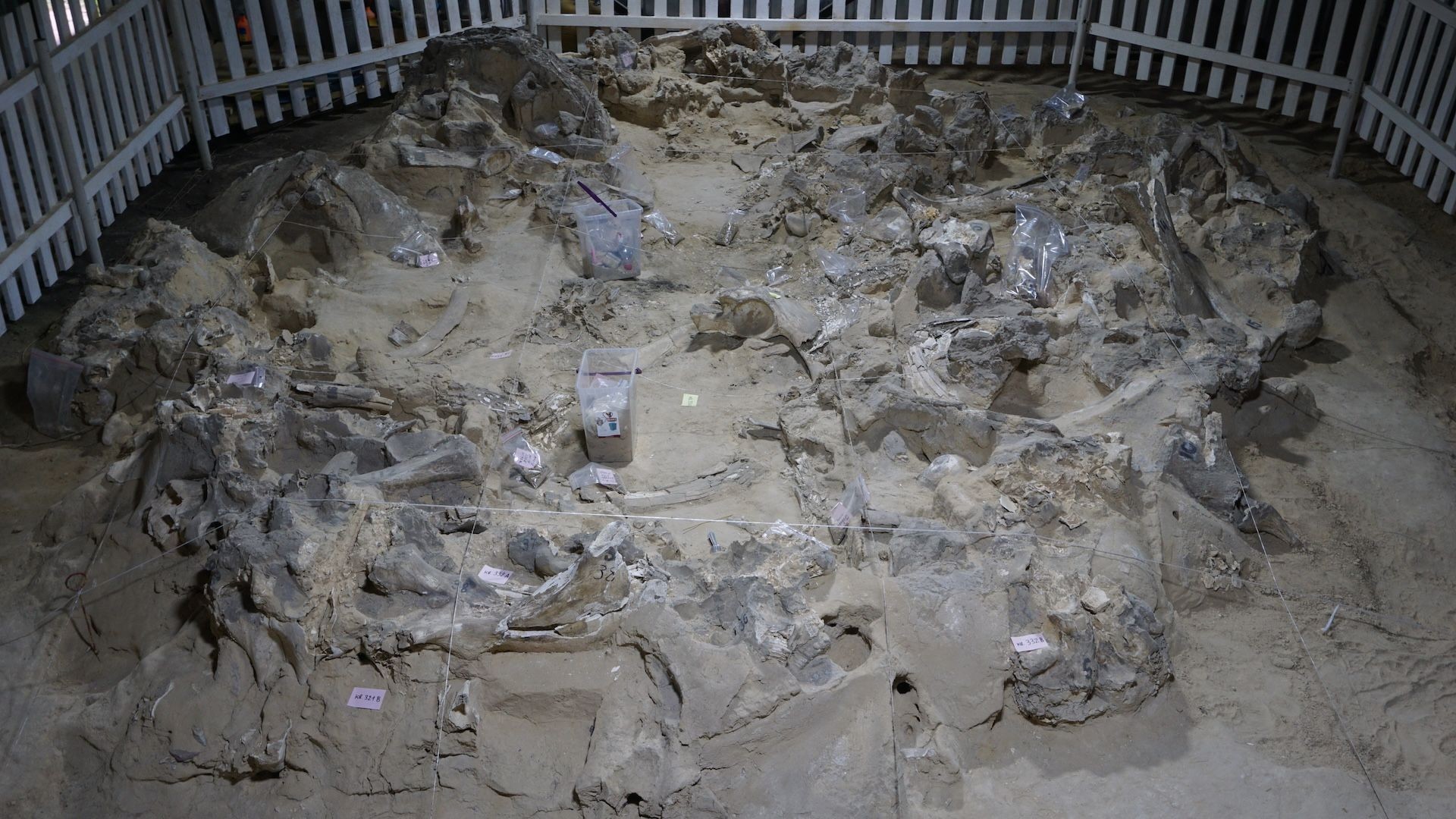
Archaeological evidence confirms that humans living in modern-day Ukraine constructed dwellings using the bones of mammoths roughly 18,000 years ago. The structures, discovered near the village of Mezhyrich, southeast of Kyiv, represent an ingenious adaptation to the harsh conditions of the last ice age. This discovery highlights not just survival, but how early humans creatively used available resources in extreme environments.
The Mezhyrich Site: A Bone-Built Settlement
Excavations conducted between 1966 and 1974 initially revealed the arrangement of mammoth remains suggesting intentional construction. Recent re-examination and refined dating techniques have now pinpointed the oldest part of the largest structure to between 18,323 and 17,839 years ago—a period immediately following the Last Glacial Maximum, the coldest phase of the last ice age. The site likely served as a temporary shelter for 5–7 people, used for up to 429 years, suggesting these weren’t permanent settlements but rather practical responses to immediate survival needs.
How Mammoth Bones Were Used in Construction
The dwellings were built with a foundation of mammoth skulls and long bones driven vertically into the ground, forming a base. Researchers believe a wooden framework would have been erected over this foundation, covered with animal hides or birch bark for insulation. Mammoth tusks and flat bones were placed on top, acting as weights to secure the roof and provide wind protection.
“These shelters were practical solutions for survival rather than permanent settlements,” archaeologists noted, emphasizing the pragmatic nature of the construction.
Why This Matters: Adaptation and Resourcefulness
The use of mammoth bones is not unique to Ukraine; similar structures have been found elsewhere in Eastern Europe. However, the precise dating from Mezhyrich offers new insight into the chronology of these adaptations. It demonstrates that even at the tail end of the last glacial period, humans were actively repurposing megafauna remains for shelter. This period was a time of rapid climate change and dwindling resources, so this ingenuity would have been vital.
Some researchers, like Francois Djindjian, caution that more radiocarbon dating is needed across the entire site to confirm the chronology fully. Nevertheless, the evidence strongly suggests that Ice Age communities in Ukraine mastered a unique and effective building technique, turning the remains of extinct giants into life-saving architecture.
This discovery underscores human adaptability in the face of extreme conditions and provides a tangible example of how early communities thrived in a world radically different from our own.


