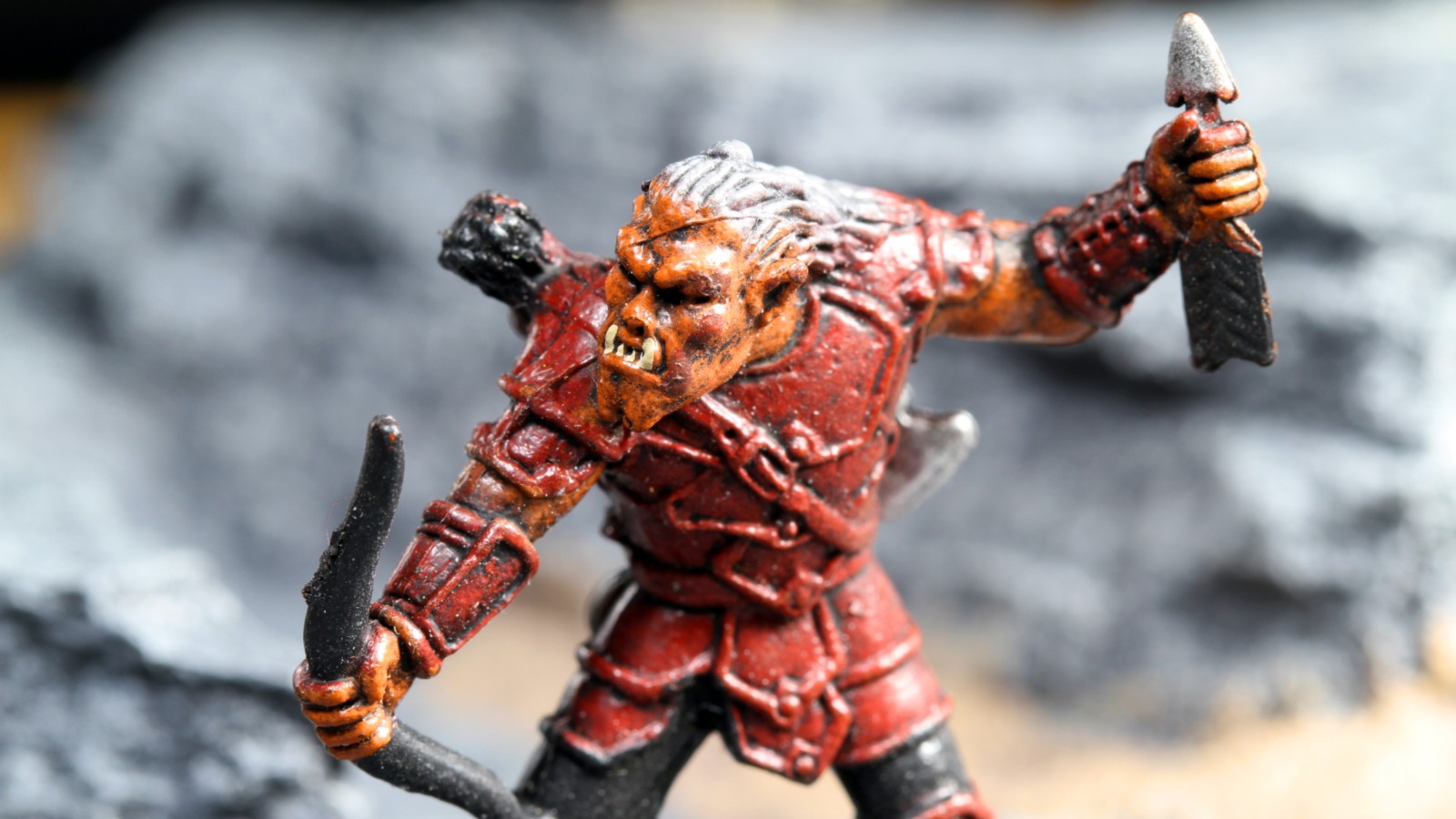
Researchers are using the tabletop role-playing game Dungeons & Dragons (D&D) as a surprising yet effective testbed for artificial intelligence (AI) development. The goal? To assess how well AI can engage in long-term strategy, collaborative problem-solving, and nuanced interaction with both other AI systems and human players. This isn’t just about gaming; it’s a critical step towards building more capable AI for real-world applications.
Why Dungeons & Dragons?
D&D provides a unique environment that blends structured rules with boundless creativity. Unlike many other AI testing grounds, D&D demands that models not only calculate optimal moves but also communicate effectively, remember past events, and anticipate opponent actions. The game effectively bridges the gap between abstract language processing and concrete game mechanics, making it an ideal proving ground.
The study, recently presented at the NeurIPS 2025 conference, highlights how AI agents can take on roles like Dungeon Master (DM) – the storyteller and monster controller – or play as heroes alongside others. The framework, dubbed “D&D Agents,” allows for mixed-player scenarios: LLMs playing against LLMs, LLMs playing with humans, or all-human groups.
“Dungeons & Dragons is a natural testing ground to evaluate multistep planning, adhering to rules and team strategy,” says Raj Ammanabrolu, assistant professor at the University of California, San Diego. “Because play unfolds through dialog, D&D also opens a direct avenue for human-AI interaction.”
Combat Scenarios and Model Performance
The experiments focused on isolated combat encounters from the popular adventure “Lost Mine of Phandelver.” Researchers tested three AI models – DeepSeek-V3, Claude Haiku 3.5, and GPT-4 – measuring their long-horizon planning, resource management, and coordination skills.
Key findings include:
- Claude Haiku 3.5 demonstrated superior combat efficiency, especially in challenging scenarios, by aggressively utilizing available resources.
- GPT-4 performed closely behind, while DeepSeek-V3 struggled the most.
- All models showed varying degrees of in-character consistency, with Claude Haiku 3.5 excelling at tailoring dialogue to specific roles (e.g., a pious Paladin versus a wild Druid).
The simulation also revealed unexpected quirks, such as AI-controlled monsters developing distinct personalities, with goblins even shrieking battle cries like: “Heh — shiny man’s gonna bleed!”
Real-World Implications
This isn’t just academic curiosity. The skills honed in D&D translate directly to critical real-world applications, including:
- Supply chain optimization: AI can plan complex logistics with long-term dependencies.
- Manufacturing lines: AI can coordinate multiple processes for greater efficiency.
- Disaster response modeling: AI can simulate and strategize for effective aid deployment.
- Search-and-rescue operations: AI can coordinate teams and analyze dynamic environments.
The ability of AI to act independently and reliably over extended periods, while maintaining coherence, is crucial for these scenarios.
The Future of AI Role-Playing
The researchers plan to expand the simulation to encompass full D&D campaigns, including narrative and improvisational elements. This will push AI’s creative boundaries further, testing its ability to react to unexpected input from both humans and other AI agents. The work suggests that testing AI in a complex, interactive environment like D&D is a surprisingly effective way to build more robust and adaptable systems.