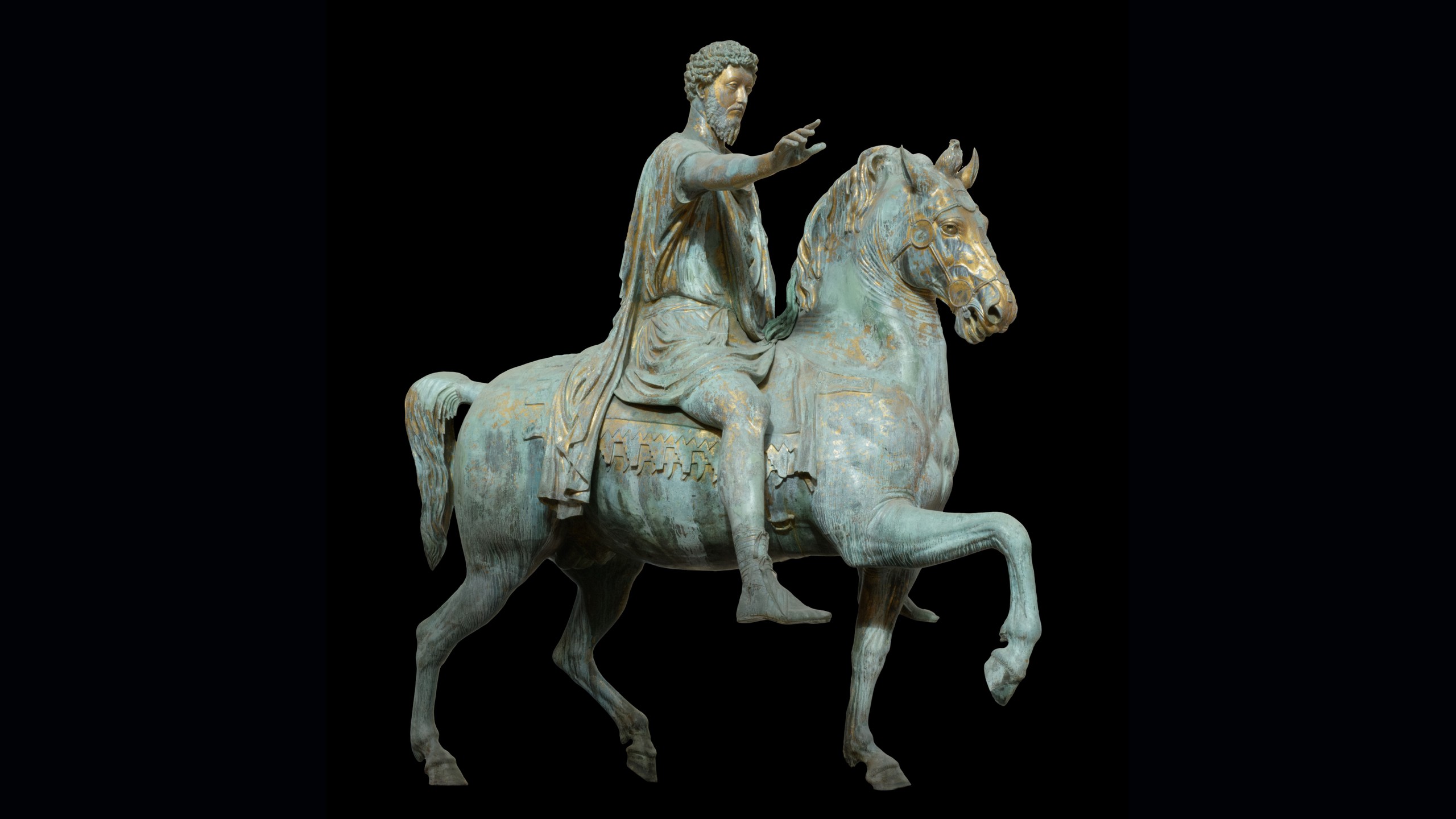
The equestrian statue of Marcus Aurelius stands as a singular survivor – the only full-sized bronze depiction of a pre-Christian Roman emperor remaining today. This rarity offers a rare window into the imperial iconography of antiquity, while its survival raises questions about cultural shifts and the fate of other similar monuments.
Imperial Representation in Antiquity
Depicting emperors on horseback was a standard practice in ancient Rome, symbolizing power and military authority. However, while dozens of these monumental “equi magni” once graced Roman public spaces, almost all were destroyed over time – melted down for materials or lost to history. The survival of the Marcus Aurelius statue is exceptional, likely due to a case of mistaken identity.
Marcus Aurelius: Philosopher and Warrior
Marcus Aurelius, who ruled from A.D. 161 to 180, governed during the decline of the Pax Romana, a two-century period of relative peace. His reign was marked by both military campaigns—fighting Germanic and Sarmatian tribes in the Marcomannic Wars—and internal strife, including heightened persecution of Christians. Perhaps more tragically, his armies may have inadvertently spread the Antonine plague, which devastated the empire between 165 and 180, killing an estimated 5 million people.
The statue itself depicts Aurelius in an adlocutio pose, addressing his troops with a raised arm. Unusually, he is shown without military garb, presenting him as a bringer of peace rather than a conquering general. This choice may have been deliberate; Marcus Aurelius was also celebrated as a philosopher-king, known for his Stoic writings, Meditations, which remain influential today.
Survival Through Misidentification and Restoration
The statue’s continued existence is thought to be linked to a misattribution: it was mistaken for a depiction of Constantine the Great, the emperor who legalized Christianity. This error spared it from the systematic destruction that befell other pagan monuments.
By the 10th century, the statue was recorded in the Lateran Palace before being moved to the Capitoline Hill in the 16th century. Michelangelo was then commissioned to refurbish it and redesign the Piazza del Campidoglio, further cementing its place in Roman history. Today, the original statue resides in the Capitoline Museums, while a 1981 replica stands in the piazza designed by Michelangelo.
The survival of the Marcus Aurelius statue is a testament to both the enduring power of imperial imagery and the unpredictable currents of historical fate. It stands as a unique artifact, preserving a fragment of Rome’s pagan past in a world reshaped by Christianity.