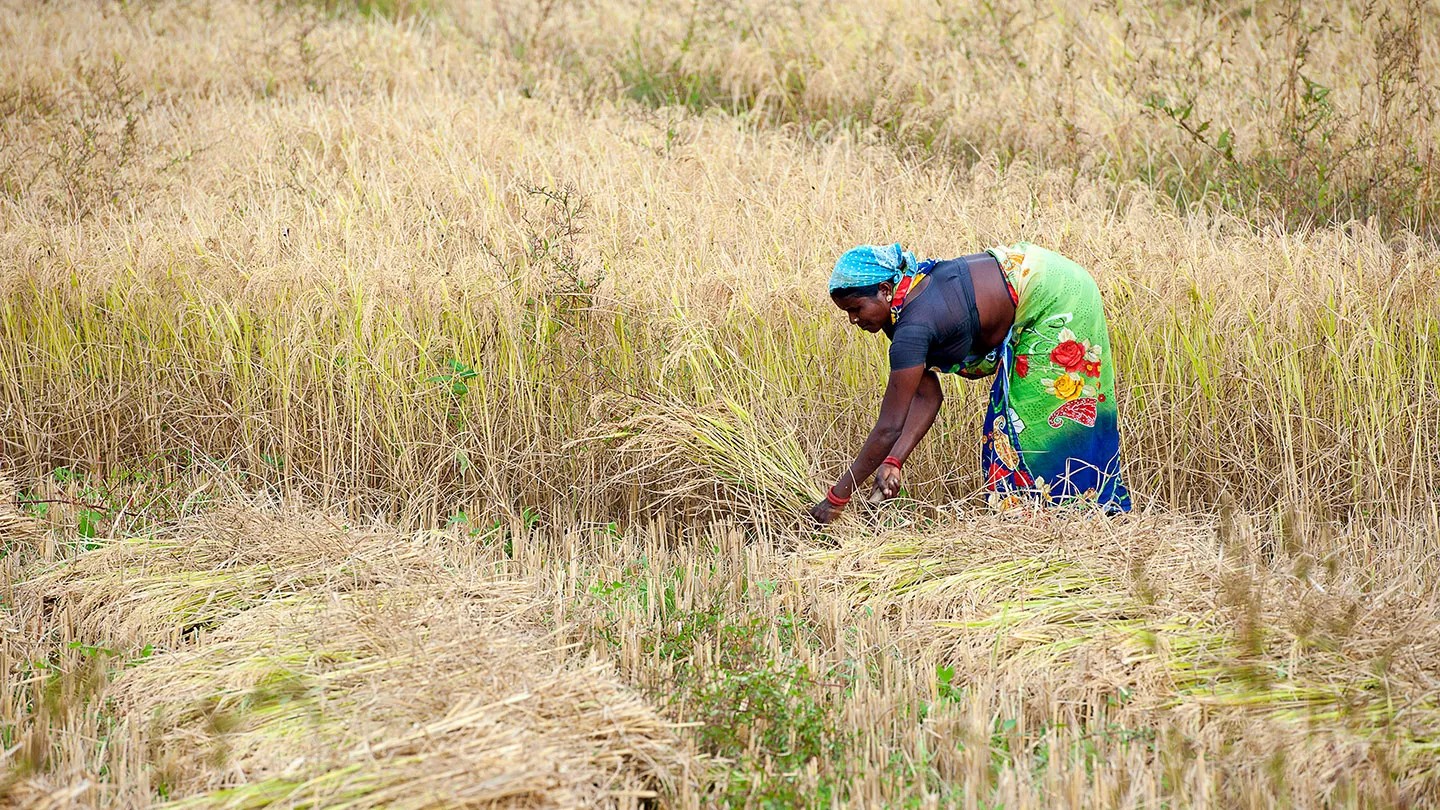
Farmers worldwide are quietly adopting a surprising new tool in the fight against climate change: crushed rock. From rice paddies in India to cornfields in the U.S., spreading pulverized basalt – an abundant volcanic rock – onto farmland is proving to be a surprisingly effective way to pull carbon dioxide from the atmosphere while simultaneously boosting crop yields. The method, known as enhanced rock weathering (ERW), isn’t a futuristic technology; it’s a natural process accelerated through simple, low-tech application.
The Science Behind Stone Dust
Basalt, the most common rock on Earth’s surface, doesn’t just sit inert in the soil. When broken down, its minerals react with atmospheric CO2, transforming it into stable carbonate minerals – essentially, trapping the greenhouse gas permanently. This is not a new phenomenon. Over geological time, this weathering process has naturally regulated Earth’s carbon cycle. But intentionally accelerating it on farmland offers a tangible solution to rising CO2 levels.
The benefits extend beyond carbon capture. Basalt releases essential nutrients like calcium, magnesium, potassium, and silica, improving soil health and promoting stronger plant growth. Studies show that basalt-treated fields see increased crop yields—corn by 12%, soybeans by 16% in the U.S. Midwest, and rice yields up 23% in India. This isn’t just an environmental win; it’s an economic one, potentially adding billions to farmers’ incomes.
Global Implementation and Challenges
To have a significant impact, ERW would require mining roughly 13 billion metric tons of basalt annually – a massive undertaking. For perspective, that’s equivalent to 400 million cement mixer trucks worth of rock. Some critics, like business and human rights lawyer Bhoomika Chaudhury, caution against large-scale mining, citing potential environmental and social disruption.
However, proponents argue that the benefits outweigh the costs. The process avoids competition with land use (unlike reforestation) and requires less technical infrastructure than direct air capture technologies. Furthermore, the environmental footprint of basalt mining may be less severe than current fertilizer production, which relies on energy-intensive factories and often generates significant greenhouse gas emissions.
Real-World Applications and Early Results
Companies like Mati Carbon are already implementing ERW on the ground. Founded in 2022, Mati Carbon is working with over 16,000 farmers across India and Africa, spreading 300,000 tons of basalt dust. Early data from Indian rice paddies show promising results: farmers capture around 4 metric tons of CO2 per hectare, with yield increases of up to 23%.
The implications are significant, particularly for vulnerable farming communities in climate-sensitive regions. In India, monsoon rains have decreased by 15% over the past 75 years, increasing drought frequency and heat waves. Basalt’s ability to enhance drought resistance could be a lifeline for farmers in these areas.
Looking Ahead
While scaling ERW faces logistical hurdles, the potential benefits are compelling. Combining this method with other carbon removal strategies—like reforestation and direct air capture—could create a powerful toolkit for combating climate change.
Spreading crushed rock on farmland is not a silver bullet, but it’s a low-tech, scalable solution with the potential to make a meaningful difference. For farmers like those in Sarekha Khurd, India, it’s not just about saving the planet; it’s about securing their livelihoods in a rapidly changing world.