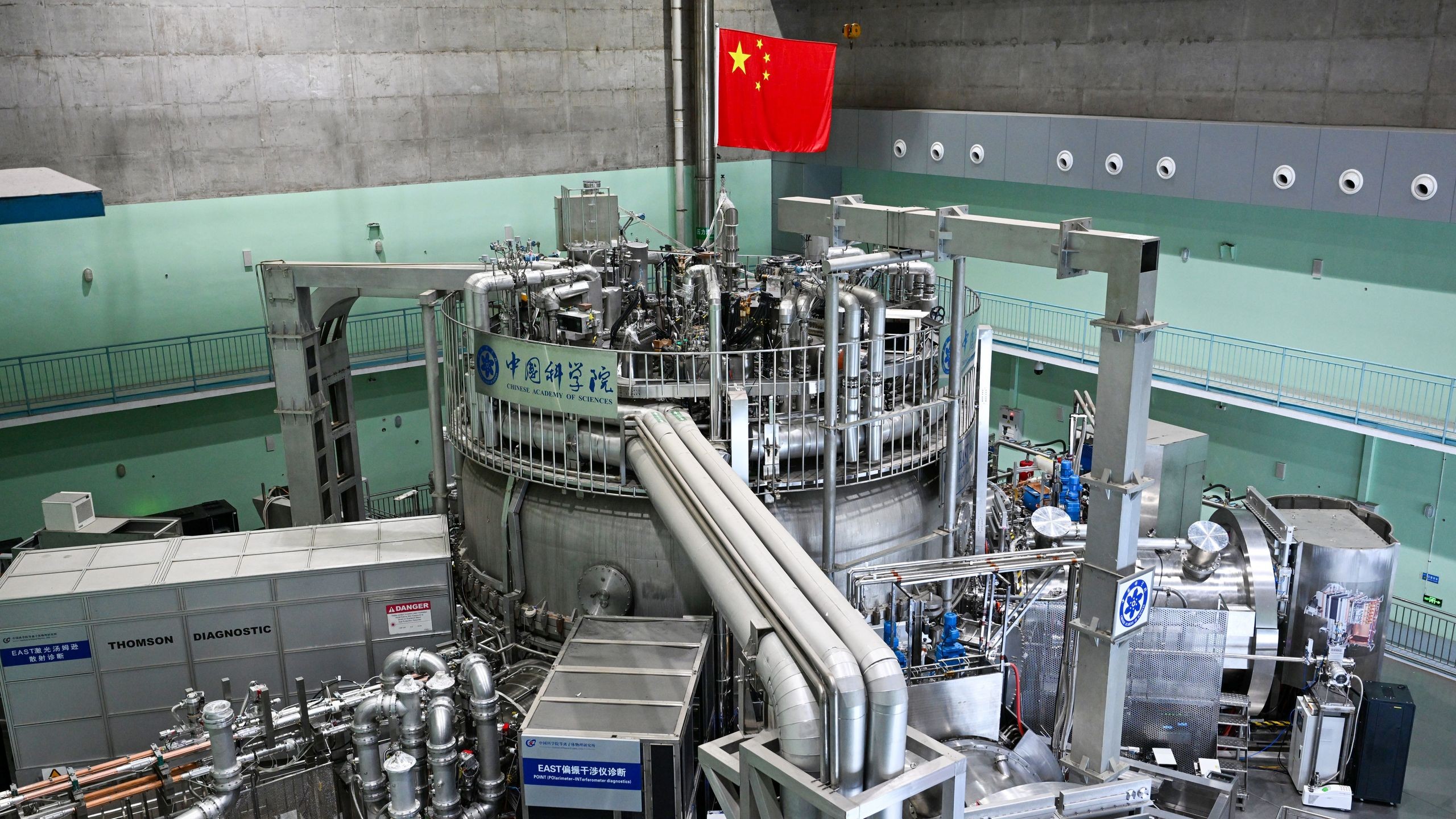
China’s experimental nuclear fusion reactor, often called the “artificial sun,” has achieved a key milestone by sustaining high-density plasma beyond previously established operational limits. This advancement brings humanity closer to the long-sought goal of near-limitless, clean energy—though practical applications remain decades away.
The Challenge of Fusion
Nuclear fusion —the process that powers the sun—holds the promise of abundant energy without the radioactive waste associated with nuclear fission or the greenhouse gas emissions of fossil fuels. However, replicating this process on Earth is incredibly difficult. One major hurdle is maintaining stable plasma : superheated matter where atoms fuse together. Plasma tends to become unstable at high densities, halting the reaction. This instability is governed by what scientists call the Greenwald Limit.
How China Broke the Limit
The Experimental Advanced Superconducting Tokamak (EAST) reactor in China has overcome this limit by carefully controlling the plasma’s interaction with the reactor walls. Researchers fine-tuned the initial fuel gas pressure and the frequency of microwave heating to keep plasma stable at densities 1.3 to 1.65 times beyond the Greenwald Limit. This allowed them to reach a previously theorized state called the “density-free regime”, where stability is maintained even as density increases.
“The findings suggest a practical and scalable pathway for extending density limits in tokamaks and next-generation burning plasma fusion devices.” – Ping Zhu, co-lead author
This isn’t the first time the Greenwald Limit has been breached. The U.S. Department of Energy’s DIII-D facility and researchers at the University of Wisconsin–Madison have also achieved similar breakthroughs. However, EAST’s success marks the first time plasma has been sustained in the density-free regime, confirming a theory called plasma-wall self organization (PWSO). PWSO suggests that a balanced interaction between plasma and reactor walls can stabilize even extremely dense plasma.
Why This Matters
Fusion research is a slow, incremental process. While practical fusion power is still decades off, overcoming the Greenwald Limit is a critical step forward. The increased density allows for more frequent atomic collisions, lowering the energy needed to ignite a self-sustaining reaction.
China and the U.S. are collaborating on the International Thermonuclear Experimental Reactor (ITER) in France—the world’s largest tokamak—which is expected to begin producing full-scale fusion reactions by 2039. Progress at facilities like EAST will directly inform the development of future reactors, pushing the boundaries of what’s possible in fusion energy.
Despite the advances, fusion remains an experimental science. While the potential is enormous, it won’t solve the current climate crisis. However, it could provide a sustainable energy source for generations to come.