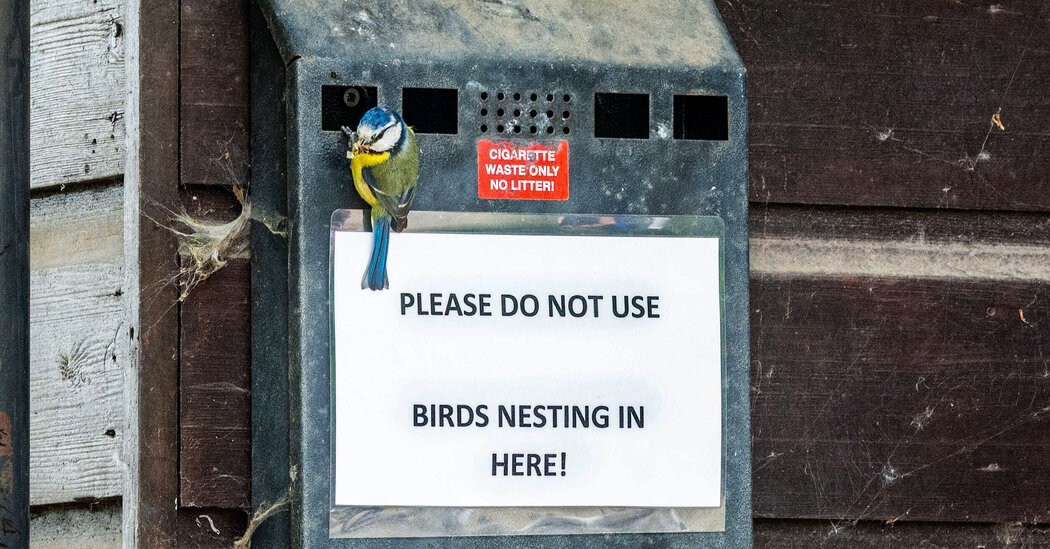
Urban birds across the globe are increasingly incorporating cigarette butts into their nests, and new research suggests this isn’t random: the toxins in tobacco may act as a natural pesticide, protecting chicks from bloodsucking parasites. Darwin’s finches in the Galápagos, house finches in Mexico, song thrushes in New Zealand, and even blue tits in Europe have all demonstrated this behavior.
The Problem with Bird Nests
Bird nests—especially those built in cavities like tree hollows or human-built boxes—are vulnerable to pests. Ticks, fleas, and blowflies thrive in these enclosed spaces, feeding on both adult birds and defenseless nestlings. This parasitic pressure can significantly reduce breeding success.
The Research: Blue Tits and Cigarette Toxins
Researchers at the University of Lodz in Poland investigated whether blue tits could benefit from the chemical compounds found in discarded cigarette butts. Their study monitored 99 blue tits across urban parkland and nearby forests, tracking the health of chicks in three types of nest boxes:
- Standard nest boxes (control group)
- Boxes lined with sterilized artificial moss and cotton wool
- Boxes containing cigarette butts
The Results: Fewer Parasites, Healthier Chicks
The study found that cigarette butts contain roughly 4,000 chemicals, including nicotine, arsenic, and heavy metals. These substances, while harmful to humans, act as potent insecticides against the bloodsucking parasites that plague bird nests. Birds nesting with cigarette butts had fewer parasites in their nests and healthier offspring.
Why This Matters
This discovery highlights how urban wildlife is adapting to human-generated pollution in unexpected ways. While cigarette smoke is obviously harmful, the residual toxins in discarded butts have become a tool for birds to improve their survival rates in increasingly contaminated environments. This also raises questions about the broader impact of pollution on ecosystems and how animals will adapt to survive it.
Ultimately, birds are using human waste to fight off parasites, demonstrating a disturbing but fascinating example of urban wildlife adaptation.