Astronomers have achieved a new milestone in solar physics: continuous observation of a single active region on the Sun for over three months. This unprecedented tracking period, from April to July 2024, could significantly improve our ability to predict dangerous space weather events.
Tracking a Violent Region From Birth to Decay
The active region, designated NOAA 13664, first emerged on the far side of the Sun on April 16th, 2024. It rotated into view in May, unleashing the strongest geomagnetic storms in decades—the same storms that caused spectacular auroras visible across unusually low latitudes. The region then rotated out of view on July 18th, having visibly calmed by the time it reappeared.
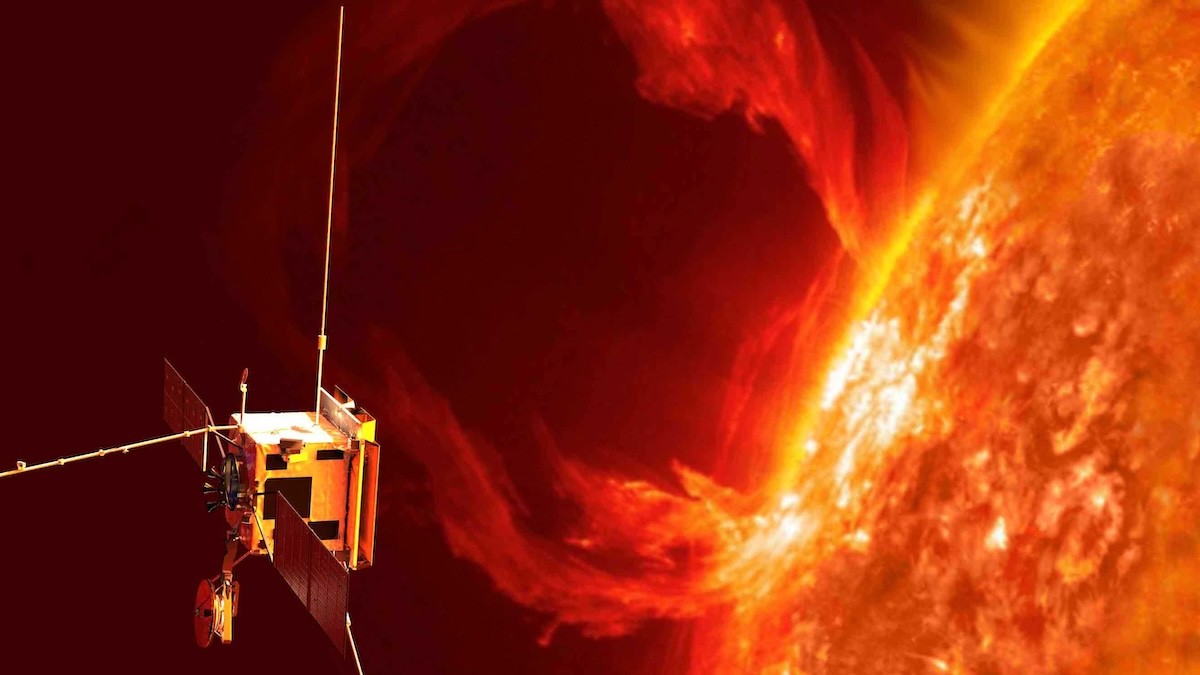
This extended observation was possible thanks to the coordinated efforts of two spacecraft: the European Space Agency’s Solar Orbiter, which monitored the region from behind the Sun, and NASA’s Solar Dynamics Observatory, which tracked it from Earth orbit.
“This is the longest continuous series of images ever created for a single active region,” says Ioannis Kontogiannis, a solar physicist at ETH Zurich. “It’s a milestone in solar physics.”
Why Continuous Observation Matters
Typically, astronomers only get about two weeks to study any given active region, as the Sun rotates once every 28 days. However, by combining data from two vantage points, researchers were able to follow NOAA 13664 almost non-stop, missing only a brief three-day window in late April.
This sustained observation allowed scientists to monitor the evolution of the region’s magnetic fields—the primary driver of solar activity—in unprecedented detail. Understanding how these fields develop and interact is crucial for predicting solar flares and coronal mass ejections (CMEs).
The Threat from Space Weather
Solar storms aren’t just beautiful; they can wreak havoc on our technology. Severe geomagnetic storms can disrupt satellites, damage electrical grids, and interfere with communication systems. The stronger the storm, the more extensive the impact.
The ability to accurately forecast these events is therefore essential for protecting critical infrastructure. By studying NOAA 13664, scientists hope to refine their models and improve prediction accuracy. The 12350 BCE event, the strongest solar storm ever recorded, serves as a stark reminder of nature’s potential to disrupt technology.
The extended observation of NOAA 13664 represents a critical step forward in our understanding of the Sun’s violent behavior, ultimately helping us prepare for future space weather events.