This week has brought a series of landmark achievements and unsettling observations across the spectrum of scientific inquiry. From humanity reaching new depths in space exploration to fundamental shifts in our understanding of neurological diseases and social animal structures, the following reports highlight the current frontiers of knowledge.
🚀 Humanity Reaches New Depths in Space
The Artemis II mission has officially concluded its historic journey, marking a massive milestone in human spaceflight. This mission did more than just circle the Moon; it shattered previous distance records.
- The Record: On Monday, April 6, the spacecraft reached a maximum distance of 406,771 kilometers from Earth.
- The Context: This surpasses the previous record held by Apollo 13 by over 6,600 kilometers.
By successfully navigating beyond the far side of the Moon, NASA has proven the technical capability required for much more ambitious goals: returning humans to the lunar surface and eventually venturing toward Mars.
🧠 Breakthroughs in Neuroscience and Immunology
Researchers are making significant strides in understanding how the body—and the brain—functions at a cellular level, offering hope for previously untreatable conditions.
A New Lens on Alzheimer’s Disease
Neuroscientists have proposed a “unifying theory” that may finally bridge the gap in how we understand Alzheimer’s. Previously, the roles of amyloid-beta and tau proteins were studied somewhat separately. This new research suggests they are directly linked:
– The two proteins compete for the same binding sites on microtubules.
– Amyloid-beta can actively prevent tau from functioning correctly, leading to the neuron death characteristic of the disease.
An “Immune Reset” for Autoimmune Disease
In a remarkable clinical case, a patient suffering from three simultaneous autoimmune diseases has entered full remission. The breakthrough came via an immunotherapy typically reserved for cancer treatment. This “reset” allowed the patient to return to a near-normal life after a decade of illness, suggesting that aggressive immunotherapy may have broader applications for complex immune disorders.
🐒 Social Complexity in the Animal Kingdom
Science is also shedding light on the darker, more complex side of animal behavior, specifically regarding primate social structures.
The Chimpanzee “Civil War”
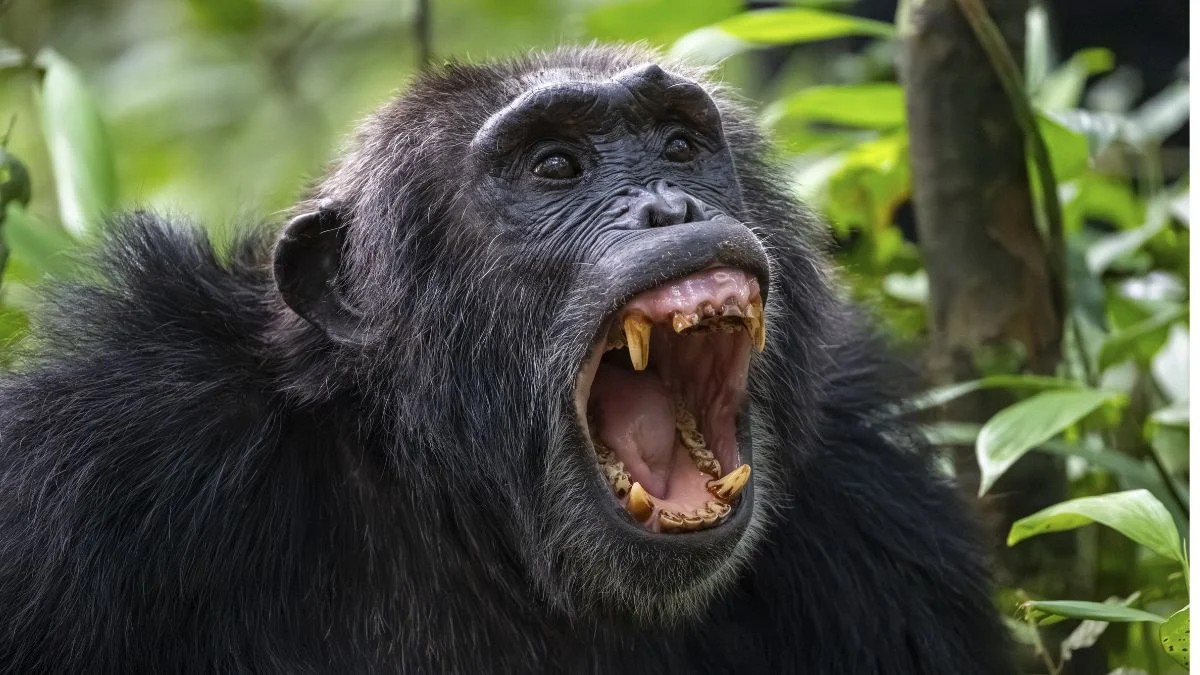
In Uganda, primatologists have documented a phenomenon described as a “civil war” among wild chimpanzees. What began as social tension within the Ngogo community escalated into organized violence:
– Groups have established territorial borders patrolled by males.
– In 2017, conflict turned physical, with “Western” chimpanzees attacking and severely injuring the alpha male of the “Central” cluster.
This research is vital because it demonstrates that chimpanzee societies possess levels of organized, territorial aggression and political complexity that mirror some human social conflicts.
🐧 Biological Paradoxes: The Zoo Penguin Study
A long-term study of penguins has revealed a fascinating biological trade-off. While zoo penguins live longer than their wild counterparts due to protection from predators and consistent food, they experience accelerated aging.
“A 15-year-old penguin in the zoo has the body of a 20-year-old penguin in the wild.”
This disparity suggests that while “unlimited” resources extend lifespan, the lack of environmental stressors may fundamentally alter the biological aging process—a finding that provides intriguing parallels for studying human longevity and metabolic health.
🌍 The Global Challenge: Earth’s Carrying Capacity
Finally, a sobering report on planetary limits suggests that humanity has reached a critical tipping point. New calculations indicate that Earth’s carrying capacity —the number of people the planet can support without degrading its resources—is significantly lower than our current population.
- Current Population: ~8.3 billion
- Optimal Capacity: ~2.5 billion
Ecologists warn that the planet is currently being pushed beyond its ability to regenerate, implying that without fundamental shifts in how we consume resources, the gap between demand and planetary supply will continue to widen.
Summary: From the successful expansion of human reach in space to the complex biological and social realities of life on Earth, this week’s findings emphasize both our incredible technological progress and the urgent need to understand the delicate balance of our biological and planetary systems.