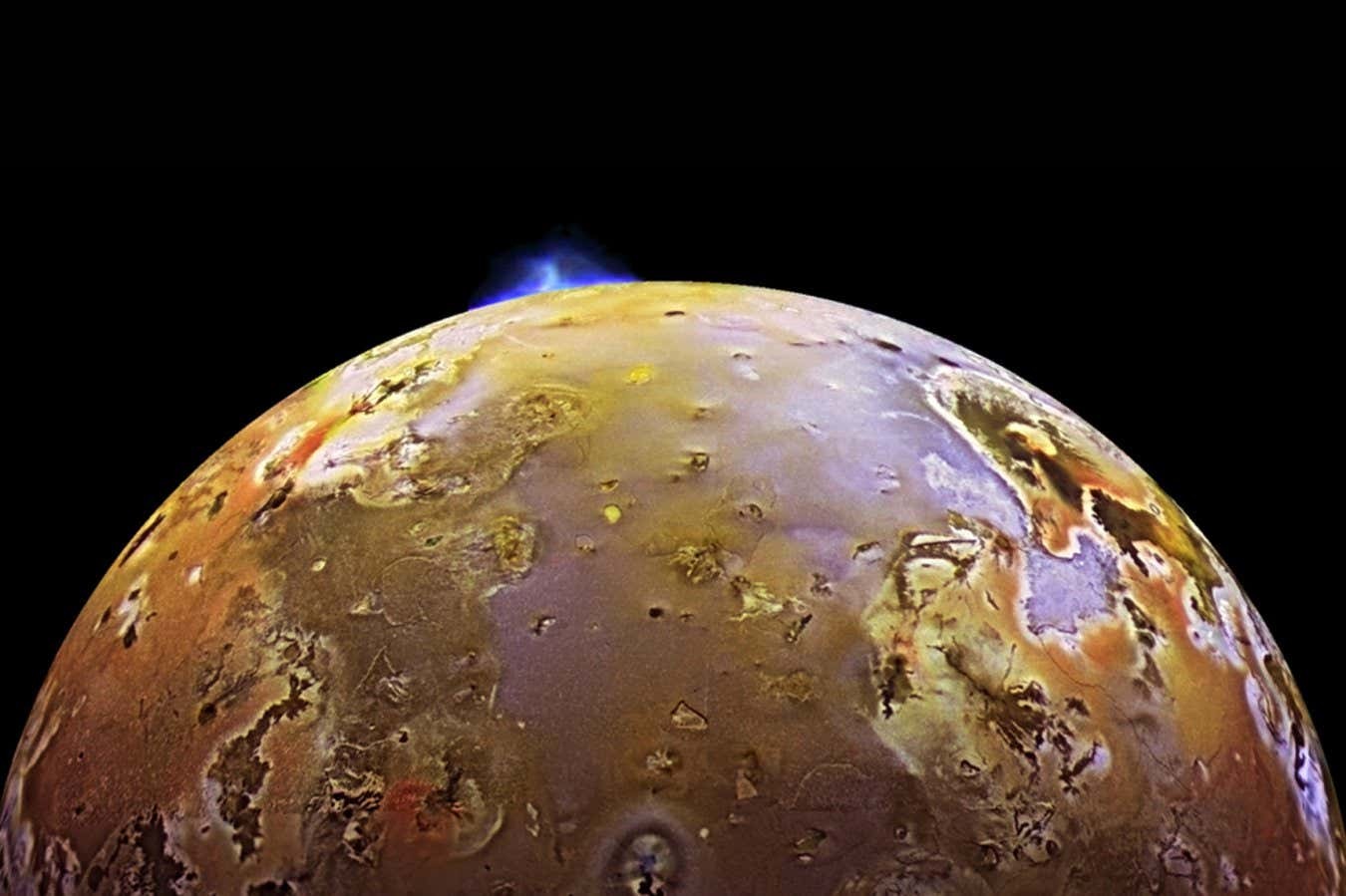
Five volcanoes on Jupiter’s moon Io erupted simultaneously, suggesting a vast, interconnected network of magma beneath its surface. The coordinated eruptions, observed by NASA’s Juno spacecraft in late 2024, release more energy than any previously documented volcanic activity on the moon. This event challenges existing models of Io’s internal structure and offers new clues to understanding its extreme geological activity.
Unprecedented Eruption Scale
The recent eruptions spanned an area of approximately 65,000 square kilometers, dwarfing previous volcanic events on Io. Researchers describe the scale as “terrifyingly beautiful,” with lava filling entire valleys in a matter of moments. The simultaneous nature of these eruptions—with multiple hotspots igniting at once—indicates a deeper, shared source of magma rather than isolated pockets.
Rethinking Io’s Interior
For years, scientists assumed Io possessed a global magma ocean beneath its crust. However, prior studies disproved this idea, leaving the source of such massive, coordinated eruptions a mystery. The latest observations suggest a different model: a “magma sponge” consisting of interconnected pores filled with lava. These pores could act as reservoirs, allowing magma to build up pressure before erupting across multiple sites simultaneously.
Implications for Earth’s Early History
Io’s extreme volcanism offers a window into the early stages of planetary evolution. The moon’s conditions mirror those of Earth billions of years ago when volcanic activity was far more intense. Studying Io’s internal dynamics could shed light on the processes that shaped our own planet’s geological history.
Future Research and Challenges
Confirming the “magma sponge” hypothesis requires further observations, which may be limited as Juno moves farther from Io. However, the implications of this discovery extend beyond Io itself. Understanding how magma behaves in extreme environments can refine our models of planetary interiors, offering insights into the evolution of rocky bodies throughout the solar system.
The coordinated volcanic events on Io demonstrate that even seemingly well-studied planetary bodies can still surprise us. Solving the mystery of Io’s internal structure may unlock a deeper understanding of how planets—including our own—form and evolve over time.