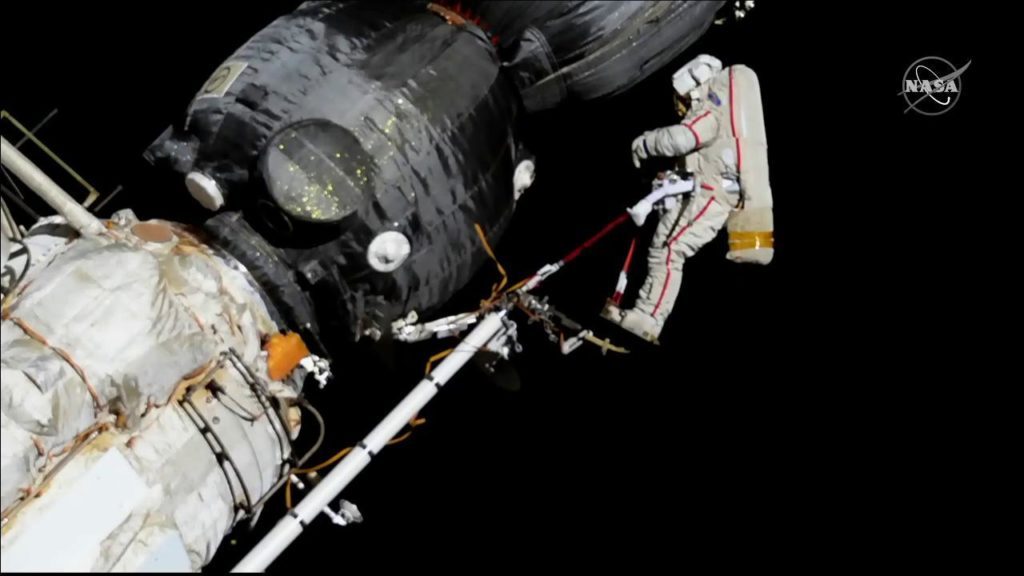
The hole in the Soyuz capsule docked to the International Space Station was no accident. It was done from the inside.
Sergei Prokopyev did not gloss over it at the press conference. He confirmed what investigators had already begun to suspect. The damage was intentional. Sabotage.
It’s not just about a punctured metal hull. It’s all about trust. And it’s about who has the keys in orbit.
The timeline doesn’t add up
The hole was discovered on August 30. This date is important. It was not found during routine inspections. It was found after something felt wrong.
Prokopyev’s statement shifts the blame. They said it is now up to investigators to figure out when the hole occurred. Not if. But when..
Why is timing important? Because it determines whether a crew member, a ground technician or someone else was responsible. If it happened during launch prep, that’s one story. If it happened in orbit, it’s much darker.
Sabotage or mistake?
The board of inquiry did not mince words. They called it sabotage. Intentional. Deliberate.
Some might call it a freak accident. A tool slipped. A welder’s spark jumped. But investigators aren’t buying it. Not yet.
“It returns to investigators to determine when this hole was made,” Prokopyev said.
His words reflect the official position. It was no accident. It was calculated. At least that’s how it seemed.
Why this is more important than you think
You might think, “It’s just a hole in the capsule.” But think about what Soyuz represents. It’s not just a vehicle. It’s a lifeline. A rescue boat. A ticket home.
If someone can pierce it from the inside, what’s to stop them from doing something worse? Pressurization loss? Lack of oxygen? Panic?
The ISS is a delicate ecosystem. One breach, one failure and the whole thing goes wrong. Literally.
The human element
Prokopyev is an experienced cosmonaut. He was in space. He knows the risks. He is also known for his directness. It’s part of his brand. But this time his bluntness carries weight.
He didn’t accuse anyone by name. He didn’t throw hands. He was just stating the facts. And these facts point to human error. Or even worse.
What happens next?
The investigation continues. You are viewing telemetry data. In the maintenance log. In the behavior of the crew. With everything.
But here’s the thing: the answer may never be public. Space agencies don’t always share dirty laundry. Especially when it comes to possible sabotage.
So what do we do? We are waiting. We’re watching. And we wonder.
Is it possible that the hole was a mistake? Sure. Everything is possible. But the evidence suggests otherwise. And until proven otherwise, the shadow of sabotage hangs over Soyuz like a storm cloud.
One thing is for sure: the crew of the ISS is watching their equipment a little more closely. And maybe, just maybe, each other.
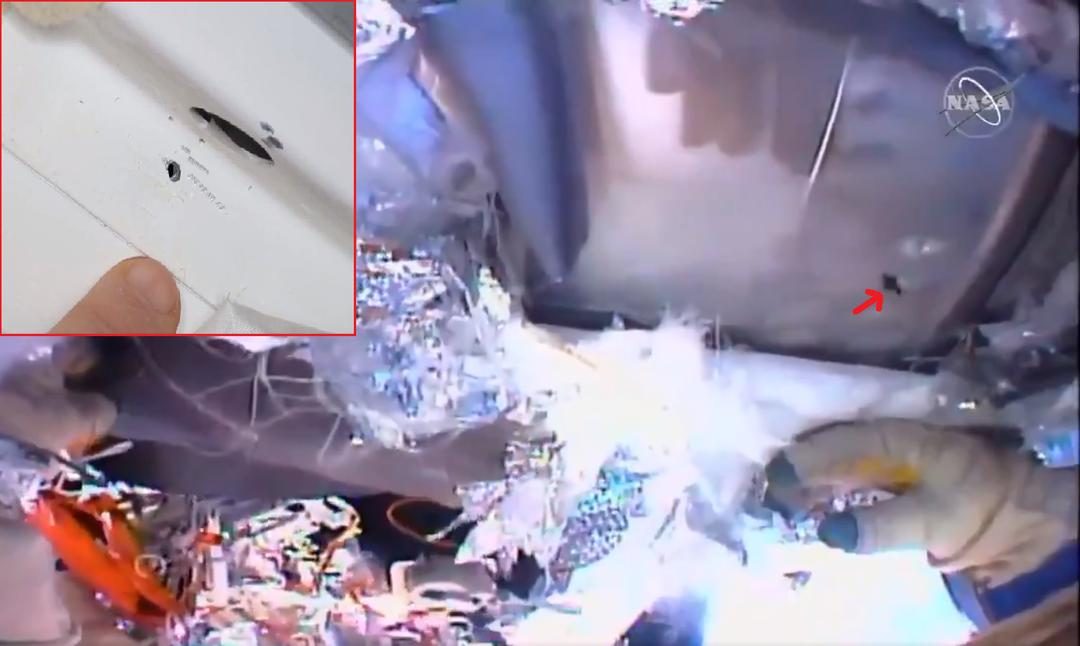
Two Russian cosmonauts spent nearly eight hours in the vacuum of space last December, trying to answer a question that sounded like a thriller plot: who drilled a hole in their ride home?
On December 11, Oleg Kononenko and Sergei Prokopyev stepped out of the International Space Station’s airlock. They weren’t just looking. They were hunting for answers regarding a mysterious leak discovered in their Soyuz MS-09 spacecraft months earlier.
The mission was intense. The pair donned their suits, armed with more than just curiosity. According to NASA, they carried knives and box cutters. Their destination was 30 meters away. It took four hours just to traverse the distance, walking across the station’s exterior like astronauts on a moon walk, but with a Russian space capsule as their target.
Inspecting the Damage
Once they reached the Soyuz, the real work began. For nearly two hours, the cosmonauts used their tools to tear away 25 centimeters of thermal insulation material. They needed to get to the hull. They needed to see the wound.
The hole had been found in August. It caused a slight depressurization inside the station. Not enough to kill anyone. But enough to raise alarms. The Russian investigative commission quickly labeled the incident an act of sabotage. That word hangs heavy in a metal tube floating 400 kilometers above Earth.
Kononenko and Prokopyev examined the breach closely. They looked for drill marks. They looked for signs of forced entry. They found nothing.
No drilling marks were visible around the hole.
This absence is the most frustrating part of the story. If someone drilled it, why no scratch marks? If it wasn’t drilled, what made it? The cosmonauts took photos. They collected samples of the surrounding material. These samples were scheduled to return to Earth on the next Soyuz flight on December 16.
The Return Trip
The Soyuz MS-09 wasn’t just a museum piece for inspection. It was their ticket home. The crew—Sergei Prokopyev, Oleg Kononenko, and NASA’s Serena Auñón-Chancellor, along with ESA’s Alexander Gerst—prepared for reentry on December 20.
Standard procedure for a damaged Soyuz is clear. If the capsule’s hull is compromised, you don’t bring the damage home. The damaged section of the capsule was jettisoned before atmospheric reentry. The cosmonauts rode in the safer, intact module. They landed safely.
But the hole remained a ghost.
The samples taken from the insulation and the hull are now on Earth. Scientists are analyzing them. They are looking for residue. For trace elements. For anything that might reveal if this was a malicious act or a manufacturing glitch gone wrong.
The investigation continues in laboratories far below the station. The cosmonauts are back on Earth, telling their stories. The hole is gone, ejected into the void. But the mystery of how it got there, and why there were no drill marks, lingers.
Was it sabotage? Or just bad luck in the harsh environment of space? The answer is locked in those soil-like samples, waiting to be interpreted. Until then, the Soyuz MS-09 remains a silent witness to a breach that shook the space community.

Stay in the loop without the noise
Most science communication feels like homework. Receive, read and delete emails. Futura has a different approach. They want news to appear as soon as it is published, instead of digested by an algorithm weeks later.
The strategy is simple. WhatsApp and Google News.
Why these two? Because your attention is already focused on them. Check WhatsApp once an hour. You can refresh Google news whenever you have time. Futura publishes the latest science and tech stories there. No clutter. No need to break through subscription walls. Just the facts, fast.
This is to eliminate friction. If the news is in your pocket, you read it. If it’s hidden in a tab you forgot you opened, you won’t. By doing this, you will not only increase your readership, but you will also build your habit.