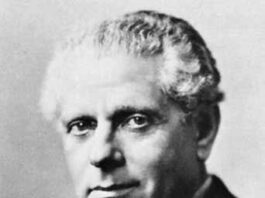
He was a genius, his grandmother was a violinist, and his mother passed down pieces of music like family heirlooms. Olga Hickenlooper, later Olga Samaroff, was born on August 8, 1882 in San Antonio. At the age of 14, he packed his bags and headed to Paris.
Early 20th century Paris was a different beast. But he does more than just attend classes. He cracked the code. In 1897, she became the first woman to win a scholarship to the Paris Conservatoire. This is not a minor footnote. It was heard from the slamming of the door.
Then life started to interfere.
From 1900 to 1904 he was absent. he is married Married life didn’t work out. He disappeared from the spotlight, but not from the music.
She returns as Olga Samarova. The name change is more than cosmetic. This is a new invention.
In January 1905, he appeared on stage at Carnegie Hall with the New York Symphony Orchestra. Critics wrote glowing reviews. Good reviews mean live. Lots of private commitments. In May he was in London performing in front of an audience that was waiting for his talent and he got it.
His concert career began in earnest in 1906. But the fire fizzles out. Rather, something else happened.
She married Leopold Stokowski. conductor. That’s a big name. The marriage didn’t last long, but it did because of distractions. In 1911, he stopped acting.
He toured again for several years starting in 1913. But then came 1925.
He suffered a serious injury to his hand. The type that cannot be cured. He is the kind of person who ends his career early.
Most pianists would collapse. Samarov turned around.
He joined the faculty at the Juilliard School of Music in New York. He just doesn’t teach. He is shaping the next generation. He also served as music critic for the New York Evening Post in 1926–1927. He watched the field from the other side of the piano bench.
But he didn’t stop there.
In 1928 he founded the Schubert Memorial Museum. target? Sponsor an entire orchestral concert for a distinguished young artist. This is not charity work. This is an investment. He believes in talent.
In 1929, he began teaching piano at the Philadelphia Conservatory of Music. His influence is growing. From around 1930, it hosted music lessons for the general public.
Who are these ordinary people? Ordinary people who want to learn about music without spending decades in a conservatory. The course took them to New York City, Philadelphia and Washington, D.C.
This is available. It is structured. It worked.
He published the text as an attachment to the course. The lecture was then broadcast on the radio. And then it appeared on TV.
His autobiography, The Story of an American Musician, was published in 1939. This is more than just a memoir. This is the plan.
He died in New York on May 17, 1948.