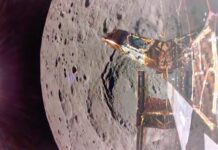
NASA’s Artemis 2 mission is set to become the farthest any human has traveled from Earth, exceeding the previous record held by Apollo 13 since 1970. The four-person crew – consisting of NASA astronauts Reid Wiseman, Victor Glover, and Christina Koch, along with Canadian astronaut Jeremy Hansen – will reach a maximum distance of 252,757 miles (406,773 kilometers) from our planet on April 6th.
The New Distance and How It Was Calculated
The current record stands at 248,655 miles (400,171 km), achieved during the emergency return of Apollo 13 after an onboard explosion forced the mission into a survival scenario. The new distance estimate for Artemis 2 isn’t speculative; it’s based on real data from the capsule’s translunar injection (TLI) burn – a six-minute engine firing that propelled Orion toward the moon.
This precision is significant because TLI effectively locks in the mission’s trajectory. As NASA officials noted, this burn also sets up the return path to Earth, functioning almost as a pre-programmed deorbit maneuver.
Why This Matters Beyond a Record
While breaking a record is notable, Artemis 2’s primary purpose isn’t just distance. It’s a critical test flight for the Orion capsule, designed to prove its ability to transport humans to and from the moon safely.
This mission is a stepping stone toward more ambitious goals, including the first crewed lunar landing under the Artemis program, planned for Artemis 4 in late 2028. Unlike Apollo 13, which was forced into a flyby, Artemis 2 was always intended as a demonstration of Orion’s capabilities, rather than a landing attempt.
A Contrast with Apollo 13
Apollo 13’s record distance was born out of crisis. The mission was meant to land on the moon, but a catastrophic oxygen tank failure turned it into a desperate fight for survival. The crew – Jim Lovell, Fred Haise, and Jack Swigert – and the ground teams at Mission Control, turned a disaster into a triumph of human ingenuity.
“The translunar injection burn is the last major engine firing of the mission. It propels Orion on a path toward the moon and sets it on the free-return trajectory that will ultimately bring crew back to Earth for splashdown.”
Artemis 2, in contrast, is a carefully planned and executed demonstration. It honors the legacy of Apollo 13 but does so with the benefit of decades of technological advancement and a clear mission objective.
This mission represents a new chapter in lunar exploration, building on past achievements while setting the stage for a sustainable human presence beyond Earth.