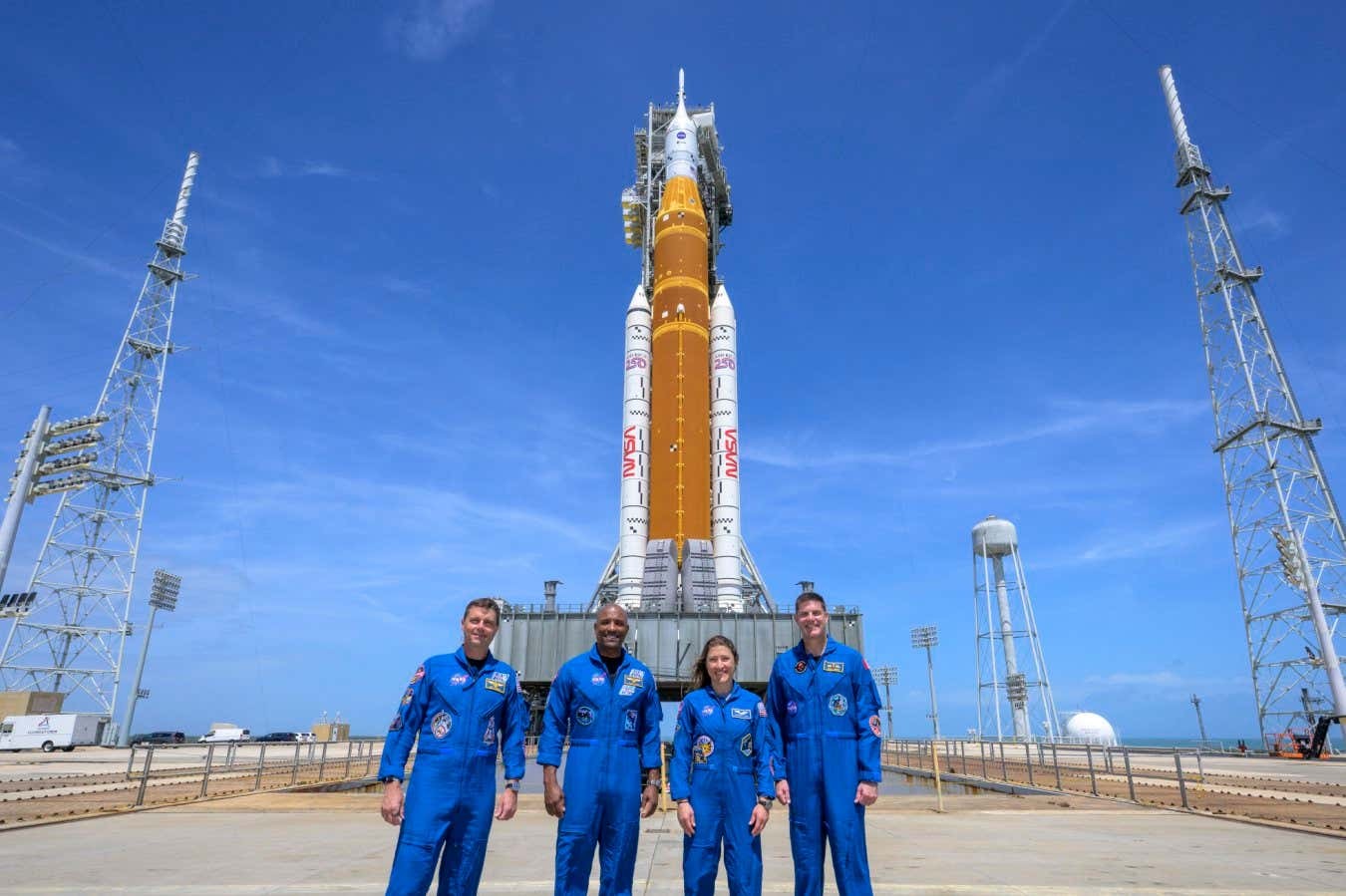
NASA is poised to send astronauts looping around the moon for the first time in over half a century with the Artemis II mission, currently scheduled for launch no earlier than April 1st. This mission isn’t just a return to lunar proximity; it’s a crucial test flight for the Space Launch System (SLS) rocket and Orion crew capsule, paving the way for a sustained human presence on the moon.
A Long-Delayed Journey
The Artemis program has faced significant delays. Originally slated for 2019, the program was pushed back due to technical hurdles. The uncrewed Artemis I mission, which successfully orbited the moon in 2022, served as the initial validation of the SLS and Orion systems. Now, with the hardware back on the launchpad after addressing minor fuel leak issues, Artemis II is ready to carry four astronauts – Reid Wiseman, Victor Glover, Christina Koch (all NASA), and Jeremy Hansen (Canadian Space Agency) – on a similar trajectory.
The Mission’s Purpose: Testing and Observation
This flight is primarily a test run. As Commander Wiseman emphasized, the team is prepared but understands the vehicle must prove itself. The eight-day mission will involve comprehensive life support system checks and manual docking simulations, essential for future lunar landing missions.
What makes this trip unique is the opportunity to observe portions of the far side of the moon that no human has ever seen. Roughly 60% of the lunar far side remains unobserved by the human eye, including areas of Mare Orientale that will be illuminated during the flight. This isn’t just symbolic; the far side holds crucial scientific potential, and the Artemis program aims to exploit it.
Beyond Artemis II: A Long-Term Vision
Artemis II is one step in a broader, ambitious plan. The original schedule had Artemis III landing astronauts on the moon by 2025, but delays have pushed this target to 2027. The subsequent Artemis IV and V missions, planned for 2028, will focus on practicing lunar lander docking procedures in preparation for a permanent moon base.
The ultimate goal is a sustained human presence on the moon, with Artemis laying the groundwork for long-term lunar exploration and potential resource utilization. Hansen, speaking at a recent press conference, framed the mission as a small but vital contribution to this larger endeavor: “We’re happy to do our small part… and then hand the baton on when we get back.”
The success of Artemis II will not only validate NASA’s next-generation hardware but also reignite public interest in lunar exploration, setting the stage for humanity’s renewed foothold on the moon.