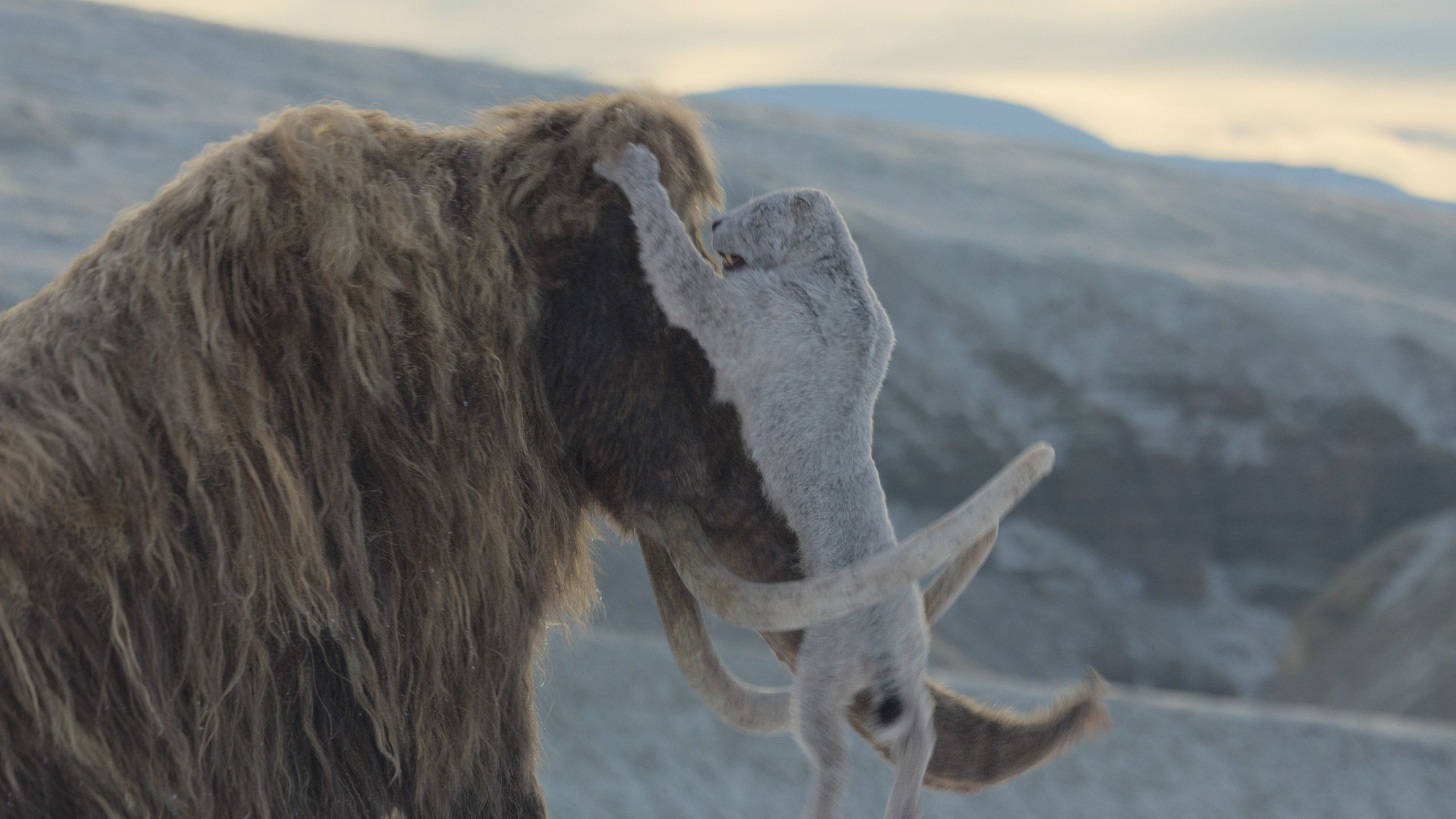
A new clip from Apple TV+’s upcoming series, “Prehistoric Planet: Ice Age,” delivers a dramatic depiction of a woolly mammoth herd defending itself against a pack of scimitar-toothed cats. The animation, set in what is now Alaska and the Yukon, highlights the brutal realities of survival during the late Pleistocene epoch as the climate shifted and resources dwindled.
The Hunt Begins
The clip shows five Homotherium serum – an extinct species of saber-tooth cat – ambushing a herd of Mammuthus primigenius. The mammoths, including a vulnerable calf and a dominant male, are forced to fight for their lives. This encounter isn’t just about predation; it’s about ecological stress. As the last ice age ended around 11,500 years ago, shrinking ice sheets and increasing human hunting pressures decimated prey populations, forcing predators like scimitar-toothed cats into desperate hunts.
Mammoths Fight Back
In the first attack, the mammoths prove formidable. A scimitar-toothed cat leaps onto the male mammoth, clinging to its trunk, but the massive herbivore quickly overpowers the attackers, driving them off. The herd, led by females, retreats with the calf while the male engages in a tense standoff. This behavior aligns with current understanding of mammoth social structures: herds were primarily matriarchal, with males joining temporarily for mating.
The clip even illustrates a biological detail of male mammoth behavior: sexually mature males enter “musth,” a state marked by pheromone-rich secretions from temporal glands, signaling readiness to mate. This is why the male was present with the herd.
The Inevitable Outcome
Despite surviving this initial clash, the series doesn’t shy away from realism. Later in the program, the scimitar-toothed cats succeed in bringing down a mammoth using a coordinated ambush from a rocky outcrop, mirroring the hunting tactics of modern leopards. This illustrates the brutal efficiency of these predators.
Technical Challenges and Realism
The visual effects team faced immense challenges in recreating these interactions. Each animal was rendered with millions of individual hairs, simulating realistic movement in a snowy environment. The complexity of snow physics added another layer of difficulty.
This series pushes the boundaries of what’s possible in wildlife animation, showcasing not just the drama of prehistoric life, but the technical skill required to bring it to the screen.
The clip serves as a stark reminder that even iconic megafauna like woolly mammoths and saber-toothed cats were subject to the harsh realities of a changing world. While the mammoths survived this particular encounter, the series emphasizes that these animals ultimately succumbed to environmental shifts and human activity.