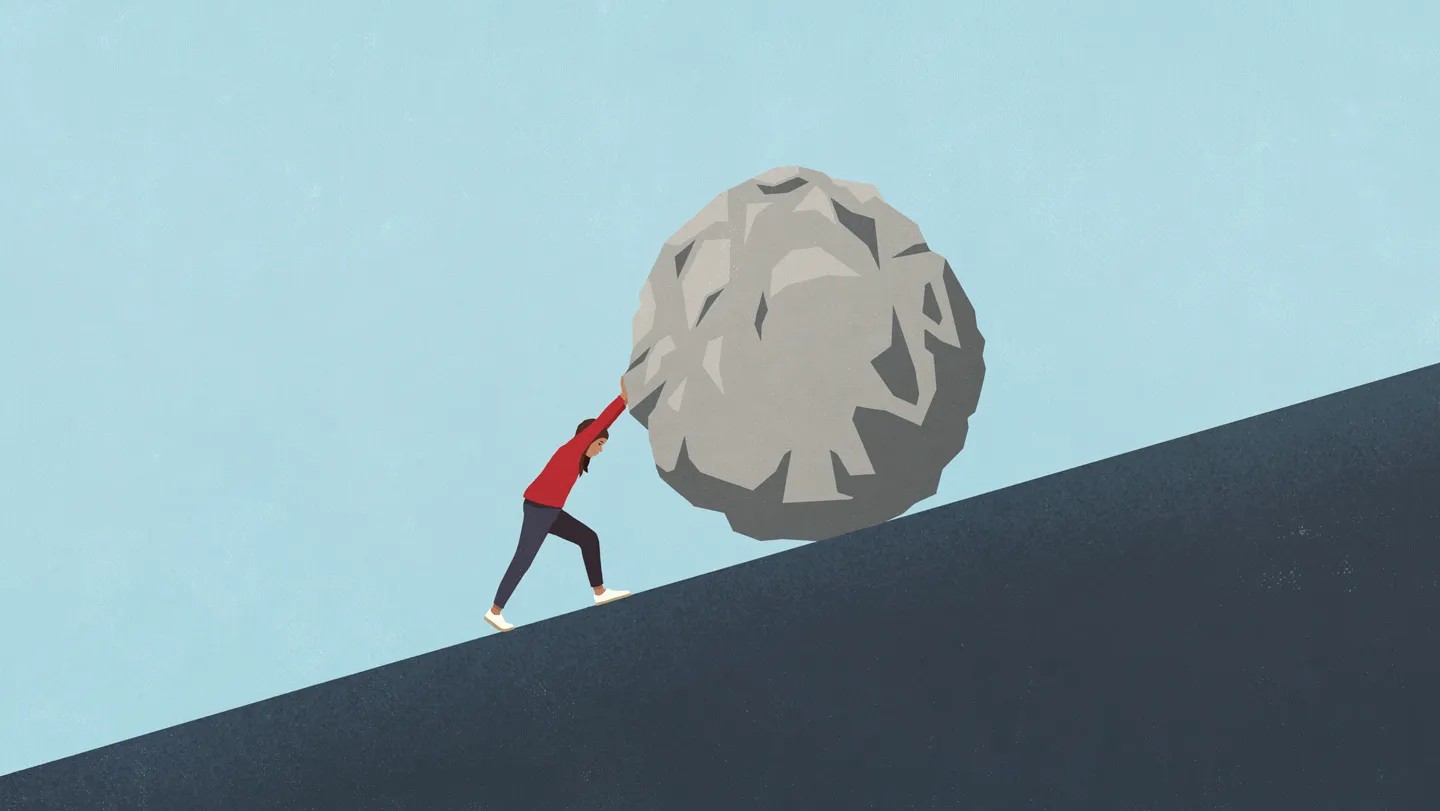
The story of the little engine that could—persistently chanting “I think I can”—is deeply ingrained in our culture. But modern psychology suggests that sometimes, the most effective path to success isn’t about dogged perseverance; it’s about knowing when to quit.
The Cultural Bias Toward Perseverance
In many industrial societies, including the United States, sticking with a task, no matter how difficult, is highly valued. Andreea Gavrila, a psychology expert at Université du Québec à Montréal, explains that “we value perseverance and persistence,” often to a fault. This mindset extends into our personal lives, particularly around New Year’s resolutions: we tend to add tasks rather than critically assess what no longer serves us.
The Science of Letting Go
Researchers are beginning to explore the counterintuitive idea that deliberately abandoning goals can be beneficial. Rachit Dubey, who studies human motivation at UCLA, suggests that the end of the year should be a time for reassessment: “What is something I don’t need in my life anymore?” Continuing to pursue impractical, costly, or misaligned goals can lead to physical and mental health problems. Yet, quitting carries a social stigma, making it harder than simply pushing through.
The process of quitting isn’t instantaneous; it can take months or even years—much like ending a relationship. Letting go of deeply held pursuits requires emotional work and can be messy.
Why We Struggle to Quit
Goals provide direction and a sense of purpose, as Nikos Ntoumanis, a motivation science expert at the University of Southern Denmark, notes. However, not all goals are equally valuable. The sunk-cost bias—the tendency to continue investing in something simply because you’ve already put effort into it—plays a significant role in why people stick with failing endeavors.
Experiments confirm this: even in low-stakes scenarios, like a simple online game, people struggle to abandon ineffective strategies. Dubey’s team at UCLA found that players held onto failing options far longer than rationally necessary, mirroring real-life behavior where emotional investment is higher.
The Brain’s Role in Commitment
Research even suggests this behavior may be hardwired into our brains. Studies on birds, rodents, and even humans with brain damage show a tendency to stick with tasks even when switching would yield better results. Damage to the prefrontal cortex—responsible for future planning—appears to reduce this reluctance to change course.
Quitting with Intention
The key to quitting effectively lies in why you’re doing it. Motivation plays a crucial role: goals abandoned due to internal dissatisfaction are easier to let go of than those forced by external pressures. A 2022 study involving over 900 participants showed that people quitting for their own reasons disengaged more cleanly than those quitting under duress.
The quitting process is rarely seamless. Doubt, second-guessing, and lingering attachment are common. But clinging to outgrown goals can actively harm your well-being. Sometimes, the courage to say “I think I can’t” is the first step toward finding a new path that truly matters.
Ultimately, recognizing when to quit isn’t about failure; it’s about strategic redirection and clearing space for more meaningful pursuits.