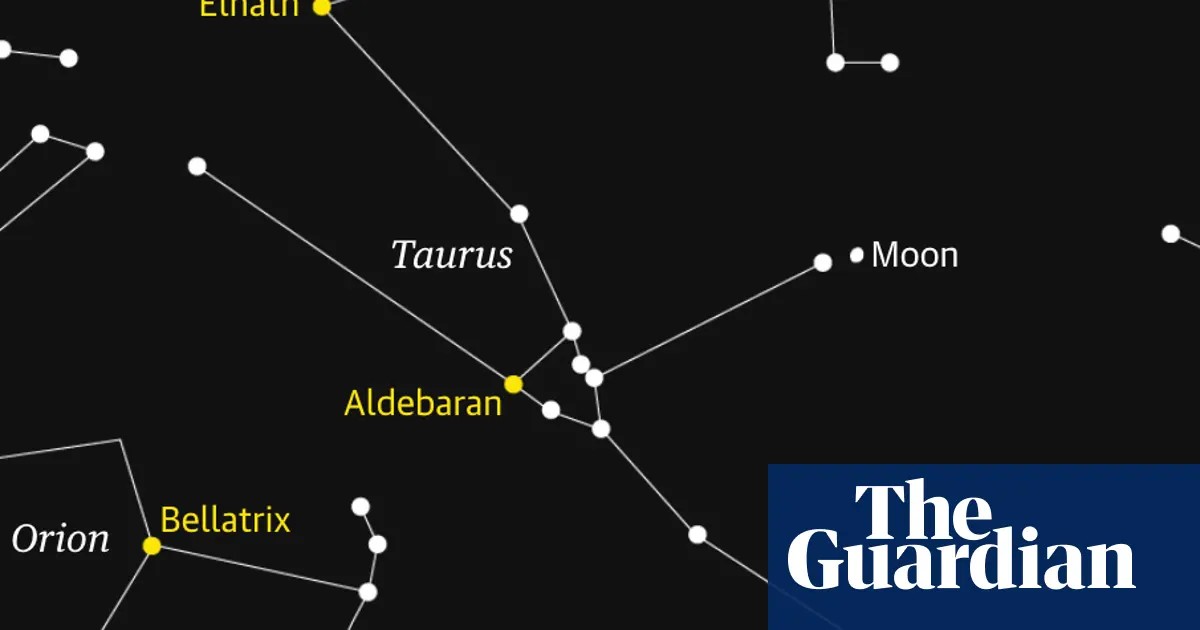
On the night of January 27, skywatchers will witness a rare celestial event: the Moon will pass in front of the Pleiades star cluster, causing some of its brightest stars to temporarily disappear from view. This is known as an occultation.
What are the Pleiades?
The Pleiades, often called the “Seven Sisters,” are a striking group of young stars located approximately 440 light-years away in the constellation Taurus. These stars formed together from the same cloud of gas and dust around 100 million years ago, making them relatively close-knit compared to other star clusters.
Why does this matter? Observing the Pleiades helps astronomers understand star formation and the early lives of stellar systems. The cluster provides a natural laboratory for studying how stars evolve when born together.
The Occultation Event
The Moon, much closer to Earth (just over a light-second away), moves quickly across the sky. During the occultation, the stars will appear to “wink out” as they pass behind the Moon’s dark side, then reappear about an hour later as they emerge from the opposite side.
To fully appreciate this event, observers should plan to spend at least an hour watching the sky.
Viewing Details
For observers in London, the first star, Taygeta, will disappear around 9:10 PM on January 27. However, precise timings vary depending on location.
Important: Check online resources for accurate times specific to your area. Even within the UK, timing differences can be up to 15 minutes.
The occultation offers a clear demonstration of how celestial mechanics work in real time. The Moon’s rapid motion against the backdrop of distant stars makes this a simple yet awe-inspiring event for casual observers and seasoned astronomers alike.
This occultation is a reminder of the dynamic nature of the night sky and the ongoing movements of celestial bodies around us. It underscores the beauty and predictability of the cosmos while offering a tangible connection to astronomical processes.