A remarkable new field of natural glass, formed by an ancient meteorite impact, has been discovered in northeastern Brazil. The find, detailed in a recent study, adds to the limited number of known “strewn fields” – areas where such impact glass, known as tektites, are scattered. Despite the extensive spread of these glassy remnants, the actual crater from the 6.3-million-year-old event remains elusive.
What Are Tektites?
Tektites are formed when meteorites, comets, or asteroids collide with Earth, instantaneously melting terrestrial rocks. These molten droplets are then flung into the atmosphere before cooling and solidifying into glassy formations. The term “tektite” itself originates from the Ancient Greek words for “melted” or “molten,” reflecting their fiery origins.
Currently, only five distinct strewn fields are recognized globally: the Australasian, Ivory Coast, Czech Republic, North America, and now Brazil. This discovery makes Brazil only the fifth place on Earth where such a field has been documented.
The Brazilian “Geraisites”
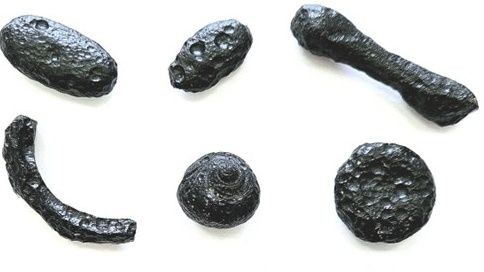
The newly identified tektites, dubbed “geraisites” after the Brazilian state of Minas Gerais where they were first found, span a strewn field at least 56 miles (90 km) long. Researchers have collected approximately 600 specimens, ranging in mass from 1 gram to 86 grams.
These glassy fragments appear black and opaque initially, but become translucent gray-green when exposed to bright light. Their surfaces are pockmarked with cavities – remnants of gas bubbles trapped during their high-speed atmospheric journey. The composition of geraisites is primarily silica (70%–74%), alongside significant levels of sodium and potassium oxides, with trace amounts of chromium and nickel.
Why Are Impact Glass Fields Rare?
The scarcity of tektite fields isn’t due to infrequent impacts but rather a combination of geological factors. Tektite formation requires specific rock compositions – such as shale, quartz sandstone, or igneous rock – which must be present at the impact site. Furthermore, larger meteorites are needed to generate enough heat for melting and dispersal.
The resulting tektites are distributed across “strewn fields,” containing specimens of similar age and chemical makeup, found both on land and in deep-sea sediments (as microtektites). The largest field, the Australasian, covers roughly 10% of the Earth’s surface.
The Missing Crater
Despite the widespread distribution of geraisites, the impact crater itself has yet to be identified. Only half of the known tektite fields have a confirmed crater associated with them. Researchers suspect the crater might lie within the São Francisco craton, an ancient granitic region in eastern South America. Locating it will likely require further investigation, potentially including satellite imagery analysis to detect buried or eroded features.
The size of the field depends directly on the energy of the impact, among other factors.
– Álvaro Penteado Crósta, geologist and lead author of the study.
The discovery of the Brazilian tektite field offers a unique opportunity to study an ancient meteorite impact. While the crater remains hidden, the presence of lechatelierite – a glassy silica formed only at extreme temperatures – confirms the event’s violent origins. This finding expands our understanding of Earth’s impact history and underscores the enduring legacy of extraterrestrial collisions.