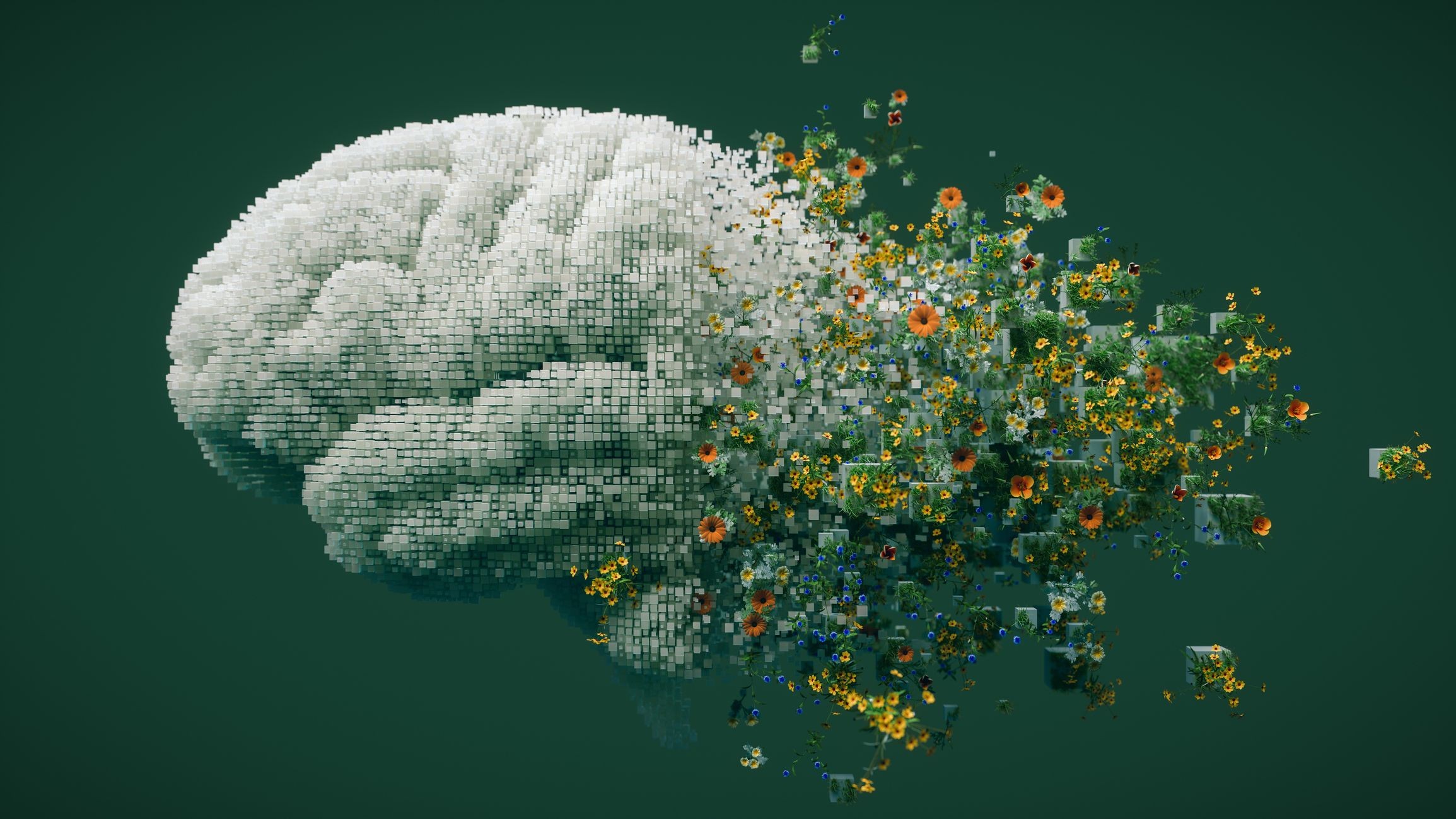
We’re running out of words.
Real ones. Written by actual humans. The timeline is tighter than we thought, some experts say it’s over by the end of this year. What happens next is a mess called model collapse. The machines eat their own tails, synthesize new data from old garbage, and then they start lying. Not just wrong answers. Total fabrication.
That’s not just annoying for a chatbot.
If an LLM running in a hospital starts misdiagnosing cancer because its training data has gone soft, you’ve got an existential threat on your hands. Yasser Roudi at King’s College London says the stakes couldn’t be higher.
“If while training another model they experienced model Collapse, these machines could misdiagnosed people.”
He didn’t say could like it’s a maybe.
So how do we stop the slide into nonsense? The answer is surprisingly simple. Just add one human data point.
Not a billion. One.
The slide to nonsense
We see small signs already. ChatGPT giving bland, smoothed-out answers. Hallucinations. Facts that sound right but aren’t. When LLMs train on data made by other LLMs, everything gets homogenized. The weird edges vanish. The variance gets eaten alive.
Early collapse looks like boring, generic text. Late stage is gibberish.
Nobody wants a model that thinks the sun rises in the west just to fill a token limit. But tracking this in massive systems is like finding a needle in a digital haystack. It’s too big. Too chaotic.
Tiny models, big truths
The researchers—teams from King’s College London, the Norwegian University of Science & Technology, and Italy’s Abdus Salam Centre—took a step back. They didn’t look at the monsters. They looked at exponential families. Smaller probability models.
Think coin flips. Bell curves.
Math that you can actually hold onto.
By studying these tractable models, they found the mechanism behind the decay. The “why.” And they found the cure. It doesn’t matter how much synthetic slop is in the training loop, even if 99.9% is machine-made, the system stays sane as long as there is a single anchor to ground truth.
A real image classified by a real human.
Just one.
This external data point acts as a gravity well for reality. It pulls the distribution back to where the truth lives. The researchers published this in Physical Review Letters back in May, proving the theory mathematically.
Next steps?
Real-world deployment is another story. We haven’t seen a major AI go completely mad in public yet. We mostly get weird poems and fake court cases. But the math doesn’t lie. The drift is there.
Roudi wants to test this on bigger beasts now. The ones that run the internet. If it holds, it changes everything for AI engineers building the next generation of ChatGPTs. They don’t need endless human datasets anymore. Just enough anchors.
It’s a weird save.
One human voice in a chorus of digital echoes is enough to keep the song recognizable.
How long can we maintain that thread though?