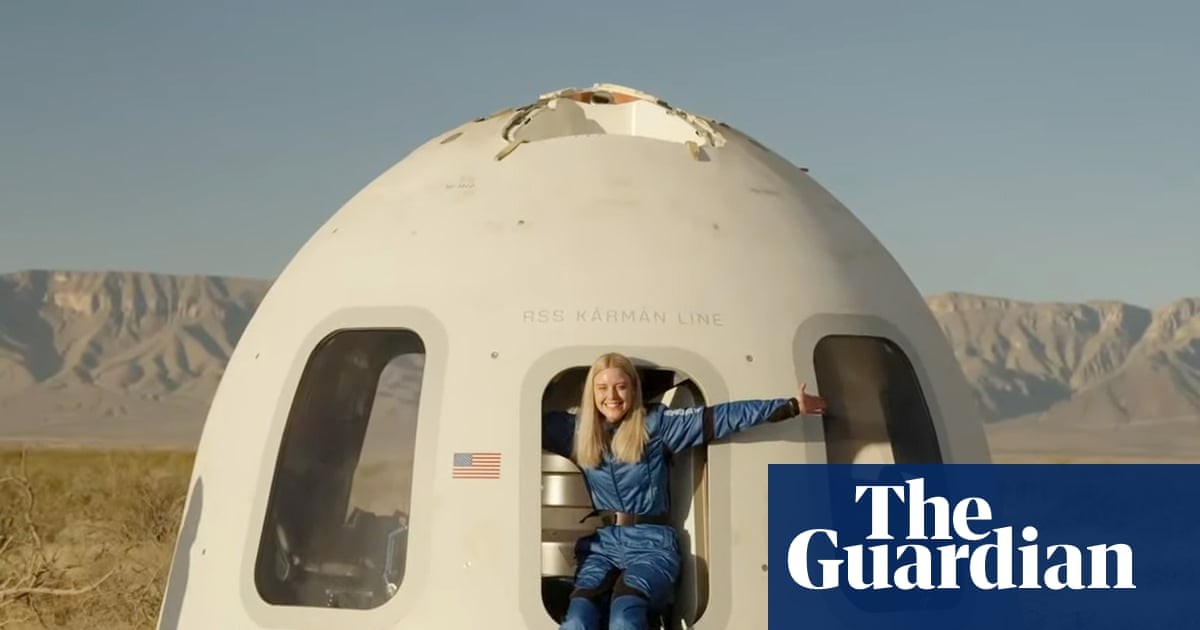
A German engineer living with paralysis became the first wheelchair user to experience spaceflight on Saturday, embarking on a suborbital journey with Blue Origin. Michaela Benthaus, who was paralyzed in a mountain biking accident seven years ago, joined five other passengers on the 10-minute flight above the Kármán line – the internationally recognized boundary of space – departing from West Texas.
Breaking Barriers in Space Tourism
Benthaus’s trip marks a significant step forward in accessibility within the burgeoning private space tourism sector. While Blue Origin has previously flown passengers with various disabilities, including those with limited mobility, impaired vision, and hearing, Benthaus’s participation represents the first instance of someone in a wheelchair reaching space. The company made only minor adjustments to accommodate her, demonstrating that their New Shepard capsule is designed to be more inclusive than traditional spaceflight systems.
The flight itself required no major changes to the spacecraft. Blue Origin engineers provided a transfer board for Benthaus to move between the capsule and her seat, and placed a carpet on the landing site to ensure immediate wheelchair access upon touchdown. An elevator was already in place at the launchpad to facilitate her access to the capsule.
The Broader Context: Space as a Frontier of Inclusion
This event is more than just a personal achievement; it highlights a shift in the perception of who can access space. For decades, space travel was reserved for highly trained, physically capable astronauts. Now, with the rise of commercial spaceflight, accessibility is becoming a real conversation. The European Space Agency (ESA) has also cleared a reserve astronaut with an amputation for a future flight to the International Space Station, signaling a growing acceptance of diverse space travelers.
The fact that this flight was privately funded, with ticket prices undisclosed, is also crucial. It demonstrates that the financial barriers to space access are falling, though not disappearing. This creates both opportunities and inequalities.
The Challenges Remain
Despite the progress, Benthaus’s case underscores the remaining limitations. She required assistance from retired SpaceX executive Hans Koenigsmann and Blue Origin engineer Jake Mills to exit the capsule post-landing, as she cannot walk. This is a stark contrast to astronauts who can self-evacuate in emergencies.
Benthaus herself acknowledges that societal inclusion lags behind technological possibilities. “I really hope it’s opening up for people like me, like I hope I’m only the start,” she stated, highlighting the need for broader systemic changes in accessibility, both in space and on Earth.
The flight brought the total number of Blue Origin space travelers to 86, signaling the company’s commitment to expanding access to space beyond traditional boundaries. Founded by Jeff Bezos in 2000, Blue Origin continues to develop larger and more powerful rockets, including the New Glenn, and aims to send landers to the Moon.
This mission shows that as commercial space travel matures, it has the potential to be more inclusive. However, it also reminds us that true accessibility requires not just technological solutions, but also a fundamental shift in attitudes and infrastructure.