
Metals dominate the periodic table. They are the most abundant elements we find, with only non-metals holding the minority share. They are dense. Mostly solid, though mercury defies that rule by staying liquid at room temperature. You can find them as pure elements or mixed together as alloys.
But what actually makes a metal a metal?
It comes down to two main traits: they shine, and they conduct. That luster is a physical property rooted in how electrons behave. And that conductivity? That is where the real utility lies.
How Metals Conduct Electricity
The defining feature of most metals is their ability to carry an electrical charge with minimal resistance. Electrons in a metal lattice aren’t locked in place. They are delocalized. They drift freely between atoms, creating a “sea of electrons.”
When you apply voltage, those electrons move. Fast.
This is why certain metals are preferred for wiring. Copper, aluminum, silver, and gold are the top contenders. Silver is technically the best conductor, but it is expensive and tarnishes. Gold doesn’t corrode, making it ideal for sensitive electronics, though it is soft. Copper offers the best balance of conductivity, cost, and flexibility. Aluminum is lighter and cheaper, often used in high-voltage transmission lines.
The Heat Connection
If electrons move easily for electricity, they also carry thermal energy efficiently. The same free electrons that zip around to conduct current also collide with atoms, transferring kinetic energy.
This is why a metal spoon gets hot almost instantly when left in a pot of boiling soup. Non-metals, like wood or plastic, lack that free-moving electron sea. They resist heat flow. Metals embrace it.
Why Does This Matter?
We rely on this behavior for everything. From the microchips in your phone to the power grid spanning continents. Without high-density, conductive materials, modern infrastructure collapses.
The next question is always how we extract these metals from the earth, and which processes are least damaging to the environment. The answer involves chemistry, energy, and a lot of heat.

Metals don’t just conduct electricity. They are also top-tier heat conductors. The reason is simple. They offer almost no resistance to high temperatures. This lack of friction allows thermal energy to flow through them with ease. That is why engineers and manufacturers rely on metals as primary channels for heat transfer. Think of a copper pot. Heat moves from the burner to the food fast. The metal facilitates this movement by surrendering to the thermal gradient.
The Physics of Plastic Deformation
Maleability is one of the most defining physical properties of metallic elements. It allows a solid mass to change shape under pressure. You don’t need magic. Just force. Continuous pressure. Hammering. Rolling. Or melting them down and casting them into a new form. This property makes metals incredibly versatile. They can be shaped into complex geometries that other materials cannot withstand.
However, there is a limit. You can only press so hard before the internal structure breaks. If you push a metal beyond its maleability and elasticity thresholds, it stops bending. It becomes brittle. It snaps. The malleable metal turns into a fragile element. It loses its ability to absorb stress and shatters instead. This transition from pliable to broken is a critical boundary in materials science.
Ductility and Wire Formation
Ductility often gets confused with maleability. They are related, but distinct. Maleability refers to compression. Ductility refers to tension. A ductile metal can be drawn out into a thin wire without breaking.
“Ductility allows metals to stretch under tensile stress, making them essential for electrical wiring and structural cables.”
This property is why copper and aluminum dominate the electrical grid. They can be pulled into long, thin strands that carry current over vast distances. The metal atoms slide past one another rather than snapping apart. This atomic sliding mechanism is what distinguishes true ductility from simple deformation.
When engineers select a material for a specific application, they look at both properties. Do you need a sheet that can be hammered thin? Look for maleability. Do you need a strand that can be pulled tight? Look for ductility. Most metals possess both, but in varying degrees. Gold is extremely ductile. Lead is highly malleable. The choice depends on the stress the final product will endure.
Real-World Implications
Understanding these limits matters. In construction, a beam must bend under load without breaking. That requires a balance of elasticity and ductility. In electronics, wires must be drawn into tiny diameters. That demands high ductility. If a manufacturer ignores these thresholds, the product fails. A wire snaps during installation. A sheet cracks during stamping.
The behavior of metals under stress is not random. It is governed by atomic lattice structures. Face-centered cubic lattices tend to be more ductile. Body-centered cubic structures can be more brittle at low temperatures. This is why some steel pipelines fail in arctic conditions. The temperature drops. The ductility vanishes. The metal remembers its fragility.
We rely on these properties every day. We don’t think about the hammer blows that shaped a car door. We don’t notice the copper pulled into a thread inside a wall. We just use the objects. But the utility of these items comes from our ability to manipulate their atomic structure. We push. We pull.


The strength behind the shine
Think about the wires running through your walls or the cables holding up a bridge. They aren’t just sitting there. They are under tension, resisting the pull of gravity and electricity. This ability to be drawn into thin, strong threads is ductility. It’s not just about looking good. It’s about surviving deformation. You can stretch these materials far before they finally snap.
But there is more to it than just stretching.
The resilience of metal
Tenacity is the real hero here. It’s the resistance to breaking during deformation. Metals don’t give up easily. Their molecules cling together with fierce loyalty. This cohesion is what links tenacity directly to malleability and ductility. A material can be bent, hammered, or pulled. It absorbs the shock. It doesn’t shatter like glass. It bends. It holds.
This property is why we trust steel in skyscrapers and aluminum in airplane fuselages. It’s not just strong. It’s tough. It survives the journey from raw ore to finished product without falling apart.
Mixing it up: alloys
Pure metals are rare in the wild. Most of what we use are alloys. These are homogeneous mixtures of two or more metals. The result is something stronger, more耐腐蚀, or more workable than the individual components.
- Bronze mixes copper and tin. Ancient civilizations relied on it for tools and weapons.
- Steel combines iron with carbon. It built the modern world.
- Brass blends copper and zinc. It sounds beautiful in instruments.
These mixtures allow engineers to tune properties. Need corrosion resistance? Add chromium. Need hardness? Add carbon. The flexibility of alloying is what makes metals so versatile.
The light show
Metals have a unique relationship with light. They reflect it. Not just any reflection, though. They create a distinctive luster. This metallic shine isn’t just aesthetic. It’s a result of free electrons moving across the surface. These electrons absorb and re-emit photons.
The intensity varies. Gold shines with a warm, heavy glow. Silver reflects with a cool, sharp brightness. Platinum holds a subtle, understated gleam. This reflectivity is why metals are used in mirrors, reflectors, and jewelry. It’s also why they catch the eye.
Beyond silver and gold
We often think of metals as silver or gray. That’s a common misconception. While many are indeed silver-white, others defy the stereotype.
Copper is reddish-brown. Gold is yellow. Cesium has a pale gold hue. These colors come from how the metal’s electron structure interacts with light. Some wavelengths are absorbed. Others are reflected. The ones that bounce back give us the color we see.
This variety matters. It’s not just about beauty. It’s about identification and application. A copper wire looks different from an aluminum one. That visual cue is part of their practical utility.
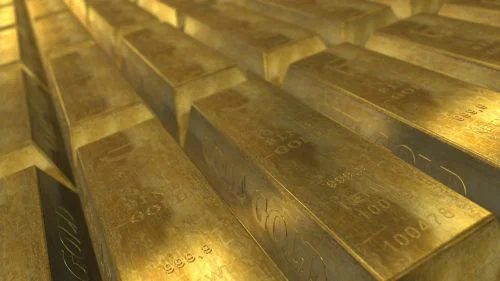

We’re conditioned to think of metals as a monolith. Cold, grey, industrial. But look closer and the illusion shatters. Gold isn’t grey; it’s a heavy, stubborn yellow. Copper sheds the dullness for a distinct reddish hue. The periodic table is full of these exceptions.
The Liquid Exception at Room Temperature
Most metals hold their shape. At standard room temperature, they are rigid solids. You can stack them. You can hammer them. There is one glaring exception that breaks the rule.
Mercury.
It’s the only metal that remains liquid under normal conditions. It beads up on surfaces. It flows. It doesn’t sit still. But this state isn’t permanent. Heat them up enough and most solids will eventually melt into pools. Cool them down and liquids will freeze into rigid blocks. Temperature dictates the form.
Giving Up Electrons
The chemistry behind this behavior is rooted in how these atoms interact with their surroundings. Metals possess a specific chemical weakness. They have low electronegativity. They also have low ionization energy.
Put simply, they don’t hold onto their electrons very tightly.
When a metal reacts, it’s usually because it’s willing to give up an electron. It’s a generous trait in a competitive atomic environment. The fewer electrons an element has in its outer shell, the more metallic it behaves. It’s easier to part with what you barely keep. This willingness to surrender electrons is what drives much of their reactivity.