
It started as a global phenomenon. Then it became a global headache.
Squid Game isn’t just the most-watched series in Netflix history. It’s a cultural force that has spilled out of the screen and into the sandbox. And the fallout is messy. The dystopian horror hit from South Korea is now facing intense scrutiny from educators and parents who say young children are treating its brutal violence as playground fodder.
The warnings are coming in from both sides of the globe. In Southern England, a local council sent an email to families urging them to “be vigilant.” Their concern? Reports indicated that young people were copying the show’s games and violence. It wasn’t an isolated incident. Schools in Sydney and Western Australia issued similar alerts, noting that children as young as six were reenacting the deadly challenges.
The Allure of the Deadly Doll
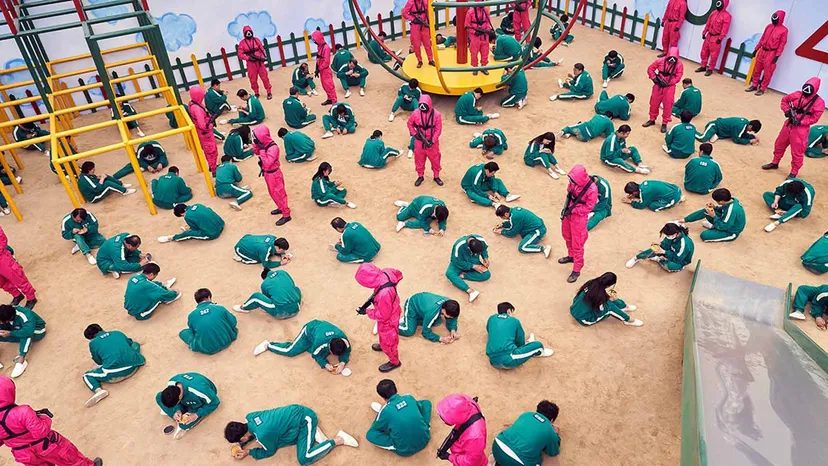
Why would kids mimic a show where losers get executed? The answer lies in the twisted simplicity of the premise. Squid Game takes classic Korean children’s games and ramps up the stakes to lethal levels. Players compete for a cash prize, but failure means death.
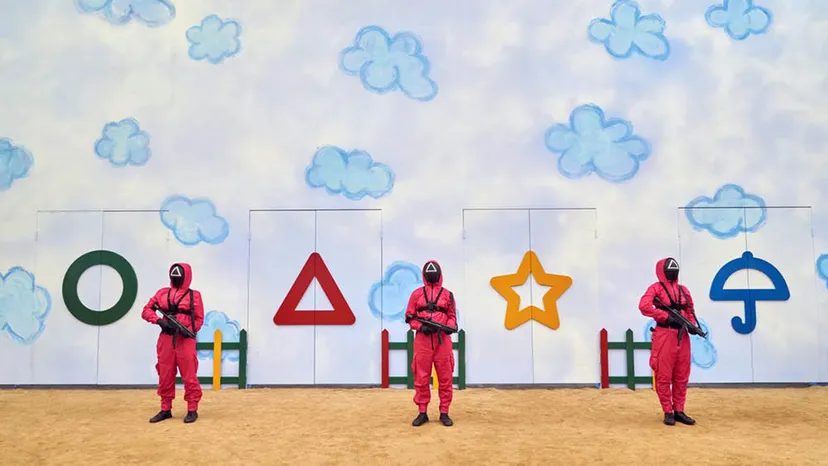
The visual language is stark. Beautifully stylized arenas replace old playgrounds. An adult-sized slide becomes a death trap. A traditional hopscotch grid is painted on concrete that soaks up blood. The contrast between innocent play and grotesque violence is the show’s hook. For adults, it’s a critique of capitalism. For a six-year-old, it might just look like a weird game with cool masks.
Squid Game on TikTok and YouTube: The Real Danger
The controversy isn’t just about kids watching the R-rated series. It’s about their exposure to the idea of the show through algorithms designed for them.
While the show itself is rated TV-MA in the United States, its DNA is everywhere on social media. TikTok and YouTube are saturated with content that makes Squid Game accessible, shareable, and fun for children. This digital presence has created a craze within children’s online cultures that parents might not even realize exists.
The Roblox Connection
A major driver of this trend is Roblox. The user-generated game platform allows players to create and share their own experiences. Naturally, creators have jumped on the Squid Game bandwagon.
Search for Squid Game on Roblox, and you will find hundreds of user-created games. These range from simple recreations to complex experiences that mimic the show’s challenges. Videos featuring these games have amassed hundreds of thousands, sometimes millions, of views.
On YouTube Kids—platforms specifically designed for viewers under 12—content creators have capitalized on this interest. You’ll find tutorials on how to draw the characters. You’ll find gameplay videos where children play Squid Game inspired challenges in Roblox.
The “Red Light, Green Light” segment has emerged as the standout trend. It’s easy to replicate. It’s visual. It’s competitive. Kids are playing it in Minecraft, in Roblox, and increasingly, in real life.
The Memeification of Violence
Central to this trend is the giant animatronic doll. In the show, it acts as a deadly motion sensor. On TikTok and YouTube thumbnails, it is meme-ified. It’s cute. It’s catchy. It’s safe for branding.
Most of the kids’ YouTube videos are innocuous. They don’t show blood. They don’t show death. They show children playing a game inspired by the show. But the context matters. The imagery of the doll, the masks, and the specific games has seeped into digital content explicitly targeting young children.
Parents are now left with a difficult question. How do you stop a trend that thrives on algorithmic visibility? The show itself is behind a paywall. But the culture it spawned is free, endless, and increasingly imitated by the very demographic the show is designed to scare.
The playgrounds are changing. The screens are watching. And the line between play and peril is blurring faster than anyone anticipated. What happens when the next game gets invented offline?
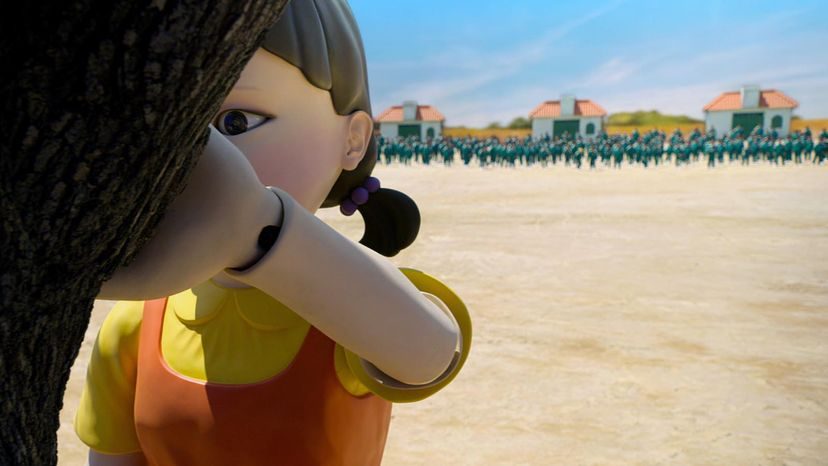

It makes sense that kids are obsessed with Squid Game. The show is a visual feast of primary colors, giant doll heads, and playground games like red light, green light. It looks like a cartoon. It feels like a game. But beneath the bright, childish aesthetics lies a brutal, adult narrative about debt and death. This disconnect is exactly why the show has gone viral among children, despite being rated for mature audiences.
The problem isn’t just this one show. It’s a symptom of a much larger, rotting infrastructure.
The digital boundaries between content made for adults and content made for kids have always been blurry. But lately, that blur has become a wash.
The TikTok and YouTube Safety Crisis
YouTube has been in the crosshairs for years. The platform has faced relentless scrutiny for hosting inappropriate content aimed at children. Think horror shorts, scary stories, or videos that use familiar characters to depict disturbing scenarios.
TikTok is in the same boat. Parents are rightly concerned about the app’s safety protocols. Kids are watching anti-vaccine rhetoric, dangerous challenges, and other problematic content. The app officially allows full access only to users over 13. But everyone knows that’s a fiction. Children much younger are using it, often with little to no oversight.
Both platforms are currently facing a U.S. Senate hearing on kids’ safety. Lawmakers are asking the hard questions: How do you protect users who are too young to understand the risks?
Why the $170 Million Fine Didn’t Fix Anything
In 2019, the U.S. Federal Trade Commission slapped YouTube with a historic $170 million fine. The reason? The platform failed to properly disclose data collection practices from children. It was a record-breaking penalty at the time.
The industry promised sweeping changes. They promised to make the distinction between adult and children’s content clearer.
Here is what actually happened:
- Creators are now required to self-report whether their content is made for kids.
- Machine-learning algorithms were deployed to identify videos that clearly target young audiences.
It sounds robust. It sounds like a solution. It isn’t.
The system relies heavily on self-reporting. A creator can label a video as “for everyone” even if it’s clearly designed to hook a child’s attention through loud noises, bright colors, and repetitive actions. The algorithms are not perfect. They miss context. They miss nuance.
“The distinction between adult and children’s content is clearer on paper, but the execution is fragmented.”
This gap is where shows like Squid Game thrive. Algorithms might flag violent content, but do they flag psychological horror wrapped in playground imagery? Probably not. The metadata doesn’t scream “adults only.” The visuals don’t trigger the safety filters. The kids click anyway.
And the parents? They are left scrambling, trying to filter content that was designed to bypass those very filters.
The Senate hearings are important. The fines are substantial. But until the algorithms understand intent rather than just keywords, the lines will stay blurred. Kids will keep clicking. And the platforms will keep collecting data.
Why Parents Are Panicking Over Kids’ ‘Squid Game’ Content
The disconnect is stark. YouTube is not broadcast television, yet the algorithm serves up the same chaotic mix of content to kids on the main platform and YouTube Kids. The result? Material that bears little resemblance to traditional children’s programming, yet somehow mimics its structure enough to confuse adults.
Take the recent wave of videos riffing on Squid Game. They aren’t just clips. They are mashups. These videos hijack trending themes, search terms, and character archetypes, often stuffing thumbnails with recognizable faces to bait clicks. It’s a longstanding trend on the platform, one that prioritizes engagement over appropriateness.
Now, global anxiety is spiking again. The panic mirrors the “Momo” phenomenon of 2018 and 2019. Back then, a photo of a Japanese sculpture—stripped of its original context—went viral. The internet decided it was a sinister entity named “Momo.” News cycles exploded with claims that this creature was lurking in children’s YouTube videos, encouraging deadly games and challenges.
Official warnings were issued to parents. Vigilance was demanded. The threat seemed real.
It turned out to be a hoax. A digital ghost story built on parental fear rather than actual algorithmic danger.
Today’s Squid Game scare follows the same script. The fear isn’t necessarily about the show itself, but about how easily adult-oriented media bleeds into spaces designed for young children. It highlights a deep discomfort with the unruly tentacles of streaming media, which refuses to respect age gates or content boundaries.
Parents are right to be wary, but their anxiety often targets the wrong enemy. It’s not just about “mashup” content. It’s about the broader, unregulated web where any adult theme can be repackaged for a five-year-old’s attention span. The real issue is how streaming challenges our existing definitions of “child-appropriate.”
This isn’t a new problem. It’s an evolution of older concerns about children’s interaction with the web. Squid Game is just the latest vessel for those fears. The content changes. The panic remains.
The Science of Why Kids Hate Their Parents’ Favorite Shows
Let’s be honest. You might think your kid is just being difficult. Spoiler alert: they aren’t. It’s biology.
Jessica Balanzategui, a senior lecturer in cinema and screen studies at Swinburne University of Technology in Hawthorn, Victoria, Australia, points out that the disconnect isn’t about taste. It’s about how young brains process information. When parents try to force their beloved classics down a child’s throat, they’re fighting a losing battle against developmental psychology.
Why “Baby Shark” Beats Your Favorite 80s Blockbuster
Kids don’t want nuance. They want repetition. They want patterns they can predict. Your nostalgic favorite might rely on complex character arcs, subtle humor, or rapid-fire editing that leaves a child’s developing brain scrambling to keep up.
Children’s television, on the other hand, is engineered for their specific cognitive stage. It moves slower. It repeats key phrases. It uses bright, primary colors that stimulate visual processing without overwhelming it. When a parent watches a show like Sesame Street alongside their toddler, they see educational value. The child sees a friend who talks in loops and solves problems in three minutes flat.
It’s not that kids have “bad” taste. It’s that their taste is optimized for learning through repetition and social bonding.
The Danger of Forcing Nostalgia
Forcing a child to watch The Empire Strikes Back or Full House isn’t just annoying. It can backfire.
“When adults project their own nostalgic attachment onto children’s media, they often ignore the developmental needs of the viewer.” — Jessica Balanzategui
This projection creates friction. The child feels misunderstood. The parent feels dismissed. The relationship suffers. Instead of sharing a bonding moment, you’re creating a power struggle over a remote control.
Kids need media that meets them where they are. That means slower pacing. Clearer narratives. Songs that stick. It’s not about dumbing things down. It’s about speaking their language.
What Parents Can Do Instead
- Watch what they watch. Seriously. Sit down. Watch Bluey or Paw Patrol with an open mind. You might find the humor lands differently.
- Ask questions. Instead of explaining why your show is better, ask why they like theirs. Listen to the answers.
- Respect their preferences. Just because you loved He-Man doesn’t mean they need to love Masters of the Universe. Let them have their own media universe.
The goal isn’t to win the argument. It’s to connect. And sometimes that connection happens when you stop trying to teach them about cinema history and start watching what’s actually on their screen.
It’s messy. It’s loud. It’s repetitive. But it’s theirs.