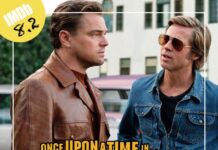
We’ve all heard the lines. We’ve quoted them at parties, tattooed them on our arms, and argued over them in forums. But when you strip away the Tarantino flair and the cool jazz soundtrack, what are these characters actually saying? They’re preaching a philosophy that feels dangerously simple in a world obsessed with image.
The Vincent Vega Take: Confession Clears the Ledger
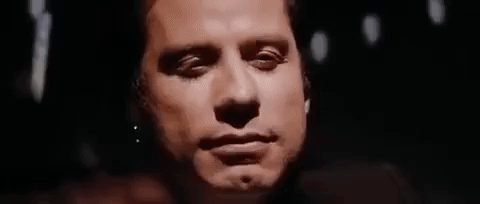
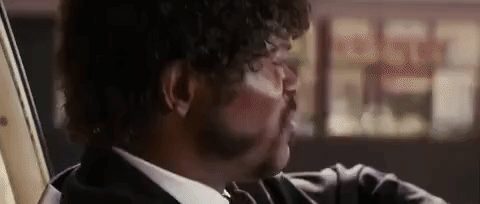
Let’s start with Vincent Vega. He drops this bombshell: “It’s a stupid and embarrassing thing. But if a person acknowledges that they have committed a sin, all their actions are forgiven in that instant.”
It’s not just about religious absolution. It’s about the psychological weight of denial. Vincent argues that pride is a trap. You can’t move forward if you’re stuck trying to prove you’re right. Once you admit you messed up—once you say “I did this, and it was wrong”—the guilt evaporates. The slate isn’t just wiped clean; it’s incinerated.
Think about it. How many times have you held onto a mistake because admitting it felt like weakness? Vincent suggests that weakness is the real enemy. Strength is looking at your screw-up and owning it. Instant forgiveness isn’t a gift from the universe; it’s a release you grant yourself.
The Marsellus Wallace Verdict: Pride Causes Pain
Then there’s Marsellus Wallace. The boss. The man who owns half of Los Angeles and still has to worry about his wife’s safety. His take is even more blunt: “Screw pride! Pride only causes pain. It never helps.”
This isn’t poetic. It’s practical. Marsellus knows that ego gets people killed. In his world, reputation is everything, yet he tells you to dump it. Why? Because pride is a liability. It makes you rigid. It makes you refuse help when you need it. It makes you take risks you shouldn’t take just to save face.
Pride doesn’t pay the bills. It doesn’t keep you alive. It just makes the inevitable suffering hurt more. If you’re too proud to ask for help, you’re doomed to suffer alone. Marsellus is saying: drop the act. The pain of humiliation is temporary. The pain of isolation, of having gone it alone because you couldn’t swallow your ego? That lasts forever.
The Real Lesson for Pop Culture Fans
We live in an era of curated perfection. Social media feeds are highlight reels. Everyone is winning. Everyone is right. And yet, these two characters from a crime movie give us the antidote: admit you’re flawed, and get over it.
It’s counter-cultural. It’s messy. But it’s honest.
Vincent talks about the relief of confession. Marsellus talks about the futility of ego. Together, they outline a survival strategy for anyone tired of performing. You don’t need to be perfect. You just need to be real. And once you’re real, the noise stops. The pride dissolves. And you’re left with something that actually matters.
What happens when you stop caring what people think? You breathe. You breathe again. And then you deal with the problem. That’s it. That’s the whole movie.
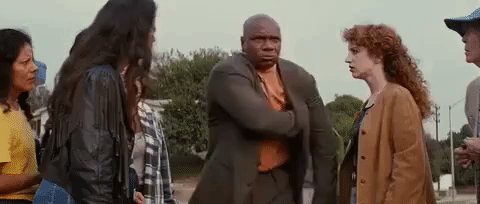

Great writing doesn’t always look like Shakespearean sonnets or complex political treatises. Sometimes, it looks like a guy named Jules Winnfield explaining the moral implications of eating a Quarter Pounder with Cheese before blowing someone’s head off. Or it looks like Vincent Vega trying to figure out what to order at a diner in Amsterdam while avoiding eye contact with Mia Wallace.
We often mistake “personality” in fiction for loudness. Quips. Witty comebacks. The ability to shut down an opponent with a single, perfectly timed insult. But the best characters in pop culture history? They understand silence. They understand the awkwardness of intimacy. They know that being “special” isn’t about having the best pickup line; it’s about knowing when to shut up and just be there.
The Myth of the Perfect One-Liner
Let’s look at The Wolf, or as he’s known in the film, Jules Winnfield from Pulp Fiction. He’s a hitman. A philosopher of the underworld. A man who quotes Ezekiel 25:17 like it’s a bedtime story. But here’s the thing: his most memorable moments aren’t his prayers. They’re his conversations.
There’s a scene where he and Vincent are discussing the ethics of McDonald’s in Europe. It’s mundane. It’s silly. It’s completely irrelevant to the plot. And yet, it’s one of the most human exchanges in Quentin Tarantino’s filmography. Why? Because it shows two men who are trapped in a job that demands they be cold, trying to find warmth in the absurd.
“A Quarter Pounder with Cheese. They call it a Royale with Cheese.”
This isn’t just world-building. It’s character development. It tells us that these men are trying to impose order on chaos. They’re trying to make sense of a world that makes no sense. And that’s why it works.
The Silence Between the Lines
Now, shift gears. Let’s talk about Mia Wallace. She’s the boss’s wife. She’s dangerous. She’s addictive. She’s the kind of woman who could ruin your life with a smile and a hit of heroin. But her most defining trait isn’t her danger. It’s her comfort.
There’s a moment in the film where Vincent and Mia are at Jack Rabbit Slim’s. They’re dancing. They’re laughing. They’re having a good time. And then, they’re not. The music stops. The room is quiet. And instead of filling the silence with small talk, they just… exist in it.
This is the “special someone” dynamic that writers struggle to capture. We’ve all been there. You meet someone. You click. And for a second, you forget to perform. You forget to be witty. You just sit in the awkwardness together. And that’s when you know it’s real.
Mia Wallace doesn’t need to be clever in every scene. She needs to be present. When she’s with Vincent, she’s not playing a role. She’s not the cool girl. She’s not the dangerous femme fatale. She’s just a person. And that’s far more compelling.
Why Awkwardness Wins
So why do we remember these characters? Why
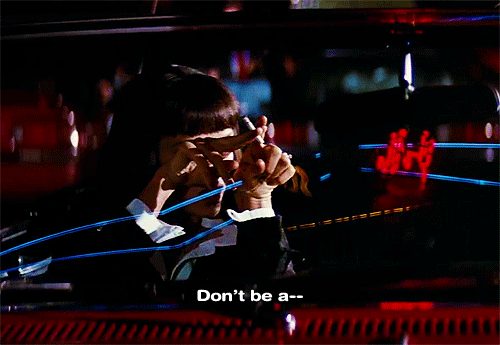

The quotes aren’t just lines. They’re cultural artifacts.
When you hear “Cevaplarım seni korkutuyorsa, korkutucu sorular sormaktan vazgeç”, you’re not just hearing Turkish subtitles. You’re hearing the cadence of Samuel L. Jackson’s most famous character, Jules Winnfield from Pulp Fiction. The sentiment is clear. If your answers scare people, maybe stop asking questions that terrifying. It’s a power move disguised as a philosophical observation.
Then there’s the advice for playing the blind man. “Bak, kör adamı oynamak istiyorsan çobanın yolundan git ama benim gözlerim ardına kadar açık.” Look. If you want to play a blind man, follow the shepherd’s path. But my eyes are wide open. This is method acting advice delivered with a smirk. It highlights the precision required to sell a lie on screen.
These lines stick because they’re delivered with absolute conviction. Jackson doesn’t just recite them. He owns them.
The Linguistic Weight of Tarantino Dialogue
Quentin Tarantino’s scripts rely on rhythmic repetition. The dialogue feels like poetry until it snaps into violence.
The first quote plays on the idea of accountability. Why do we fear what we don’t understand? Jules challenges the listener. Are you afraid of the answer? Or are you afraid of the question? It’s a common trope in crime thrillers, but Jackson’s delivery makes it feel personal.
The second quote is about observation. A blind man relies on touch and sound. He follows the shepherd because the shepherd knows the terrain. But the character speaking has sight. He sees everything. The contrast creates tension. It’s a subtle reminder that perception is reality.
Why These Lines Define a Generation
Fans quote these lines because they offer a sense of control. In a chaotic world, saying something sharp and precise feels empowering.
Social media has amplified this. Clips circulate. Memes are created. The Turkish translation adds a layer of local flavor, making the global appeal of Pulp Fiction accessible to new audiences. It’s not about the language. It’s about the attitude.
When you type these phrases into a search bar, you’re not looking for definitions. You’re looking for the vibe. The cool factor. The connection to a character who lived by his own code.
Jackson’s performance anchors the film. Without his intensity, these lines would just be text. With it, they become legends.
The impact lingers. Years after the movie’s release, people still stop and listen when someone speaks like Jules. It’s a testament to the power of good writing and better acting.
What other lines from the 90s do you hear in everyday conversation?
Probably more than you realize.

It’s a universal social hack. You know the one. You’re stuck in an elevator with a colleague. The doors close. The air gets thin. Someone has to speak. So, you talk about the weather. Or the traffic. Or how much you love the new bagel place downtown.
Why?
Because silence feels like a failure.
We treat quiet like a void that must be plugged with noise. Any noise. Even if it’s meaningless.
The tyranny of the small talk
Think about Mia Wallace. She had a rule. “The day I forgot my past, I’d be free.”
Freedom from memory. From history. From the weight of who you were.
Now think about Pumpkin. “The days I remember are past, the days I will remember have begun.”
Time is shifting. Memory is fading. But the need to connect? That stays.
When we’re alone, we are whole. When we’re with others, we fracture. We break ourselves into pieces to fit together. Small talk is the glue.
It’s not about information. It’s about safety.
If I ask you how your weekend was, and you say “fine,” we both win. We’ve acknowledged the other person. We’ve established a boundary. We haven’t gone too deep. We haven’t risked rejection.
We’ve just passed the time.
Why we fear the pause
Silence isn’t empty. It’s heavy.
In a conversation, a pause can feel like a cliff. One person stops talking. The other rushes to fill it. Not because they have something to say. But because the silence feels like judgment.
Are they bored?
Do they think I’m strange?
Is this awkward?
So we talk about the weather. Again.
It’s a defense mechanism. We use trivia to keep intimacy at arm’s length. Small talk is a moat around the castle. It keeps the unknowns out.
But it’s exhausting.
We perform. We curate our personalities. We become characters. Mia Wallace didn’t want to remember her past. Maybe because the past is messy. Real. Uncontrollable.
Small talk is controlled. Safe. Predictable.
The cost of constant noise
We live in a world of constant input. Notifications. Emails. Streams of consciousness.
We’ve forgotten how to sit with ourselves.
When was the last time you just were? No phone. No podcast. No conversation. Just you.
It’s terrifying.
Because without the noise, you hear your own thoughts. And they’re loud.
We fill the void with words because we’re afraid of what we’ll find if we stop.
Pumpkin talks about days past and days to come. The present moment is slippery. It escapes. We grab at it with chatter.
But the present is where life happens. Not in the recap. Not in the preview. Now.
Breaking the spell
You don’t have to speak.
Next time you’re in an elevator. Or a waiting room. Or a car with someone you know.
Try silence.
Let it sit.
Let it breathe.
See what happens.
Does the world end?
No.
Does it get awkward?
Maybe
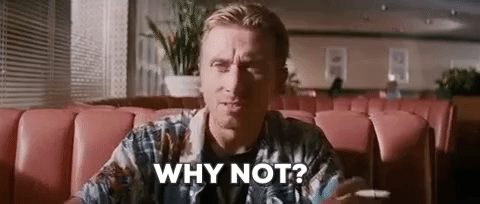


Quentin Tarantino didn’t just write Pulp Fiction. He built a language. It’s not just about the plot, which is a fractured diamond of crime gone wrong in Los Angeles. It’s about the rhythm. The way these characters speak defines them more than their actions do. We remember the lines because they feel real, yet heightened. Like life, but with better timing.
Jules Winnfield owns the room. He doesn’t just enter; he arrives with a mission and a philosophy. His iconic line isn’t just cool. It’s foundational. “Dogs have owners. People have owners. Who owns you?” No, wait. That’s the biblical quote. The core truth he lives by is simpler. “Köpekler kişilik sahibidirler. Kişilik her şeyi değiştirir.” Dogs have personality. Personality changes everything. It’s a statement on identity. On how who you are matters more than what you do. Jules believes in redemption, or at least the performance of it. His personality shifts from hitman to preacher. It alters the scene. It alters the movie’s trajectory.
Then there’s Vincent Vega. He’s the wildcard. The guy who thinks he knows the game but is actually just playing it by ear. His advice is straightforward. Brutal. “Kibritle oynarsan, yanarsın.” If you play with matches, you burn. It’s a warning about risk. About hubris. Vincent plays with fire constantly. He’s careless. He’s charismatic. But he’s also doomed. The line isn’t just slang. It’s foreshadowing. It’s the movie’s moral compass pointing at his head.
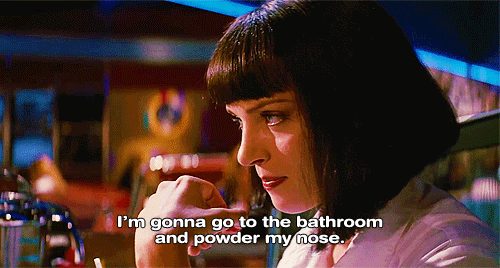
And Mia Wallace? She’s the eye of the storm. The femme fatale with a pulse. She’s not just a plot device. She’s a vibe. Her question hangs in the air like cigarette smoke. “Also, doesn’t it get more exciting when you don’t make a promise?” It’s a challenge. To the audience. To Vincent. To the viewer. Promises are boring. Predictability is the enemy of art. And life. Mia thrives in the uncertainty. She wants the thrill. The danger. The lack of commitment. It’s why she’s memorable. Why she’s iconic.
The Architecture of Cool
Why do these lines stick? Why do we quote them twenty-five years later?
It’s the specificity. Tarantino doesn’t write generic dialogue. He writes real talk. About burgers. About foot massages. About the meaning of life, delivered while cleaning blood off a car seat. It’s juxtaposition. High culture meets low stakes. Or low stakes meet high violence.
Think about the diner scene. Pumpkin and Honey Bunny. They talk about burgers like they’re discussing world peace. Then they pull guns. The shift is jarring. It’s funny. It’s terrifying. It’s Pulp Fiction.
The script was released as a book. It’s taught in film schools. Not just for structure. But for voice. Each character has a distinct rhythm. Jules is biblical and precise. Vincent is casual and evasive. Mia is playful and dangerous. Jules is heavy. Vincent is light. Mia is electric.
Personality as Plot
Let’s go
The Tarantino Effect: Why “Realism” and Burgers Rule Hollywood
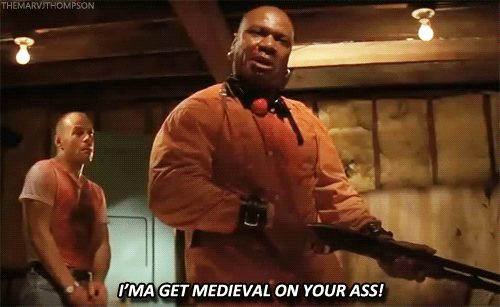
You look around the industry and what do you see? A sea of actors convinced their messy, unpolished authenticity is going to age like fine wine. They’re wrong. Most of it doesn’t. It goes sour. Fast.
“Görüyorsun ki bu iş ağzına kadar gerçekçi olmayan piçlerle, şarap gibi yıllanacaklarını sanan piçlerle dolu.”
Marsellus Wallace
It’s a harsh take, but there’s a grain of truth in the cynicism. Realism in cinema is often just a costume people wear to look intelligent. Meanwhile, the things that actually stick? The absurd ones. The ones that make no sense until they do.
Take breakfast. Or at least, the movie version of it.
The Theology of the Quarter Pounder
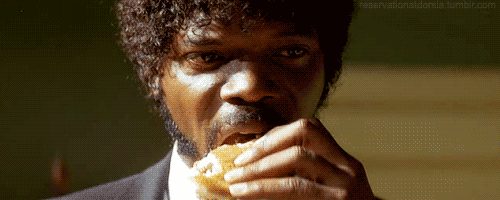
Forget the kale smoothies. Forget the artisanal toast. If you want fuel for the soul, you need a quarter pounder.
“Hamburger! Her besleyici kahvaltının temeli.”
Jules Winnfield
It’s not just food. It’s a philosophy. In a world that tries to over-complicate everything, there is something profoundly grounding about a cheeseburger. It’s simple. It’s direct. It doesn’t ask for permission.
The industry loves to pretend that complex, mumble-core realism is the peak of artistic achievement. But the culture? The culture remembers the burgers. The culture remembers the lines that made you laugh when you had no right to laugh.
Why We Crave the Absurd
Why does this matter? Because we’re tired of being told how to feel. We’re tired of actors wincing on cue while holding a prop phone. We want the guy in the suit who quotes scripture before putting a bullet in a dealer’s knee. We want the certainty of a good cheeseburger when the world is fuzzy.
Realism is fragile. It breaks under scrutiny. A burger? A burger holds up. It’s durable. It’s iconic. It doesn’t try to be deep. It just is.
And that’s why it lasts.
The Aftermath of the Split
The dust hasn’t quite settled. Reports are swirling about who said what, who left first, and who is holding the purse strings. It’s messy. It’s inevitable. When two massive brands merge for just a few years and then tear themselves apart, you don’t get a clean break. You get litigation. You get leaked emails. You get a PR team working overtime to spin the narrative that “it was for the best.”
Which products will stay?
This is the question everyone is typing into search bars right now. Will the co-branded sneakers still be available? The answer is complicated. Inventory that was already shipped to retailers generally stays on shelves until it sells out. But new production? That’s a different story. Companies usually pause manufacturing during the wind-down phase to avoid holding dead stock. If you’re looking for a specific colorway, you might want to check secondary markets soon. Prices are already ticking up for limited editions that were produced in the final months of the partnership.
Where do the fans go?
Loyalty doesn’t transfer easily. Fans of Brand A don’t automatically switch to Brand B just because the logo changed. The emotional connection was with the combination, not just one of the logos. This creates a vacuum. A space where hype used to be. Retailers are seeing a dip in foot traffic for those specific drop days. The energy is gone. Replacing that cultural moment won’t happen overnight. It takes years to build a subculture, and only weeks to dismantle it.
The financial fallout
Investors are watching the quarterly reports closely. Stock prices for both parent companies have seen volatility. Some analysts predict a short-term dip due to lost licensing fees. Others argue that the separation allows each brand to operate more efficiently without the friction of a forced marriage. The truth is probably somewhere in the middle. Margins might improve in the long run, but the short-term hit to revenue from the discontinued line is real.
What’s next for the designers?
Both creative directors have hinted at new projects. Teasers are dropping. Dark images. Fragmented logos. The mystery is part of the marketing now. They know their audience is hungry for the next big thing. The hiatus from the collaboration gives them time to rethink their aesthetics. To move away from the constraints of the joint venture. To see if they can command their own spotlight again.
The silence is louder than the launch ever was.