


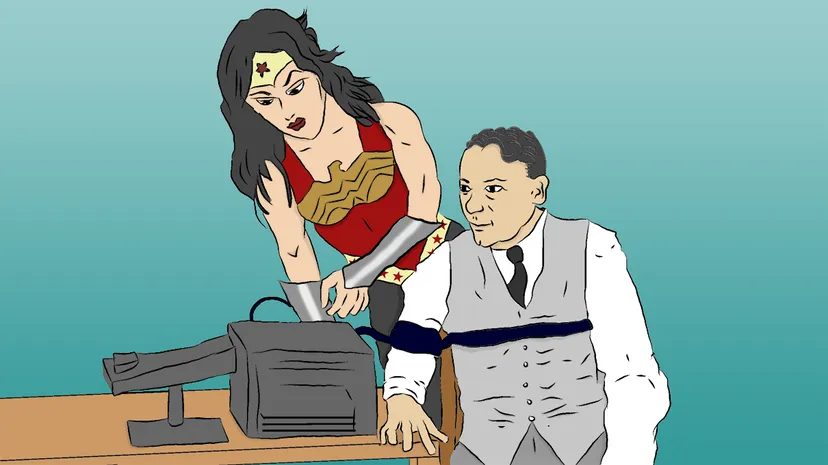
2016 treated Wonder Woman like the enemy.
It was supposed to be her centennial-adjacent glory year. The 75th anniversary. A time for celebration. Instead, it was a masterclass in public relations failure.
In March, she finally hit the big screen. Batman v Superman didn’t just miss the mark. It trampled it. Critics shredded the appearance. Fans groaned. It was a slugfest that felt more like an apology tour than a debut.
Then came the UN.
She was named an honorary ambassador for women and girls. High honor. Global stage. Two months in, the deal collapsed. The ambassadorship was revoked. A twelve-month campaign lasted less than sixty days. Humiliating.
The comic book side wasn’t spared either. Legend of Wonder Woman, widely praised for its fresh take, got the axe. Canceled. Gone.
And Frank Cho? He threw a tantrum. He wanted to draw Wonder Woman’s underwear on a cover. He didn’t get his way. So he made a scene. Publicly.
A terrible year. A no-good, very bad year.
But there’s a secret history here. A hidden layer most storytellers ignore.
Her creator, William Moulton Marston, didn’t just want to sell comics. He wanted to teach.
Marston saw Wonder Woman as an educational tool. He embedded his controversial beliefs into the character’s DNA. These ideas were radical then. They’re still polarizing now.
Jill Lepore pulled the strings together in 2014. Her book, The Secret History of Wonder Woman, is the definitive guide. She exposed the three core fixations Marston baked into the Amazon.
Lie detection.
Matriarchal uprising.
Sexualized bondage.
These weren’t random quirks. They were the mission statement.
Marston believed in truth above all. His lie detector device, the polygraph, wasn’t just a gadget. It was a moral compass.
He also believed women ruled best.
The comics showed this clearly. Themyscira wasn’t just an island. It was a blueprint. A matriarchal society where men were secondary. This was a direct challenge to the status quo.
Then there was the bondage.
It looked like fetish art to the censors. Marston argued it was about consent. About trust. About submission as strength.
The comics were a vehicle for these ideas.
Today, we see the superhero as a toy. A brand. A box office number.
Marston saw something else.
He saw a lesson.
Most of us forget that.
We remember the suit. The lasso. The tiara.
We don’t remember the lectures.
The polygraph.
The political theory.
The shame.
Wonder Woman survived 2016. Barely.
She’s still out there.
Waiting for someone to ask why.

From Blood Pressure Cuffs to the Lasso of Truth
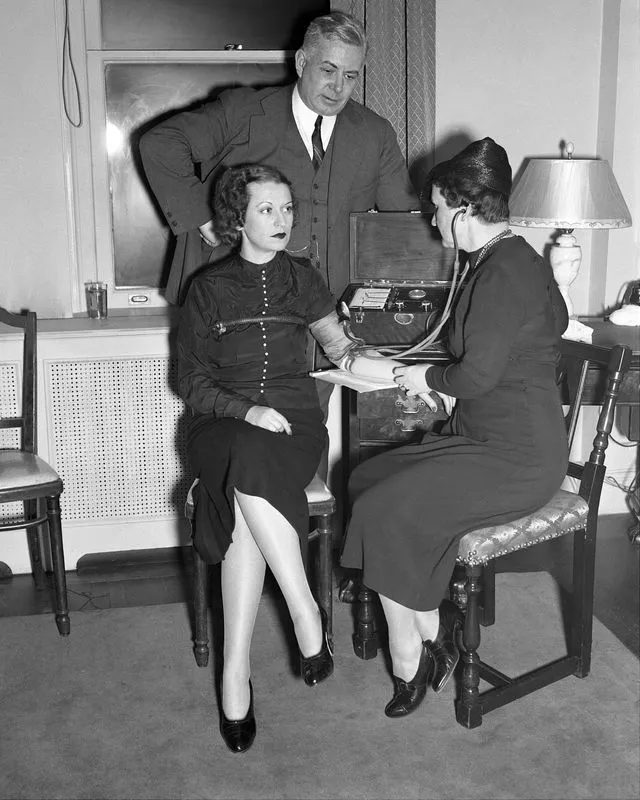
William Moulton Marston didn’t just stumble upon the lie detector. He built it. Well, sort of. His early prototype was barely more than a stethoscope clamped to a standard blood pressure cuff. Compare that to the high-tech digital polygraphs forensic psychophysiologists use today and it looks primitive. It is, but the core mechanic remains the same. Deception triggers anxiety. That spike in stress alters blood pressure, heart rate, respiration, and skin conductivity. The theory held up. The application did not.
Here is the part most people miss. Marston didn’t invent the concept of linking stress to physiological response. His wife, Elizabeth Holloway Marston, did. She noticed her own blood pressure rising when she was upset. She shared that observation with him. He built the machine. She had the insight. It’s a detail often lost in the retelling of how the lie detector was invented, but it changes the narrative of who really held the power in that household.
And let’s be clear: the tool’s accuracy was always questionable. Marston tried to introduce polygraph results in court in 1922. It failed. Spectacularly. Science wasn’t ready. Society wasn’t ready. So he pivoted. He turned to fiction.
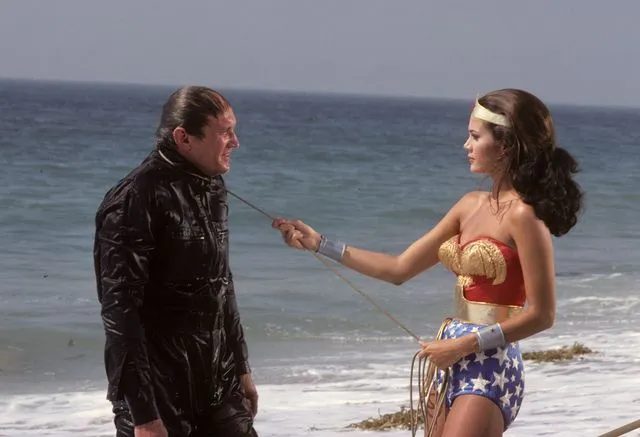
He created the Lasso of Truth.
It’s a simple concept, really. If you can’t trust a machine to tell you who is lying, trust a magical golden rope. Wonder Woman’s most iconic weapon isn’t a sword or a shield. It’s a truth-compulsion device. It forces those in its thrall to reveal their deceptions. No anxiety. No sweating. Just honest words.
The Political Households of Wonder Woman’s Creator
Marston’s personal life was as unconventional as his science. He married Elizabeth Holloway. Then he partnered with Olive Byrne, his former student. The three lived together in an open, polyamorous arrangement. Marston fathered children with both women. It wasn’t a scandal to him. It was a lifestyle choice rooted in deep ideological beliefs.
Byrne’s aunt was Margaret Sanger. The birth control pioneer. Her feminist philosophies permeated the household. Marston had already been involved with the Harvard Men’s League for Women’s Suffrage. He believed in equality. But his academic background complicated things. He worked as a lab assistant under Harvard psychologist Hugo Münsterberg. Münsterberg was known for opposing women’s right to vote.
This contradiction seemed to spark a radical conclusion in Marston’s mind. He began to believe women were superior. Not just socially, but biologically. They were more trustworthy. Less aggressive. In his view, women would eventually run the world because they possessed the emotional intelligence men lacked.
Not wanting to be girls they don’t want to be tender, submissive, peace loving as good women are. Women’s strong qualities have become despised because of their weak ones. The obvious remedy is to create a feminine character with all the strength of a Superman plus all the allure of a good and beautiful woman.
This 1943 essay outlines the blueprint for Wonder Woman. Marston wanted a character who combined the power of Superman with the nurturing traits of a “good woman.” He didn’t want a damsel. He wanted a ruler.
He also used his environment to fuel the mythology. The villain Dr. Psycho was drawn directly from Münsterberg. If the teacher represented patriarchal oppression, the villain was his grotesque embodiment. It was personal.
Then there was the setting. Wonder Woman’s home was Paradise Island. Later renamed Themyscira in 1987, the shift in terminology reflects a move away from “paradise” as a static state to a proper noun, a real place. It was a female-dominated society. An island of Amazons. Marston pulled heavily from ancient Greek myth to build a world where men were the exception, not the rule

The Chains That Bound a Culture
Marston’s fascination with the suffrage movement wasn’t just academic. It was personal. He witnessed suffragists chaining themselves to fences during protests. That image stuck. Chains became a symbol of emancipation from slavery. He translated that visual into Wonder Woman. The heroine was constantly bound by enemies. It was an allegory for female liberation. Specifically, birth control. Margaret Sanger, the birth control activist, published a collection of letters titled “Motherhood in Bondage.” She argued that lack of contraception was akin to slavery. Marston clearly absorbed this. He wove it into the comics.
But the creator had a dark side. There is evidence Marston suppressed his first wife’s career. He took credit for her ideas. This hypocrisy is uncomfortable. It remains largely unexplored. We might see it in the upcoming biopic, “Professor Marston And The Wonder Women.” If not, we have Gal Gadot’s second outing as the Princess of the Amazons. It’s a chance to dig into the genesis of the heroine. One can only hope her 76th year treats her better than the last one did.
A Rapid Rise to Icon Status
Wonder Woman didn’t debut with a bang. She started quietly. First appearance was in All Star Comics #8. The date was December 1941. The character was introduced. Readers saw her powers. They saw her costume. But she wasn’t the main event yet.
Then came the shift. Only a month later. Sensation Comics released its debut issue. The cover featured her prominently. This marked her first solo cover appearance in a comic book. The transition was swift. From background feature to headline star. The momentum built quickly.


