


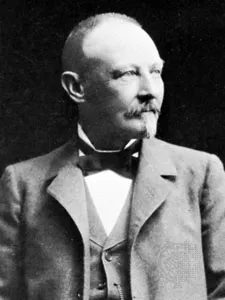
Sophus Otto Müller was not just digging up dirt; he was digging up time. Born in Copenhagen on May 24, 1846, and dying there nearly ninety years later on February 23, 1934, he became one of the most influential figures in Scandinavian archaeology. His work didn’t just catalog old stones. It redefined how we understand the Neolithic era in Northern Europe.
The Discovery in Central Jutland
Müller’s breakthrough happened in the late 19th century. While serving as assistant and later inspector at the Museum of National Antiquities in Copenhagen, he turned his attention to central Jutland. He found something unprecedented: single burial graves enclosed within barrows, or burial mounds.
This was the first concrete evidence of the later Middle Neolithic Periods in Scandinavia.
The excavations revealed a clear chronological sequence. The graves contained well-proportioned battle-axes, flint axes, amber beads, beakers, and cups. These artifacts were not random. They signaled a distinct cultural group. Scholars now refer to this as the Neolithic battle-ax culture. Müller had found the first examples in Denmark.
A New Way to Excavate
Müller did more than find artifacts. He changed how archaeologists looked for them. He developed new techniques for excavation and monument preservation. These methods allowed for more careful and accurate recovery of historical data.
He also championed a controversial but impactful theory. He supported the principle that Mediterranean civilization influenced northern Europe. This idea helped bridge the gap between Southern European antiquity and Northern European prehistory.
Institutional Leadership and Legacy
In 1892, the National Museum in Copenhagen established its Danish prehistoric and ethnographic collections. Müller became codirector. This role cemented his influence on the field.
His written work remains a key resource for understanding Danish antiquities. His major publications include:
- Vor oldtid (1897; “Our Antiquity”)
- Ordning af danmarks oldsager (1888–95; “System of Danish Antiquities”), in 3 volumes
- Oldtidens kunst i danmark (1918–33; “Ancient Art of Denmark”), in 3 volumes
These texts systematized the study of Danish artifacts. They provided a framework that other archaeologists could build upon.
Müller’s legacy is not just in the battle-axes he found. It is in the structured way he approached them. He turned scattered finds into a coherent narrative of the past. The question remains whether future discoveries will ever match the foundational shift he caused. Probably not. But his methods still echo in the field today.


