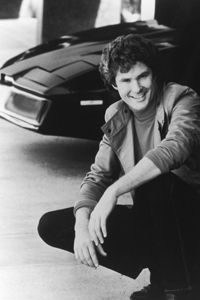
When the original Knight Rider premiered in 1982, the concept of a talking car wasn’t just sci-fi fantasy. It was ridiculous. It was outrageous. And it was completely cool. David Hasselhoff sat behind the wheel of the Knight Industries Two Thousand, widely known as KITT, driving the action series for four years before it finally burned out.
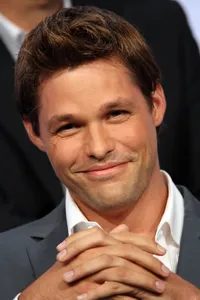
Fast forward to last February. NBC resurrected the franchise with a two-hour TV movie. This time, the car was upgraded. The star was Justin Bruening, playing Mike Traceur, the son of Hasselhoff’s Michael Knight. The premiere pulled in 12.7 million viewers during sweeps. That rating was high enough to justify a spin-off. The network gave the green light immediately.
But the reality of weekly television set in quickly. Nostalgia works for a movie. It doesn’t hold an audience for a season. A talking car alone wasn’t enough either. Technology had changed. OnStar and GPS meant that almost every vehicle on the road talked to its driver now. Gary Scott Thompson, the series producer and original fan, saw the problem clearly.
The audience had changed too. A new generation grew up on Transformers. They saw the Batmobile morph into the Batpod in The Dark Knight. They lived in a world of high-octane video games. Thompson knew that for the new Knight Rider to succeed, KITT had to be spectacular. The action had to be fast. It had to be furious.
“Audiences won’t sit still for people just talking anymore. There are too many options out there –movies, hundreds of channels, video games. Our competition is Xbox and Playstation.”
Thompson wasn’t kidding about the competition. The target demographic wasn’t just looking for a detective show. They were looking for stimulation. To capture younger fans while keeping the original believers, the pacing needed to shift. The stories had to be entertaining, not just talky. Thompson’s goal was simple. Create a 43-minute movie every single week. He argued the result would be arguably the biggest show on TV. The stunts. The cars. The visual effects. All of it had to pop.
Bruening leads the team. The cast includes Deanna Russo, Yancey Arias, Sydney Tamiia Poitier, Paul Campbell, Smith Cho, and Bruce Davidson. They operate out of a high-tech hub. Thompson calls it the “KITT Cave.” The vibe is less police procedural. It’s more Mission: Impossible.
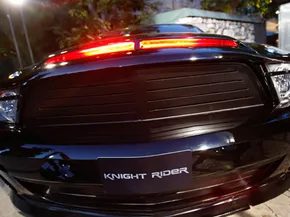
Everyone involved agrees on one thing. The centerpiece is the car. It is the star. A massive amount of work went into transforming a sporty, black Ford Mustang into the Knight Industries Three Thousand supercar. The goal was to make the Knight Rider revival feel like a premium event. The car couldn’t just be a prop. It had to be a character.
The Tech Upgrade
The original KITT had a voice. The new KITT has a presence. The transformation from Mustang to supercar required more than just paint. It required engineering that could stand up to high-speed chases. The team wanted the vehicle to look like it could outrun reality.
Thompson’s strategy was straightforward. If you can’t beat the video games at being realistic, you have to beat them at being spectacular. The Knight Rider revival leaned into that spectacle. Every episode promised a visual feast. The cars moved differently. They fought differently. They looked like they were built for a different era of excitement.
The supporting cast had to match the energy. Russo, Arias, and the rest of the team provided the human element. But the machine was the hook. The KITT Cave served as the command center, keeping the operations tight and tactical. It wasn’t a garage.

KITT in its standard configuration is essentially a production model Ford Mustang GT 500. Ray Claridge, founder of the North Hollywood shop Cinema Vehicles, describes it that way. With some tuning and suspension modifications, sure. But the visual flair comes from elsewhere. Claridge’s crew installed a rear spoiler with lights. Mirror lights. Strip lights. And what he terms “heartbeat lighting,” per specifications ordered by artist Harald Belker.
Other elements were harder to engineer.
“In the original design, the front of the car was probably an inch and a half off the ground,” Claridge explains. “That isn’t gonna work. You can’t drive a flat surface everywhere you go. You hit a bump and that’s the end of that.”
So they adjusted the ride height. It has to function on a highway while staying true to the silhouette. Claridge worked closely with Ford. The goal was keeping the integrity of their product intact. When you see the car, you know it’s a Mustang.
The Cost of Practical Effects
Claridge has built six KITT cars so far. Four are facsimiles of the normal ‘hero’ version for beauty shots and stunts. Two are attack vehicles with performance enhancements. Producers wanted practical effects everywhere. Time and budget didn’t allow for it.
“Television producers ‘have a feature mentality on a beer budget,'” Claridge notes. Each vehicle costs around six figures. Compromises are mandatory. The network wanted mechanics to work in real life. Budget constraints got in the way.
Some mechanical effects are now CGI. When KITT transforms from normal into attack mode, the transition is computer-generated imagery. “Our product is the end-product,” Claridge says. KITT has already morphed into other Ford models. A pickup truck. A Predator.
AI, Surveillance, and the Voice of KITT
Computer effects also handle the interior. There’s a touch screen across the front windshield. It works like an iPhone. You can download information. View 3-D objects while driving. KITT has satellite surveillance that tracks anybody and anything around the world. It’s learning through artificial intelligence.
“KITT operates from a logic point of view. He’s almost more human than the humans are,” says Thompson.
The voice, however, is not digital. It might sound familiar. It belongs to actor Val Kilmer. Thompson raves about him. “He gives you multiple options and multiple ways every time he says something.”
Kilmer records independently. So Bruening handles the KITT dialogue scenes with a voice double. Someone who can impersonate Val very well. Same cadences. Everything.
Does Bruening actually drive the car himself? Or does a stunt double take the wheel?
Beyond Knight Rider
“Criminal Minds.” “The Sarah Connor Chronicles.” All the “CSI” shows. “24.” “Desperate Housewives.” Cinema Vehicles works on 35 to 50 TV shows at a time. The operation runs out of a 70,000-square-foot facility. Seven and a half acres.
Claridge is currently preparing several films. “The Hangover,” a comedy starring Bradley Cooper, is one.
Of the hundreds of cars he’s worked on over the past 32 years, he has a favorite. “Eleanor,” the 1967 Shelby GT 500 Nicolas Cage drove in “Gone in 60 Seconds.” “It was kind of an icon. The car is still quite the attention getter,” Claridge says. They still have one of the several built for the film.
“We don’t always get to keep them, but in this case we did.”
Driving the New Knight Rider
Justin Bruening didn’t just hop into the driver’s seat for Knight Rider. He took stunt driving lessons. Not the Hollywood gloss version. Real instruction. He trained with Corey Eubanks. A stunt driver who can thread a needle at 60 miles per hour. Bruening learned reverse 180s. He learned to slide a car toward the camera. Without hitting the crew. Thirty people stood there watching. Nerve-wracking. He’s comfortable behind the wheel. But precision matters. Eubanks is amazing. He can circle a barrel. Two inches clearance. Bruening wants to master those skills. He doesn’t need to match Eubanks’ precision. He wants to perform the stunts he sees on screen.
Doing the Stunts
Bruening handles 98 percent of the fights. He’s eager to do them. As long as they don’t risk injury. A fan of the original series. He re-watched it after winning the role. One of his favorites. He turns 29 on the premiere date. September 24. The show shoots in Los Angeles. This creates logistical nightmares. Shutting down freeways. Highways. Downtown traffic. Gary Scott Thompson knows the pain. He produced Las Vegas. Wrote The Fast and the Furious. It makes him unpopular.
Balancing Old and New
The creators face a tightrope. They need to please original fans. Attract new viewers too young to remember the 80s. Keep those who liked the two-hour TV movie interested. Some cast members were deleted. Added. Plots tweaked for an ongoing story. Thompson expanded the mythology. Necessary for a series. He didn’t work on the telepic version. David Hasselhoff had a cameo in the movie. Fans might be disappointed he isn’t in the series. Thompson says it’s not a dead issue. The original Knight Rider could return.
Tone and Appeal
Thompson and co-executive producers know they can’t please everyone. They’re trying. Emphasis on lighthearted entertainment. A lesson from The Bionic Woman reboot. Short-lived. Too different in tone. Too dark. Brooding. They forgot the fun aspect. Fine for Sci-fi channel. Not for a broad network. Broaden the horizons. Appeal to more people. And give them the coolest car on TV.
Behind the Wheel
Bruening is reckless on screen. Off screen? A pretty damn good driver. Nebraska native. First car: 1976 Chrysler Cordoba. He drives a Mustang now. Like Michael Knight. A replica of Steve McQueen’s Bullitt car. His worst habit? Listening to AC/DC and Metallica too loud. While his wife is in the car. Not her kind of music.
Related HowStuffWorks Articles
- How the Ford Mustang Works
- How the New Knight Rider Car Works
- How Real Transformers Work
- Mustang Stars in Bullitt
- Inside “The Dark Knight”
More Great Links
- Official “Knight Rider” Web site
- Cinema Vehicle Services
Sources
- Gary Scott Thompson and Justin Bruening interviewed July 21, 2008
- Ray Claridge interviewed August 21, 2008