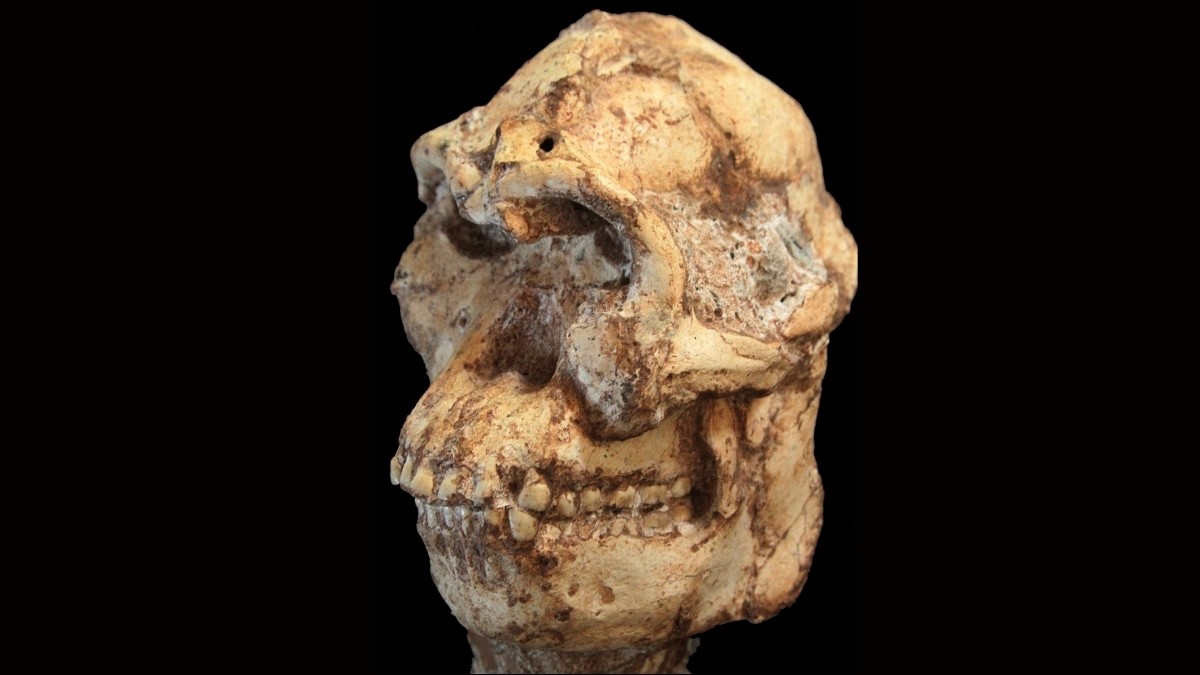
One of the most complete hominin fossils ever discovered, nicknamed “Little Foot”, may not fit neatly into existing classifications of early human ancestors. A new study suggests that this iconic specimen could represent a previously unknown species within the Australopithecus genus, challenging decades of debate about its origins.
The Puzzle of Little Foot’s Identity
Discovered in the Sterkfontein caves of South Africa, Little Foot (formally designated StW 573) has captivated scientists since the first ankle bones were unearthed in 1980. The skeleton, remarkably well-preserved, took over two decades to fully excavate from the surrounding rock. The core debate has always centered on whether Little Foot belongs to Australopithecus africanus, a well-established species, or A. prometheus, a name resurrected by the original discoverers.
The issue isn’t trivial. Accurate classification is vital for understanding the complex story of human evolution. Without it, we can’t properly map relationships between species, timelines of divergence, or the environments that shaped our ancestors.
New Evidence Challenges Existing Classifications
Paleoanthropologist Jesse Martin and colleagues at La Trobe University used high-resolution 3D scanning to compare Little Foot’s anatomy to known A. africanus and the single fossil assigned to A. prometheus (MLD 1). Their findings are striking: at least five significant anatomical differences separate Little Foot from MLD 1.
“There is no morphological justification for aligning StW 573 with MLD 1,” the researchers conclude, arguing that the evidence doesn’t support classifying Little Foot as A. prometheus . In fact, they suggest that A. prometheus itself may be indistinguishable from A. africanus and should likely be considered a synonym – a junior label for the same species.
A Possible New Species?
If Little Foot isn’t A. prometheus, and A. prometheus may not be distinct, what is it? The study indicates that Little Foot also displays enough unique traits to separate it from known A. africanus specimens. This leads the researchers to propose that Little Foot may represent a previously unidentified species within the Australopithecus genus.
The team intentionally refrains from naming this potential new species, deferring that task to the researchers who have dedicated years to excavating and analyzing the remains. This is a standard practice in paleoanthropology – allowing those most familiar with the fossil to define its characteristics properly.
The implications of this study are significant. If confirmed, Little Foot would add another layer of complexity to our understanding of early hominin diversity in South Africa, further solidifying the region’s status as a cradle of human evolution.