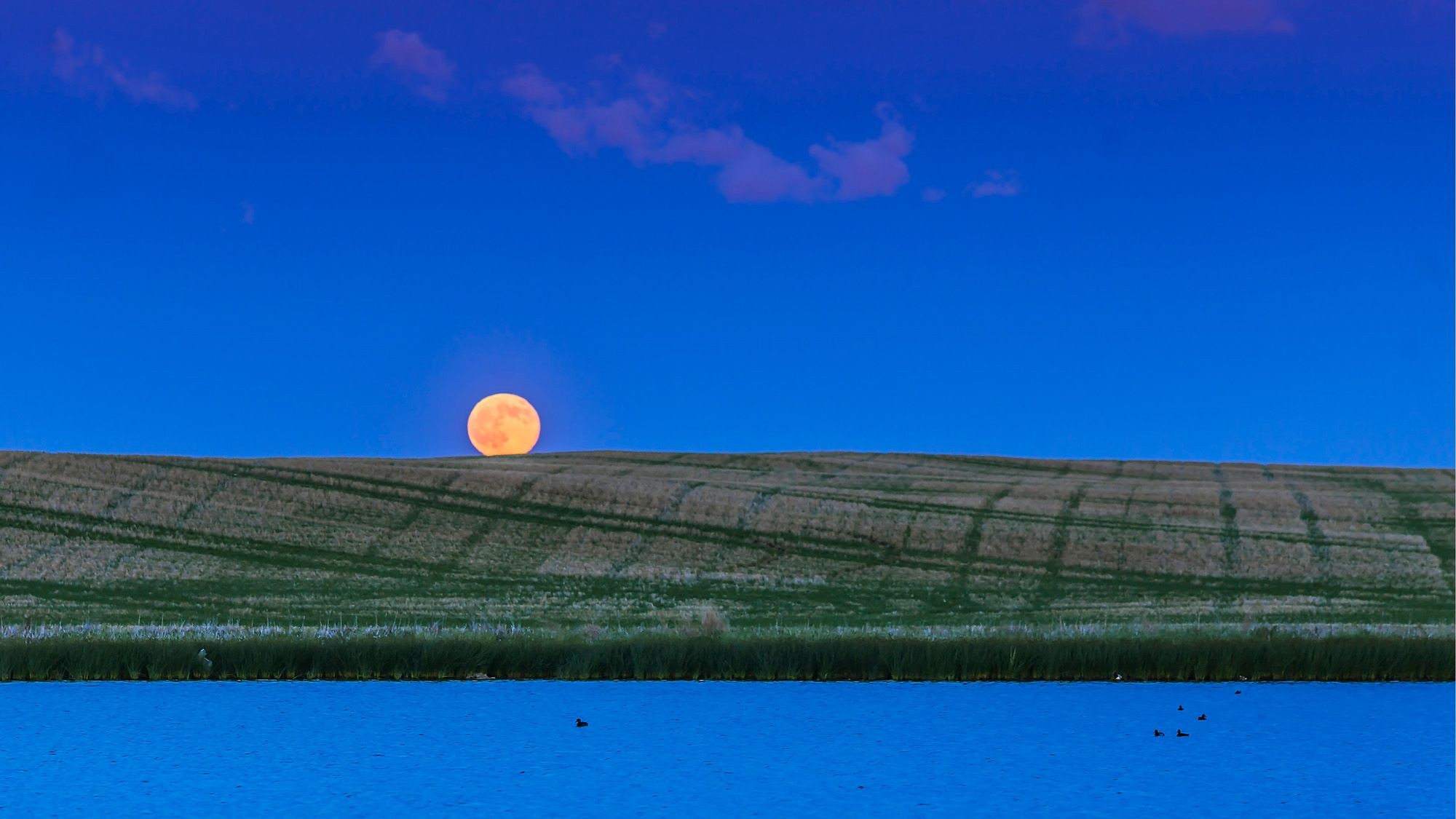
Tonight’s full moon is special. Not for being huge. It’s actually tiny. And it will hang dangerously low on the horizon.
The Strawberry Moon hits peak illumination Monday evening. July 29th? No, stick with June 29th at 7:56 p.m. EDT. You won’t need a telescope to see it. You just need eyes and a clear view of the southeast at dusk. That’s when it looks best. Sitting right there. Low.
Sunday and Tuesday work too. The moon looks nearly full on those nights. But Monday gives you that dramatic rise. In North America and Europe, it will appear unusually close to the ground. For a while anyway.
Here’s the weird part about summer full moons. They’re shy. The sun just hit its northernmost point during the solstice. June 21. Full moons sit opposite the sun. Always. So when the sun climbs high in the north, the moon dips low in the south. It’s basic celestial mechanics. Mirroring the sky from six months prior.
Down under, though? Different story. Southern Hemisphere folks get a front-row seat. For them, the Strawberry Moon shoots straight up. High overhead. It’s the biggest, brightest rise they’ll see all year. Geography changes the show.
What are you actually looking at?
It’s small. Technically called a micromoon. Or maybe a minimoon. Some folks call it an apogee moon because it’s far away. Distance matters. This one is 252,424 miles (406,103 kilometers) from Earth. The furthest full moon happened back on May 31. That was 252,554 miles (406,445 km) away. So this is the second-smallest of the year.
Distance shrinks the view, but it doesn’t ruin it.
You can name it whatever you want. Strawberry Moon comes from old Native American calendars. It marked the harvest of… well. Strawberries. But there are plenty of other names. Berries Ripen Moon. Honey Moon. Birth Moon. It all depends on where your ancestors lived. Or where you want to pretend you lived.
Looking to its upper right, you’ll spot Antares. It’s a red supergiant. Bright. Yellowish. Part of Scorpius. Just another light in the sky.
No gear needed. Just look up. Binoculars help if you want to squint at craters. Cameras help if you have decent skills. Want tips on that? There’s a guide for that too.
This isn’t the last big event either. Next comes the Buck Moon in late July. August brings a total solar eclipse. And a partial lunar one too.
So take a picture. Or just stare at it. Does it look small? Maybe.