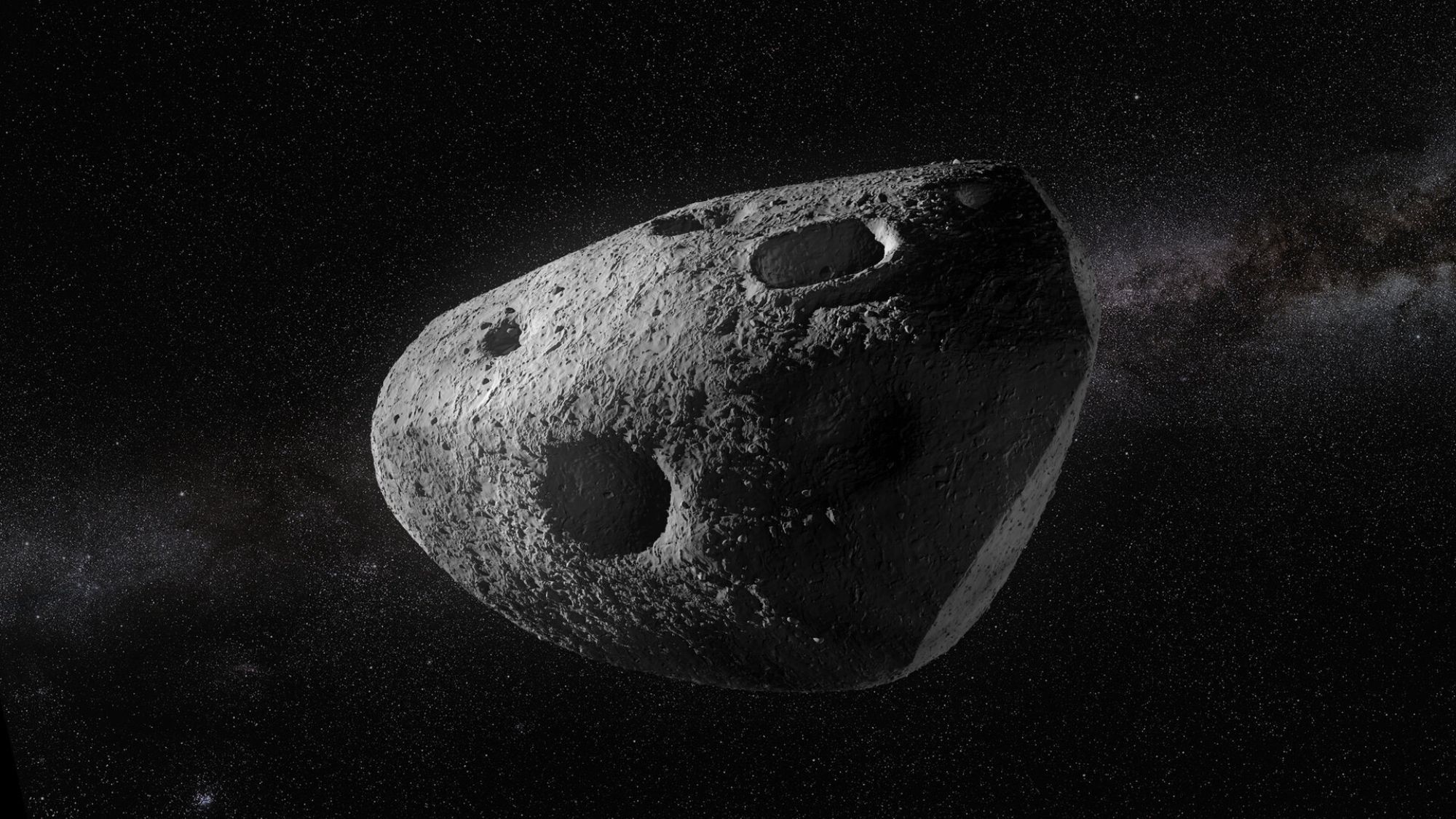
It’s coming. In three years, exactly, the sky will change for billions of us. Not dramatically, not violently, but visibly. A rock called Apophis.
Scientists aren’t waiting for the moment. They’ve already mapped it.
At a recent workshop in Italy, astronomers Rick Fienberg and retired cartographer Michael Zeiler dropped some heavy details. They want you to know where to look. When. Who will see it. Roughly 90% of Earth’s population—that’s about 7.6 billion souls—sits in the sweet spot.
The date? April 13, 2229? No, wait, check that. 2029.
Of course, nature is a spoiler. Clouds. Light pollution. If your city glows too bright or your sky hides behind storm fronts, you might miss the party. But the geometry works. For most of us, Apophis won’t be a blazing streak. No Hollywood meteor trails. It’s more subtle than that.
“It will definitely be noticeable.”
A point of light. A steady, quiet glide. At its fastest, it shifts by the width of a full moon each minute. Slower than a satellite. Hours, not minutes, to cross your vision.
The Timeline
Visibility kicks off around noon EDT, rising over Australia. It lingers. Drifting eastward, it spends roughly seven hours in the sky for anyone with clear eyes.
Then comes the peak.
By 4:35 p.m. EDT, Apophis hits its brightest point over Cameroon. This is the money shot. Africa, Asia, Eastern South America, and parts of Europe get front-row seats. Nearly 4 billion people.
One hour later, 5:45 p.m., it gets uncomfortably close. About 19,700 mi above the North Atlantic. That’s dangerously intimate. We’re talking well inside the ring where geostationary satellites orbit. You know, the ones keeping your cable signal intact? Apophis passes between Earth and those anchors.
This isn’t a drill. And it’s not a disaster.
No Impact
Let’s address the panic, even though it shouldn’t be there. When we first found this guy in 2004? Scary stuff. Early math whispered a 1-in-3 chance it would hit in 2029. It made headlines. It made us look up, sweating.
More time. Better telescopes. Hard data.
NASA’s numbers are now crystal. Impact chance for 2029? Zero. Next century? Also zero. MIT professor Richard Binzel kicked off the Padua workshop with a mantra, repeated until it felt like a spell:
Apophis will safely pass.
He said it three times. Because certainty, after two decades, is earned, not assumed.
So why does everyone care so much?
A Cosmic Tug-of-War
Because this is new. Never before in human history have we predicted a naked-eye asteroid flyby. Binzel called it a shared experience. We’re all looking at the same rock.
But beyond the spectacle, there’s science. Real physics in action. Earth’s gravity isn’t just watching Apophis go by; it’s grabbing it.
The planet’s mass will tweak Apophis’s orbit. Send it on a slightly new path around the Sun. But during that close squeeze? Forces will flex the rock. Stretch it. Compress it.
We don’t know the outcome. Will it hold together? Or will tidal forces trigger landslides on its surface, knocking away the dust to reveal pristine interior rock?
Maybe nothing happens. Maybe the asteroid is tough. Indifferent to the embrace of Earth.
“We simply don’t know what is going to happen,” Binzel said.
It’s a guess wrapped in a calculation.
Scientists are already positioning themselves for the best view. Canary Islands in Spain, looking out over the Atlantic. Clear skies. Optimal angle.
They’ll be watching. You will too. We’ll all see if Apophis changes its shape under the weight of our world’s gravity.
It might surprise us. It might not. But we’ll finally see it close enough to tell the difference.
Seven hours of visibility. One pass. One chance to watch the solar system adjust.
See you in 2029 ☄️