We used to think we knew what a planet was. You saw it in the sky. It wasn’t a star. It moved. Done.
But science rarely leaves things that simple.
The word comes from the Greek planētes, which just means “wanderers.” Ancient astronomers noticed these lights drifted across the background of fixed stars. That was the only rule for a long time.
Then we got better telescopes. Then we got space probes. Then we found out Pluto is weird.
Now we have a definition that is specific, slightly arbitrary, and technically precise. According to the International Astronomical Union (IAU), a planet is a natural body that orbits the Sun. It must be massive enough to be round. And it must have cleared its orbital neighborhood.
That last part is the killer.
The IAU is the group charged with naming and classifying astronomical objects. They hold the pen. In 2006, they wrote the rule that kicked Pluto out of the club. Before that, we had nine planets. Now we have eight.
Why the change?
Because we stopped looking only at our own backyard.
Until the late 20th century, planets were just the objects in our solar system. Then astronomers confirmed other stars have planets too. Exoplanets. The floodgates opened. If everything orbiting anything was a planet, the term lost all meaning.
So the IAU imposed constraints.
Size matters. Shape matters. Mass matters.
An object needs to be large enough for its own gravity to squeeze it into a sphere. This usually means at least 700 kilometers (about 435 miles) across, depending on how dense the stuff is. If it’s rocky, it needs to be bigger. If it’s icy, it can be smaller.
It also can’t shine by itself. No internal nuclear fusion. If it’s making its own light and heat through fusion, it’s a star. Not a planet.
And here is where it gets tricky.
Some scientists want the bar even higher. They argue a planet should be larger than Ceres, the largest known asteroid. That’s about 1,000 kilometers (600 miles) across. Or they insist the object must have cleared its orbit of other debris.
Pluto failed that test. It shares its orbit with lots of other Kuiper Belt objects. It’s not the boss of its lane.
So it got demoted.
It wasn’t malice. It was clarity.
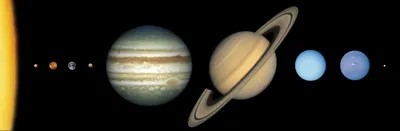
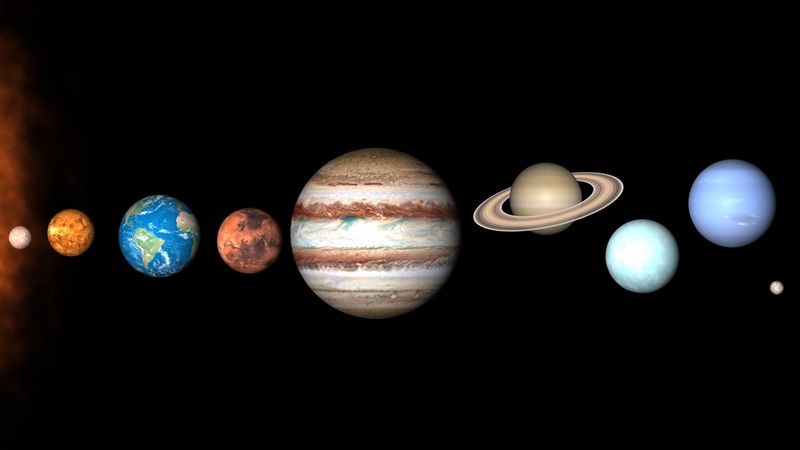
The eight planets we recognize today are Mercury, Venus, Earth, Mars, Jupiter, Saturn, Uranus, and Neptune. Listed in order of distance from the Sun.
But what about the others?
The ones that are round but didn’t clear their orbits? The IAU has a name for them too.
Dwarf planets.
This distinction matters. Not because Pluto is less beautiful. It’s gorgeous. But because language shapes how we think. If everything is a planet, nothing is.
We needed a line.
The IAU drew it.
Some people still hate it. That’s fine. Science is messy. But the definition holds. For now.
As we find more worlds around distant stars, we’ll see if this definition survives. Or if we need

how the definition of a planet shifted from myth to science
The word planet didn’t always mean what we think it means now. It started as a cultural label. Ancient sky watchers looked up and saw things moving against the static backdrop of stars. They called those movers planets. That list included the Sun. It included the Moon. It included Mercury, Venus, Mars, Jupiter, and Saturn. These five were obvious. They wandered. The telescope hadn’t been invented yet, but the naked eye was enough to spot them.
Then came the Copernican shift. Earth stopped being the center of the universe. The definition tightened. Now, only bodies orbiting the Sun counted. The Sun and Moon got dropped from the list.
Uranus showed up in 1781. Neptune followed in 1846. They fit the pattern. They were big. They orbited the Sun. Nobody argued. They were planets.
Pluto was different. Found in 1930, it seemed like the ninth member of the club. Or so we thought.
why pluto lost its planet status
Pluto is small. Tiny, even. Its orbit is weird. It’s made of ice and rock, not gas or molten rock like its neighbors. Astronomers started scratching their heads. Was Pluto really a planet? Or was it something else entirely?
The 1990s broke the debate open.
More objects appeared beyond Neptune. They were Pluto-sized. Some were smaller. Pluto wasn’t unique. It was just the first one we’d found. It turned out to be a chunk of debris. Leftover material from when the solar system formed. We call this zone the Kuiper belt.
Pluto isn’t an anomaly. It’s a representative.
So, what is the definition of a planet in the solar system today? It’s not just about orbiting the Sun. It’s about clearing your neighborhood. Pluto shares its space with billions of other icy rocks. It couldn’t clear the area. That’s why it got demoted. Not because it’s small. But because it’s crowded.
The term planetesimal comes up here. These are the building blocks. Pluto is essentially a big planetesimal. A leftover brick from the construction phase of the solar system.
Does that make it less interesting? No. It makes it more mysterious. It’s a gateway to the Kuiper belt. A window into the early solar system. But it’s not a planet. Not by the current rules.
And the rules? They’re still evolving.

Why Pluto lost its title and what the IAU rules actually say
The vote happened in August 2006. It wasn’t quiet. The International Astronomical Union (IAU) gathered to answer a question that had nagged at astronomers for decades: is Pluto a planet? The assembly approved a strict definition. It excluded Pluto. At the same time, it created a new category. They called them dwarf planets. Pluto qualified. Immediately.
Scientists hated it. Many called the definitions flawed. Unscientific. They protested the decision loudly, demanding a reconsideration. The debate raged because the stakes felt higher than taxonomy. It was about identity.
So what did the IAU decide? They set three bars for planetary status. A celestial body must orbit the Sun. Check. It must be round, molded by its own gravity into a sphere or near-sphere. Check. The third condition was the killer. It must have cleared the neighbourhood around its orbit.
This phrase means dominance. Your mass has to be big enough to sweep away or swallow the rocky and icy debris sharing your path. You clear the lane. Pluto couldn’t do that. It orbits partially inside the Kuiper belt. It shares its space with countless other objects. It’s part of a crowd, not a ruler. Because it hasn’t cleared its neighborhood, it failed the test. The definition held. Pluto stayed out.
What actually counts as a dwarf planet?
The IAU definition is strict. You have to meet the first two criteria we talked about. Then, you must fail at clearing your neighborhood. And you can’t be a moon. If you check those boxes, you’re a dwarf planet.
Pluto fits. Ceres fits. So does Eris. That big guy was found in 2005, hiding out past Pluto’s orbit in the Kuiper belt.
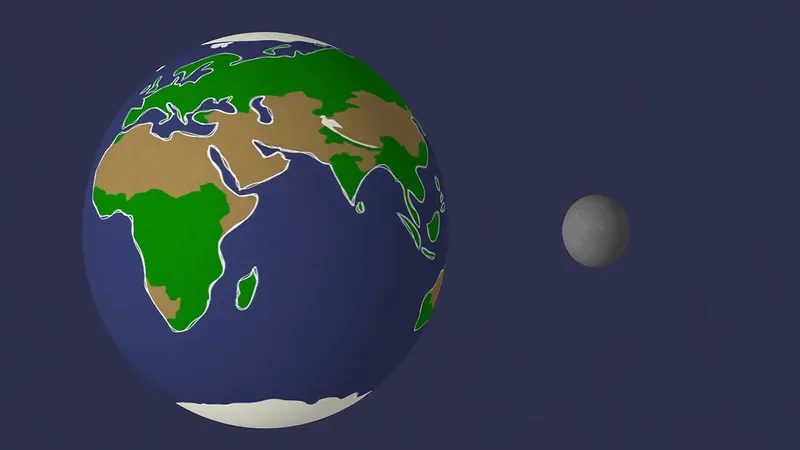
Charon? No. Even though it’s huge—more than half the size of Pluto—it’s a moon. Moons don’t get the title. It’s a hard line.
The list isn’t finished. We’ll probably add more. As we find new objects that meet the rules, the ranks of dwarf planets will grow.
Plutoids: The distant cousins
In June 2008, the IAU added a label. Plutoids.
Think of it as a sub-category within dwarf planets. But with a location requirement. Plutoids orbit farther from the Sun than Neptune. They are the kings of the Kuiper belt.
Pluto is one. Eris is the other. Ceres? No. It’s stuck in the asteroid belt, too close to home. It’s a dwarf planet, sure. But not a plutoid.
The rest of the solar system lineup
Now look at the eight official planets. They split into two camps.
The inner four—Mercury, Venus, Earth, Mars—are terrestrial planets. Rocky. Small. Close.
The outer four—Jupiter, Saturn, Uranus, Neptune—are giant planets or Jovian planets. Big. Gassy. Far.
Between them sits a messy belt of small bodies. Asteroids.
Back in the early 1800s, when Ceres and others were found, people called them minor planets or planetoids. The terminology shifted. Now, asteroid is the standard term. It’s cleaner. Less confusing.
Planets of other stars
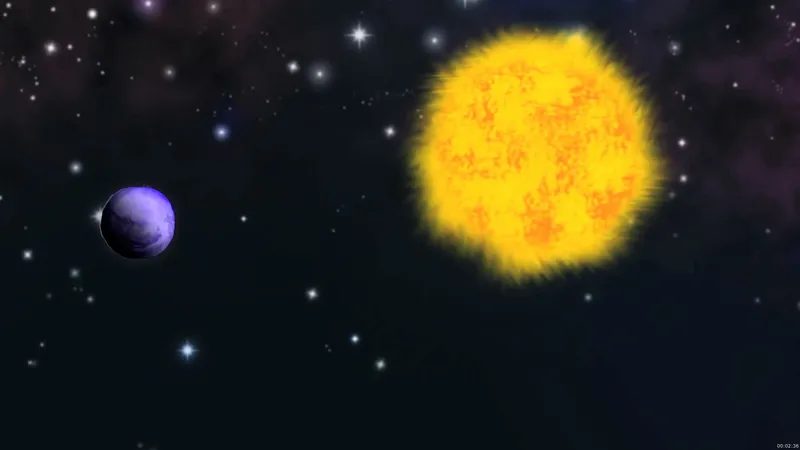
Why finding alien planets is a game of hide-and-seek
We know how our own solar system got here. A giant cloud of gas and dust collapsed under its own weight. It spun into a disk. The center got hot and dense enough to ignite the Sun. The leftover scraps in the disk clumped together. They grew heavier and heavier until they became planets. Simple enough.
But the real question isn’t how we formed. It’s whether everyone else did too.
For a long time, astronomers just guessed. They wanted to know if other stars had their own planetary families. The problem was visibility. Planets are small. They are dim. And they orbit stars that are blindingly bright. Trying to see an exoplanet directly is like trying to spot a firefly next to a stadium floodlight. You can’t just point a telescope and snap a picture. Not from Earth.
So scientists changed tactics. They stopped looking at the planets. They looked at the stars.
Planets have mass. Mass has gravity. That gravity tugs on the star. It makes the star wobble ever so slightly. Detect that wobble and you prove a planet exists. It’s indirect. It’s clever.
The first big win came in the early 1990s. Astronomers found three planets orbiting a pulsar named PSR B1257+12. A pulsar is a rapidly spinning neutron star. It’s a dead star. A cosmic corpse. Finding planets there was weird. It proved planets could survive stellar death. But it didn’t answer the bigger question. Do normal stars have normal planets?
Then came 1995.
The announcement of 51 Pegasi b changed everything. This was a massive planet orbiting a star just like our Sun. It was the first time anyone had seen this process happen around a main-sequence star. The floodgates opened.
Fast forward to today. We know of more than 5,000 exoplanets.
The technology caught up. In 2005, astronomers finally got direct infrared images of extrasolar planets. No more guessing from wobbles. We could actually see the heat signatures of these distant worlds.
The variety is staggering. Some are tiny. About the size of Earth’s Moon. Others are monsters. More than a dozen times the mass of Jupiter.
This scale creates a mess for definitions. We still don’t have a rigorous, generally accepted definition of a planet that fits all these new discoveries. Where do you draw the line? How do you distinguish a large planet from a small star? Specifically, how do you separate exoplanets from brown dwarfs? Brown dwarfs are failed stars. They are too big to be planets but too small to fuse hydrogen like a proper star.
The science is ahead of the vocabulary. We have the objects. We have the images. We just haven’t agreed on what to call them yet.