Babies hate dry air.
Adults just get dry noses, maybe some static shock. Tiny lungs and delicate skin react much more violently to the arid assault of heating systems. You know the drill: congestion, crankiness, skin irritation.
Enter the humidifier.
It sounds simple. Add moisture to the room, problem solved. Right?
Not so fast. Standard humidifiers are basically petri dishes waiting to happen. If you forget to clean them, mold moves in. If you don’t use distilled water, you spread impurities around the room like confetti. And let’s talk about steam models for a second—burn hazard. Just one too many steps forward from a toddler with zero depth perception, and it’s the ER.
Then there is the aesthetic problem. Most humidifiers look like beige plastic bricks. They belong in a dentist’s waiting room from 1995. They certainly don’t fit in a nursery designed with color and imagination in mind.
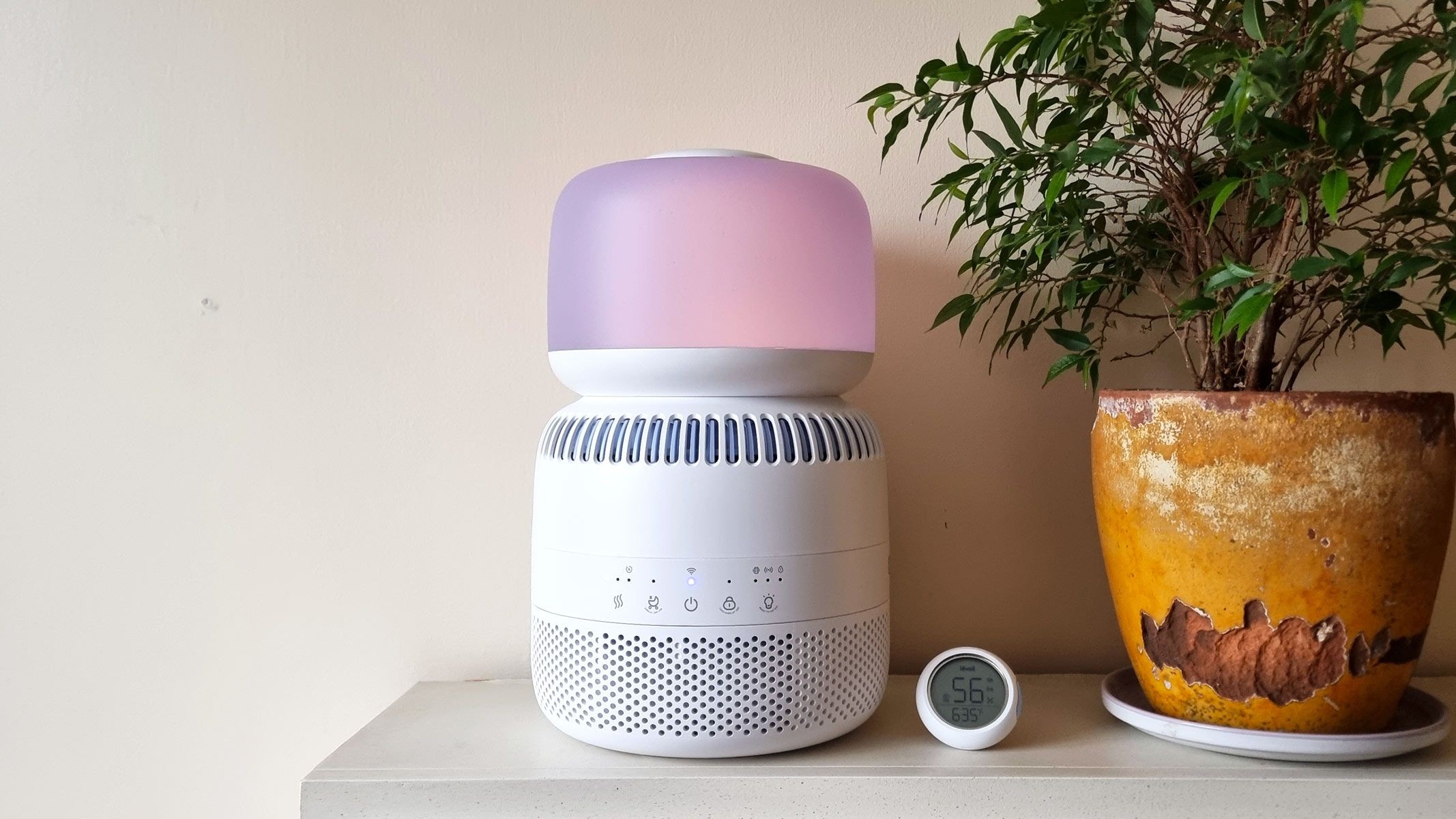
This is where Levoit’s Sprout comes in. It promises to solve all these problems. It uses evaporative technology, meaning no steam burns. It uses filters to trap minerals, so no white dust or impurities go back into the air. And it looks like a rounded snowman, which is cute if you don’t hate everything about Frozen.
We put it to the test.
Looks and Feel
The Levoit Sprout looks exactly like their air purifier. Same color. Same curved body. Same weight. If you own both, they look like siblings. It is designed with soft curves, no sharp corners, nothing that will hurt a kid’s face during a clumsy crawl.
Assembly is another story.
It was painful. The manual was vague, almost mocking us. Taking the packaging off was fine, but putting it back together? We stared at it for a while. Pieces wouldn’t align. Instructions didn’t help. We finally got it working, but it left a bad taste in our mouth. Seriously, parents are sleep-deprived. Why make assembling your appliance a puzzle?
Once built, it shines.
The water tank sits on top. This is genius. You don’t have to pull a heavy tank out, trip over the cord, fill it at the sink, and carry it back. You just take off the lid and pour. Or pour from a bottle while the unit stays plugged in.
It holds about a gallon. Easy to hold, easy to see when it’s running low. And yes, you can throw the tank in the dishwasher. That alone is a feature worth buying for.
Control is smart, too. Buttons on the front. App control via VeSync. You can even ask Alexa or Siri to change the humidity. For a gadget in a child’s room, this remote convenience is huge. You are asleep, the humidity drops, you fix it without leaving your bed.
But the price.
$190.
For a humidifier.
That is three times the cost of competitors with similar specs. And that’s just the entry fee. The wick filters cost $30 to replace. You can find generics on Amazon, but they’re cheap-cheap. The convenience tax here is high.
Smart Sensors and Auto-Dry
Here is where the Sprout separates itself from the plastic junk at big box stores.
It doesn’t trust its own built-in sensors. Why? Because air right next to the unit isn’t representative of the whole room. Instead, it comes with a standalone sensor. You plug it into the wall where your child sleeps, near the crib. The humidifier listens to that sensor and adjusts accordingly.
This is how you maintain true room humidity, not just humidity near the machine.
It also has an Auto-Dry mode.
Mold is the enemy of the humidifier user. Moist wick filters sitting in a dark tank for 48 hours become a breeding ground for bacteria and mildew. When you turn the Sprout off, this mode kicks in. It dries the filter automatically.
We checked. It worked. We didn’t have to scrub gunk out of a filter after two days of use. This maintenance reduction is valuable. Is it worth $190? You tell us.
Then there’s the light.
Underneath the water tank is a soft night light. It’s not blinding. It casts a warm glow that feels calming, not stimulating. For bedtime routines, where lights out causes anxiety, this gentle illumination is a thoughtful addition. It helps adults, too, let’s be honest.
The Performance Test
Does it actually add humidity? Yes.
Does it add it fast? Not really.
This is the trade-off of evaporative technology. Air blows through a wet wick. Physics dictates friction. Friction slows the air down. So you don’t get the explosive moisture jets of an ultrasonic unit.
We tested it in a room of roughly 200 square feet.
Start: 55% humidity.
1 Hour Later: 59% humidity.
2 Hours Later: 63% humidity.
That is… gentle.
We compared it to an ultrasonic competitor, the PureGuardian H550. Same room. Same start. The competitor nearly doubled the humidity in the same time.
But here is the thing. The Sprout didn’t create puddles. No condensation on windows. No wet rings on the nightstand. Just steady, quiet, safe moisture.
For a nursery, safe usually trumps fast.
Noise levels? Whispers. 42 decibels max. That is quieter than a refrigerator running in the other room. It produces white noise that most parents will find soothing. It won’t keep the baby awake.
And no white dust.
Because it evaporates rather than boils, minerals in the tap water get trapped in the wick, not shot into the air as fine powder. Our air particle counter confirmed this. Only a negligible rise in particulates. Your baby’s lungs stay cleaner.
What Other Parents Say
Reviews online are mixed, averaging 3.8 stars.
Happy users love the look, the silence, and the smart controls. One user mentioned that despite living in an apartment, it could barely manage the smallest room but excelled in making the air feel “nicer on the skin.” That’s a great metric, isn’t it?
The grumbling is consistent with our experience. The power is limited. If you have a massive open-plan living room, forget it. Also, people complain about the noise on the highest setting. Maybe our ears are sensitive, maybe the fan just gets louder when you push it. Connectivity glitches are common too—apps being apps.
Verdict
The Levoit Sprout is a good machine. A very specific one.
It prioritizes safety, hygiene, and quiet over brute force. It avoids the pitfalls of standard humidifiers—mold, burns, mineral dust, ugliness. The standalone sensor is a genuinely brilliant feature for parents who want accurate data, not guesswork.
But the cost is hard to swallow.
Buy it if: You have a small nursery, a child who needs safe humidification, and a budget that isn’t a strict constraint. The convenience of the app and the auto-dry filter is nice.
Skip it if: You want to humidify a whole floor. Or if $190 for a plastic jug with a fan sounds excessive. There are cheaper, more powerful options if you don’t mind doing the cleaning yourself.
The air felt better in the test room. Crisper. Easier to breathe. The light was pretty. But the assembly frustration lingered, and so did the knowledge that I spent half my budget on humidity.
Is it perfect? No.
Does it solve the dry air problem without creating a new mess?
Yeah. It does.