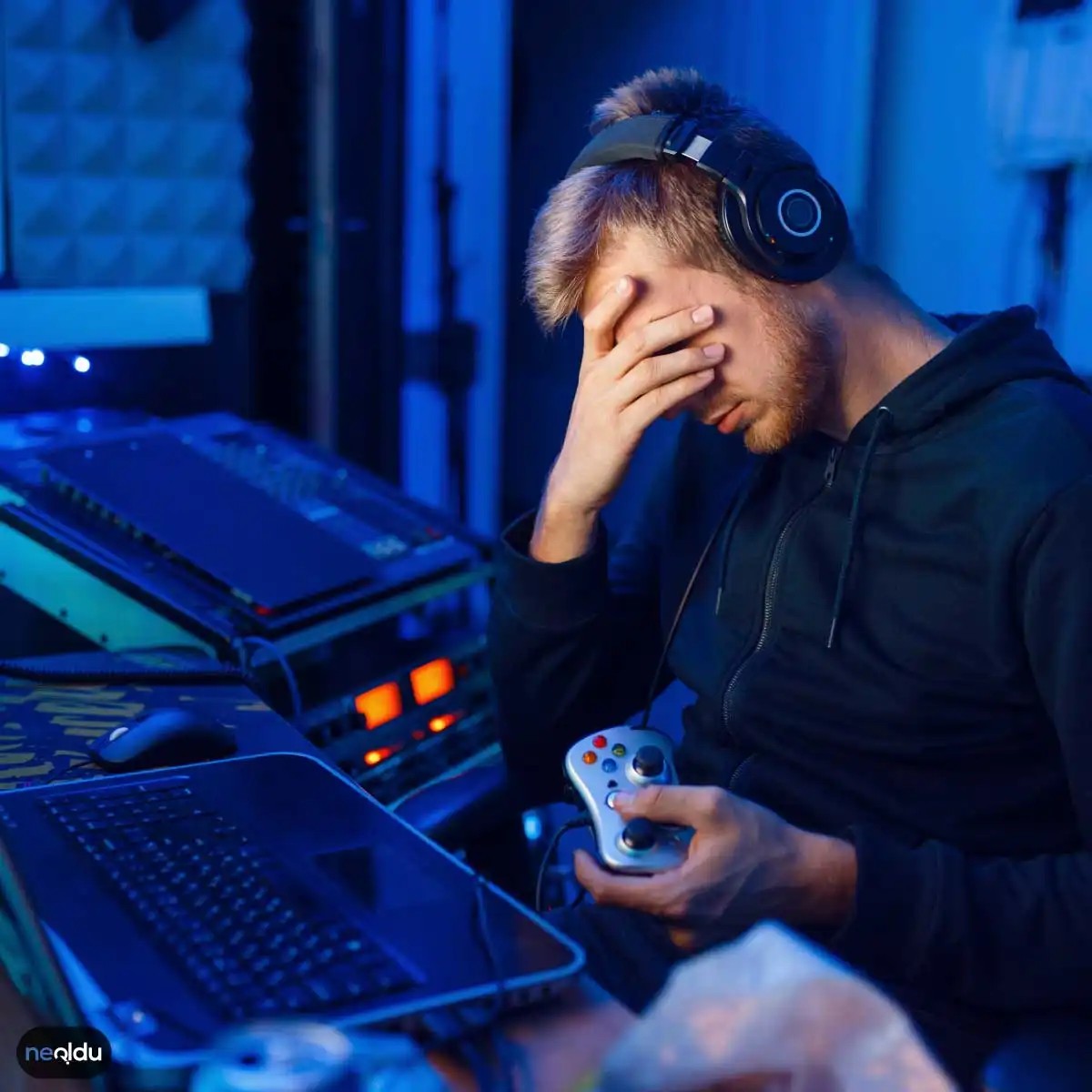
Video games are no longer just a pastime of children or young people. They are also an escape for adults, a means of social bonding and, most importantly, a refuge from daily stress. However, this act of refuge sometimes turns into a trap. Gaming addiction, which has become an increasing problem in the world, is not only a waste of time, but also a condition that seriously affects career, relationships and health.
In this article, we have listed ways to get rid of game addiction.
1. Accept Addiction
The first step is the hardest. Many people think, “I’ll just play some more and quit.” This thought may be the first sign of addiction. Accepting the truth is the first step in generating the energy needed for change.
Accepting addiction means showing compassion for oneself. Feelings of guilt often reinforce avoidance behaviors. Instead, try to see the situation as it is. “Yes, I’m addicted to games right now. It’s causing problems for me. And I want to change that.”
“Admitting addiction is an act of courage, not weakness.”
This acceptance lays the groundwork for taking the next steps. Instead of blaming yourself, identifying the problem opens the door to solution-oriented thinking. This process is a journey of conscious awareness rather than a sudden interruption.
The first step to starting to fight gaming addiction is to accept the addiction. You must be honest with yourself and recognize your addiction to games. Accepting addiction is an essential part of the change process and gives you a solid foundation to move forward from.
Admitting addiction can be difficult at times because we often tend to hide or deny our addiction. However, the important thing at this point is to face the facts and be honest with ourselves. Feel free to ask yourself these questions: Is the amount of time I spend on games really healthy? Am I neglecting other important activities and relationships? Do I feel restless without games?
Admitting addiction should not be viewed with shame or guilt, but as an encouraging step towards providing yourself with a better life. This is the first step in change and creates a foundation for your future progress.
Accepting addiction allows you to understand yourself better and investigate the root causes of why you are addicted to games. Maybe you’re going through a tough time, maybe you’re turning to games to cope with stress, or maybe you’re having trouble making social connections. No matter what, understanding the underlying causes of your addiction will enable you to combat it more effectively.
Questions to Ask Yourself to Accept Gaming Addiction
Many people don’t realize that the biggest obstacle before they begin the process of fighting gaming addiction is closing their own eyes. Denial is the mind’s protection mechanism. But you have to lower this protection shield. The process should start not with a feeling of shame, but with knowing that you deserve a better life.
To objectively evaluate your own situation, you need to give clear answers to the following questions:
- Is the time I spend on games really healthy?
- Am I neglecting other important activities and relationships?
- Do I feel restless without games?
It is rare that these questions can be answered with “no.” If your answer is “yes”, that’s a sign. Understanding the root causes of addiction means filling the underlying void, not just limiting time. Is stress your escape point? Lack of social connection? Knowing why is half way to finding a solution.
Why Do You Need Professional Help?
Overcoming addictions alone is an almost impossible battle, especially in the digital age. When games are designed, Mr.
When should you seek professional support?
Sometimes it is impossible to fight alone. Gaming addiction has a complex structure and keeps itself hidden. At this point, seeking professional help is not a weakness, but a strategic move.
Experts don’t just listen to you. They draw a special road map for you. Psychologists, psychotherapists and addiction specialists have deep knowledge in this field. They use this experience when determining the appropriate dealing with gaming addiction methods for you.
Why is it so important? Because being alone can increase loneliness. Working with an expert gives you the following benefits:
- In-depth understanding: Clarifies the causes and triggers of your addiction.
- Personal strategies: Develops coping tactics specific to you.
- Emotional support: Maintains your motivation and increases your self-confidence.
How does the mechanism of the treatment work?
Professional support isn’t just about chatting. Proven treatment methods are used. The most important of these is Cognitive Behavior Therapy (CBT). This method radically changes negative thought and behavior patterns.
Other effective methods include:
- Motivational interviews.
- Group therapy sessions.
- Support groups.
These approaches get you to the root cause. It paves the way for you to gain healthy habits. Experts catch the details you would miss if you tried it on your own.
Continuity and follow-up process
Healing is a process, not a point. Meeting regularly with your specialist allows you to monitor your progress. It sets goals. You evaluate the steps. You update the treatment plan if necessary.
This tracking system keeps your motivation alive. Prevents flashbacks. It provides you with a constant support network. You won’t feel abandoned. You know where you are on the path.
3. Control and Limit Play Time
The first and hardest rule to get rid of game addiction is to take back control by interrupting time. Balance cannot be established without limiting interaction. This process is not just about reducing the time spent looking at the screen; is to redirect the mind to the real world.
Time Disciplining Strategies
Willpower alone is not enough. You need a plan. Setting weekly or daily goals reduces the brain’s anxiety caused by uncertainty.
- Make a Plan: Which days? How many hours? Give clear answers to these questions. For example, setting a concrete limit such as only Friday and Saturday evenings, a maximum of two hours per day, eliminates flexibility.
- Set Alarms: Your smartphone can be your best enemy or your best friend. An alarm that goes off when time is up negates the “one more round” excuse. Pause the game when the alarm sounds. I am serious. Move on to something else.
- Use a Reward System: Position the game as a reward, not a blessing. This game can be opened after completing daily chores, sports or social tasks. Thus it remains limited.
- Get External Support: Talk to your family or friends. Ask them to help set boundaries. Outside observation breaks through your own rationalizations.
Filling the Gap with Alternative Activities
Duration control alone is insufficient. What will the free time be filled with? This question is the biggest factor preventing a return.
Focusing on real life means exploring activities outside of gaming. Social interactions. Hobbies. Outdoor sports.
These activities naturally restructure the dopamine cycle. It tries to achieve the instant gratification that the game provides in a more sustainable way in the real world.
Find yourself new interests. This simple but critical step is key to reducing addiction.
5. Socialize in the Real World
Finding alternative activities to get rid of gaming addiction is not just a matter of passing time. This is part of rewiring your brain’s reward system. Instead of high dopamine responses in the virtual world, you are looking for slow but lasting satisfaction in real life.
Social interactions play a key role in this process. Games isolate you. The bonds you establish with real people connect you to life. Drinking coffee with your friends, eating with your family or meeting new people is the most natural way to cope with the feeling of loneliness.
Look for places like community centers, clubs where you can share your hobbies, or volunteer organizations. The social interactions established here break the isolating effects of addiction. You don’t just do an activity; You become part of a community.
These bonds are one of the most powerful alternatives that can be tried to get rid of gaming addiction.
The hardest but most necessary step in breaking away from the game world is to force you to get away from the screen and face real people. Hours spent in the virtual world are like acid that dissolves your ties to the outside world. To prevent yourself from drifting into an isolated lifestyle, it’s essential to focus on social interactions and real-life relationships.
Face-to-face meetings in the real world
Meeting with friends or family is not just about passing time, it is about rebuilding emotional bonds. Engage in simple activities like going to the movies, drinking coffee, or eating together. Face-to-face communication carries that special energy that digital messages cannot carry. These interactions help you improve your social skills and feel less lonely.
Join groups that match your interests
Meeting like-minded people is the most natural way to make a fresh start. Join hobbies, sports teams, art workshops or book clubs. The conversations you have with people with whom you share common interests become a natural bridge of friendship, rather than a mandatory interaction.
Serving society through volunteer work
Helping others is a great way to fill the void in your own inner world. Provide community service and meet new people by volunteering at hospitals, animal shelters, conservation projects or charities. Such activities strengthen your awareness of social responsibility and enable you to establish sharing-oriented connections.
Limit social media use
One of the factors that trigger game addiction is social media. A constant stream of notifications and comparative content can overshadow your real-world relationships. Channel your energy into real interactions by consciously limiting your social media use. This restriction helps you strengthen your social connections in life while reducing your digital addiction.
Talk to people and really listen
Do not remain passive in social interactions. Play an active role. Talk to people, show interest in them, and especially listen. Empathizing and trying to understand other people’s stories helps deepen relationships. This approach helps you establish new connections and strengthen existing relationships.
6. Transition to a healthy lifestyle
Getting rid of game addiction is not limited to just reducing screen time. It also requires adopting a new routine that prioritizes your mental and physical health.
To break addiction to games, simply reducing screen time is not enough. It’s all about how you fill the free time. Creating new habits that center on your physical and mental health is the most realistic way to restore balance.
Why is it necessary to move?
A sedentary life feeds the cycle of addiction. The solution is simple: activate the body. Exercising restructures not only the muscles but also the brain. Swimming, running, yoga or dancing… Whichever it is, the important thing is regularity.
Exercise lowers stress hormones. It releases endorphins. This is a much healthier alternative to the false feeling of happiness that games give. Exhausting your body is the key to resting your mind.
What do your meals tell you?
When struggling with addiction, nutrition often takes a backseat. However, your diet directly affects your energy. Stay away from fast ready foods. Sugar and processed carbohydrates cause mood swings. This instinctively increases the desire to get in front of the screen.
Turn to natural foods. Fruits, vegetables, whole grains, healthy fats and protein… This combination strengthens the immune system. Your energy level remains constant. Impatience and irritation decrease.
Sleep patterns: The forgotten basic
Game addiction is one of the biggest enemies that disrupts sleep patterns. Staring at the screen until late at night interrupts melatonin secretion. Conclusion? Not being able to rest. Mental fatigue.
Establishing a regular sleep schedule is vital. Don’t leave your phone in your bedroom. Blue light reduces sleep quality. A good night’s sleep restores brain functions. It allows you to maintain your decision-making ability in times of crisis.
Ways to deal with stress
Recovery from addiction is a stressful process. Instead of reacting, it is necessary to manage your reaction. Meditation, deep breathing exercises or a simple nature walk… These calm the nervous system.
Massage is also an effective method. Or just returning to your hobby. Reading books, listening to music… These activities distract the mind from the game world. It keeps you rooted in the real world.
Why might professional support be needed?
Sometimes being on your own is not enough. Gaming addiction masks underlying emotional voids or traumas. Working with a therapist helps you delve into these depths.
Counseling gives you new coping strategies. Support groups break the feeling of loneliness. Connecting with people who share similar experiences keeps you motivated.
What is gaming addiction?
Gaming addiction is not just about “playing too much.” Classified as a behavioral disorder
Game addiction is not just an interest in games, it is a complete loss of control. The individual’s social relationships, academic success and personal life are seriously damaged. These interactive channels, which offer unlimited entertainment, have become more common, especially in computer and online games. The addictive features that draw players in create the necessity of withdrawal.
What kind of collapse is happening in social and academic life?
Relationships break down. Work or school gets left behind. The person forgets everything except playing games. This disrupts daily routines. Time management is disrupted. Stays awake until late at night. It becomes impossible to wake up in the morning. The desire to get out of bed decreases. Daily responsibilities are neglected. Friends don’t come to invitations. Communication with family members is cut off. Technology addiction is the biggest trigger in this process.
How does loss of control manifest itself?
The person exceeds the time he intended to play. The phrase “Just one more time” is often repeated. You don’t know how time passes. When the game is over, there is regret. But one can’t wait for the next session. This cycle aims to compensate for the lack of satisfaction in real life. Games promise a sense of achievement and control in the virtual world. It becomes difficult to find this feeling in real life.
The most obvious sign of gaming addiction is the tendency to give up other activities.
What are the physical and emotional symptoms?
Eyes turn red. Hands hurt. The risk of lumbar and neck hernia increases. Eating and drinking patterns are disrupted. Insomnia becomes common. Irritability increases. Anger outbursts occur when the game cannot be played. Such reactions indicate the physiological effects of addiction. Emotional instability deepens social isolation. The person prefers to be alone. Real-world interactions are restricted.
Why is it becoming so attractive?
Games use instant reward mechanisms. Successes are confirmed quickly. This releases dopamine in the brain. Dopamine is the chemical mediator of pleasure. Games constantly trigger this feeling. Real-life reward systems are slower. This difference strengthens the addiction. The design of the games is optimized to keep the user hooked. Designers psychologically trap the player to ensure they return.
Which
Let’s be honest. Gaming isn’t just a hobby anymore. For millions, it’s a lifestyle that bleeds into every corner of their existence. When that hobby becomes a cage, daily life starts to crack. You might not see the cracks at first. Maybe you tell yourself it’s just one more level. Then two. Then five hours.
The line between passion and pathology is thin. But for those with game addiction, the line vanishes entirely. They don’t just play. They are consumed.
Here is what that consumption looks like in the real world.
Losing the Reins on Time
Control is the first casualty. People trapped in this cycle set limits. “I’ll play until midnight.” They don’t stick to it. They play until 3 AM. Or 4 AM. Or until their eyes burn.
The inability to stop isn’t a suggestion. It’s a compulsion. When you try to pull back, your brain screams. It fights you. The duration of play stretches indefinitely. Boundaries dissolve.
Abandoning the Rest of Your Life
Everything else gets sidelined. Hobbies you used to love? Forgotten. Friends who called? Ignored. Studies? Deferred.
It’s not that these things cease to matter. It’s that they are pushed to the bottom of a very long list. The game is at the ball. Always. Social interactions with others. Academic goals crumble. Job performance dips. The real world becomes background noise to the digital one.
The Great Withdrawal
Isolation isn’t just a side effect. It’s a feature. To game more, you must game alone. You retreat.
Family dinners become interruptions. Weekend plans get canceled. The circle of trust shrinks to whoever else is in the lobby. Social bonds don’t just fade; they atrophy. You stop going out. You stop talking. You hide.
Emotional Whiplash
Mood swings are the norm. During gameplay? Euphoria. The rush of victory. The dopamine hit.
Stop playing? The crash. Irritability. Anxiety. sadness
It’s a rollercoaster with no brakes. You become volatile. A simple request to turn off the console can trigger rage. A delay in logging in can spark despair. Emotional stability is replaced by a dependency on the next session.
The Body Keeps Score
Your body doesn’t care about your achievements. It just suffers.
Sleep schedules are obliterated. Insomnia is common. Or you’re sleeping in erratic bursts. Physical symptoms pile up. headaches Neck pain. eye strain Chronic fatigue.
You are sitting still while your body screams for movement, for rest, for light. The physical toll is real and cumulative.
The Fallout on Performance
When hours are stolen, responsibilities are missed.
Homework piles up. Deadlines are ignored. Work suffers. Errors increase. Promotions stall. Grades drop.
It’s not a lack of capability. It’s a lack of time and energy. The mind is elsewhere. Focused on virtual goals that pay no rent and feed no one.
Why Does This Happen?
Understanding the why is just as important as spotting the what. People don’t wake up and decide to destroy their lives. Something draws them in. Something
Games are no longer just entertainment tools. It’s an escape hatch for many people. This escape turns into addiction. Why? Because the real world feels heavy sometimes. Games, on the other hand, give a feeling of control. You want to escape a stressful job. The pressure of school is starting to get boring. What you are looking for is simple. A mental break. Games provide this. The feeling of winning. The desire to get to the top of the leaderboards. These emotions bind people. Performing well is rewarding. Rewards release dopamine. Dopamine creates addiction.
Social Connections and Online Interaction
The Internet has become widespread. Online games have become popular. People formed social networks in the virtual world. In real life, communication can weaken. Games provide the platform. Opportunity to play together. Opportunity to communicate. However, this situation can be dangerous. Real relationships may be replaced by virtual bonds. Most of the time is spent on games. Desire to compete with other players. Desire to work in a team. These social ties increase commitment to games. If your friends are online, you will be online too. You don’t have to be isolated. But isn’t this an isolated world?
Psychological Escape and Detachment from Reality
Psychological factors are also triggers. Some people take refuge in games. To deal with problems. To suppress negative emotions. Depression. Anxiety. Low self-esteem. For those experiencing these situations, the games seem to be resolving. Being successful in the virtual world. Developing a strong identity. Feeling better. But real world problems remain unresolved. On the contrary, it gets worse. Addiction is increasing. The loop crashes.
Negative Effects of Gaming Addiction
Gaming addiction is not just a waste of time. It reduces the quality of life.
Excessive addiction to games is not just a hobby craze. This condition, which can become a real health and social problem, can radically change your individual life and your connection with your environment. Here are the devastating effects of gaming addiction and why it is so difficult to break out of this cycle.
Price of the Physical Body
Being buried in a screen for days takes a heavy toll on your body. The most obvious trace of gaming addiction is in physical health. The combination of being inactive for hours, irregular sleep, and unhealthy snacks; It invites a number of problems ranging from obesity to back and neck pain and serious sleep disorders. Lack of exercise adds not only physical but also mental fatigue to this picture.
Academic and Professional Collapse
While achievements are trapped inside the game, anything can go wrong in the outside world. For students, the situation is more urgent. A student who plays games instead of studying cannot deliver his projects on time. This leads to lower grades, fear of failure, and social isolation within the school.
The situation is similar for adults. Focus problems and chronic fatigue reduce work performance. In many cases, this decline can lead to the risk of dismissal. The game becomes the ultimate rival, distracting you from your job or your place at school.
Emotional and Financial Destruction
Not only time and money are lost, but also emotional integrity. The constant feeling of losing in the game, competitive anxiety and social rejection erode self-confidence. This process opens the door to serious emotional problems such as depression, anxiety and low self-esteem.
From a financial perspective, the situation is deplorable. Spending on in-game purchases and equipment can become uncontrolled. This spending spree can lead to debt and serious financial crises. The game is like a machine that drains your wallet and your soul at the same time.
What is Game Addiction and Why Does It Happen?
What is game addiction? Its definition is simple, but its effects are profound: Spending excessive time on the game, losing the power to get away from it, and feeling uneasy when not playing games. This becomes an obligation rather than a choice.
Why does it start? The reasons are complex. Difficult living conditions, low self-esteem, social isolation, high stress and genetic predisposition are among the factors that fall into this trap. Sometimes the game becomes a refuge to fill the gap in real life.
Symptoms and Ways of Relief
How can you spot it? The main signs are the desire to constantly play games, loss of control, neglecting important relationships and disruption of sleep patterns.
Is salvation possible? Yes. But willpower alone is not enough.
* Awareness: Admitting the problem is the first step.
* Boundaries: Controlling game time.
* Alternatives: Finding other satisfying activities in real life.
* Support: Getting professional help and strengthening the social environment.
Practicing a healthy lifestyle and rebuilding connections with family and friends helps this process. But remember, this process is not easy. The real world can sometimes feel heavier than the game world. It takes courage to keep up with him.