
MIT scientists have a bold claim. They believe graphene, a material far stronger than steel, could soon fit inside your phone. The team is led by Tomas Palacios. He says these devices could eventually be small enough for every laptop and smartphone.
This news sent shockwaves through the tech world. Suddenly, everyone was talking about it. Why? Because graphene isn’t just strong. It’s flexible. It conducts electricity better than copper. It’s almost invisible. But can we actually put it in our pockets?
The Strength of Graphene vs. Steel
Graphene is a single layer of carbon atoms. They are arranged in a hexagonal lattice. Think of it as a sheet of chicken wire, but atomic. This structure makes it incredibly tough.
It is up to 200 times stronger than steel. Yet, it is lighter than paper. This paradox is what excites engineers. Current phone screens crack. They scratch. They die. Graphene doesn’t. Imagine a phone that never needs a screen protector. Or a battery that lasts weeks.
MIT researchers are not just theorizing. They are testing. The goal is integration. Not just adding graphene as a coating. But embedding it into the core components of mobile devices.
Why Your Next Phone Should Care
You might wonder why this matters. You have a sturdy phone now. Doesn’t it work fine?
Here is the thing. Batteries are the weak link. They degrade. They swell. They run out. Graphene electrodes could change that. They allow for faster charging. Longer life. Higher capacity. All without adding bulk.
Palacios mentions that the challenge is scale. Making graphene is hard. Making it cheap is harder. But progress is accelerating. MIT’s work focuses on manufacturing processes that can handle mass production. Not just lab samples.
The Road to Commercialization
How close are we? Palacios is optimistic. He sees a future where graphene is standard. Not a luxury feature. A basic part of every device.
This shift would redefine hardware design. Thinner phones. More durable devices. Better performance. The implications go beyond smartphones. Wearables. Medical implants. All could benefit.
But there are hurdles. Supply chains. Cost. Integration with existing tech. These are real problems. They require time.
Still, the momentum is undeniable. The tech world is waking up. And for the first time, graphene feels less like science fiction. And more like an inevitability. What happens when your phone becomes unbreakable?
From Lab Bench to Windshield: The Next Wave of Material Science
The initial trials didn’t just show promise; they delivered results that forced scientists to sit up and take notice. Positive data doesn’t just validate a hypothesis—it validates the budget, the time, and the sheer obsession required to get here. Researchers have since pivoted, streamlining their protocols to accelerate the transition from controlled environment to consumer product. The goal is clear: take this promising new material and strip away the friction that keeps it locked in the lab.
When you translate complex chemistry into everyday utility, the abstract problems of modern life start to dissolve. Consider the driving experience. Nighttime visibility is a persistent hazard, a gap in human biology that technology usually struggles to bridge. But with a sensor array embedded directly into an automobile’s windshield, the equation changes. The material doesn’t just sit there; it actively enhances the driver’s field of vision. The result isn’t just clearer sight—it’s safer, more precise navigation through the dark.
This isn’t about replacing human perception with cold machinery. It’s about removing the blind spots. It’s about a windshield that sees what you can’t, processing data in real-time to correct for glare, darkness, or obscurity. The shift from theoretical compound to functional glass is where the real impact happens. Drivers don’t think about the polymer science behind the tint. They just think about getting home safe.
The implications ripple outward, though. If a windshield can adapt to light conditions this effectively, what else can this promising new material do? We are moving past the stage of “could it work?” into “where else can it go?” The answers are likely already being stress-tested in other industries, waiting for the right moment to scale. The technology is ready. The question is just how fast the infrastructure can catch up.
What Exactly Is Graphene?
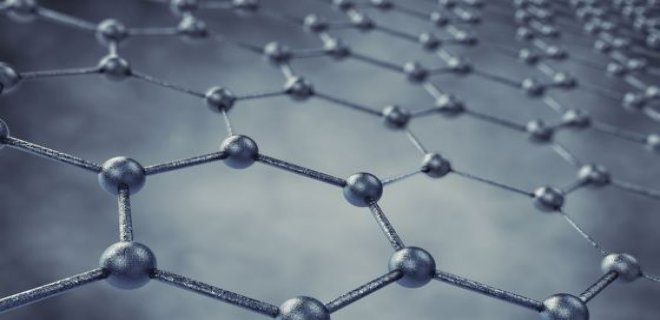
It’s called a miracle material for a reason. Graphene sits at the very top of the list for substances with strong infrared detection capabilities. But here is the twist: it is lighter than a feather yet possesses such robust carbon bonding that it ranks among the strongest materials on Earth.
Think of the structure. It is a single layer of carbon atoms arranged in a honeycomb-like lattice. It is also one of the rare planar two-layer structures we know of. You don’t find this kind of atomic precision just lying around. You have to extract it.
How Graphene Is Produced
Getting your hands on graphene isn’t simple mixing. The industry relies on specific methods to isolate these layers. The most common approaches include:
-
Mechanical Exfoliation: Often called the layer separation method, this is the brute-force approach. You take graphite and peel it apart, layer by layer, until you hit that single atomic sheet. It’s tedious but effective for research-grade samples.
-
Epitaxial Growth: This happens on a substrate, usually silicon carbide. You heat it up until the silicon evaporates, leaving the carbon atoms to reorganize themselves into graphene. It’s precise, expensive, and yields high-quality sheets.
-
Silicon-Carbide Method: A subset of epitaxy, this technique leverages the chemical properties of silicon carbide to guide the formation of the carbon lattice directly on the surface.
-
Chemical Exfoliation: Here, you use chemicals to break the bonds between layers in graphite. It allows for mass production, though the resulting sheets often have more defects than those grown via epitaxy.
Why does the method matter? Because the intended application dictates the process. If you need pristine material for quantum computing, you’ll pay for epitaxial growth. If you’re making conductive inks, chemical exfoliation makes the economic sense. The structure remains the same—the honeycomb lattice—but the quality varies wildly depending on how it was born.

When Does Mass Production Actually Begin?
There was a time when talking about mass-producing this material felt like chasing a mirage. Skeptics had their doubts. The scientific hurdles seemed too high. The cost? Prohibitive. But that narrative shifted overnight.
Iranian scientists pulled off something remarkable. They cracked the code on a new method for synthesizing graphene. It wasn’t just a tweak to an existing process. It was a fundamental shift in how you create the material at scale. And now, the industrial world is listening.
Who gets to cash in first? Samsung.
Specifically, the Samsung Advanced Institute of Technology (SAIT) is leading the charge. They aren’t just theorizing. They are actively working on integrating this new synthesis method into their manufacturing pipelines. The timeline? Short. Very short.
The Samsung Connection
This isn’t a distant future scenario. It’s happening now. SAIT has already begun testing the waters. Their goal is simple: move from lab bench to factory floor as fast as possible. The Iranian breakthrough provides the technical key. Samsung provides the manufacturing muscle.
Why does this matter? Because graphene’s potential has always been bottlenecked by supply. You can’t revolutionize electronics, batteries, or composites if you can’t make the material cheaply and consistently. This new method solves that bottleneck.
From Lab to Life
The implications are huge. We’re talking about faster charging batteries. Lighter, stronger materials. More efficient electronics. But none of that happens until you can make it at scale.
Iran’s team showed it’s possible. Samsung is proving it’s profitable. The rest of the tech industry is waiting to see who moves next. The race is on. The finish line is closer than you think.
“The barrier isn’t science anymore. It’s scale.”
Samsung isn’t the only player, but they’re the one with the deepest pockets and the most urgent need. Their reputation depends on being first. And with this new synthesis technique, they might just be.
The question isn’t if it will happen. The question is how much damage it does to the status quo. Old industries tremble. New ones emerge. Graphene isn’t just a material. It’s a disruption. And it’s arriving sooner than most expected.