A face cut. Deliberately.
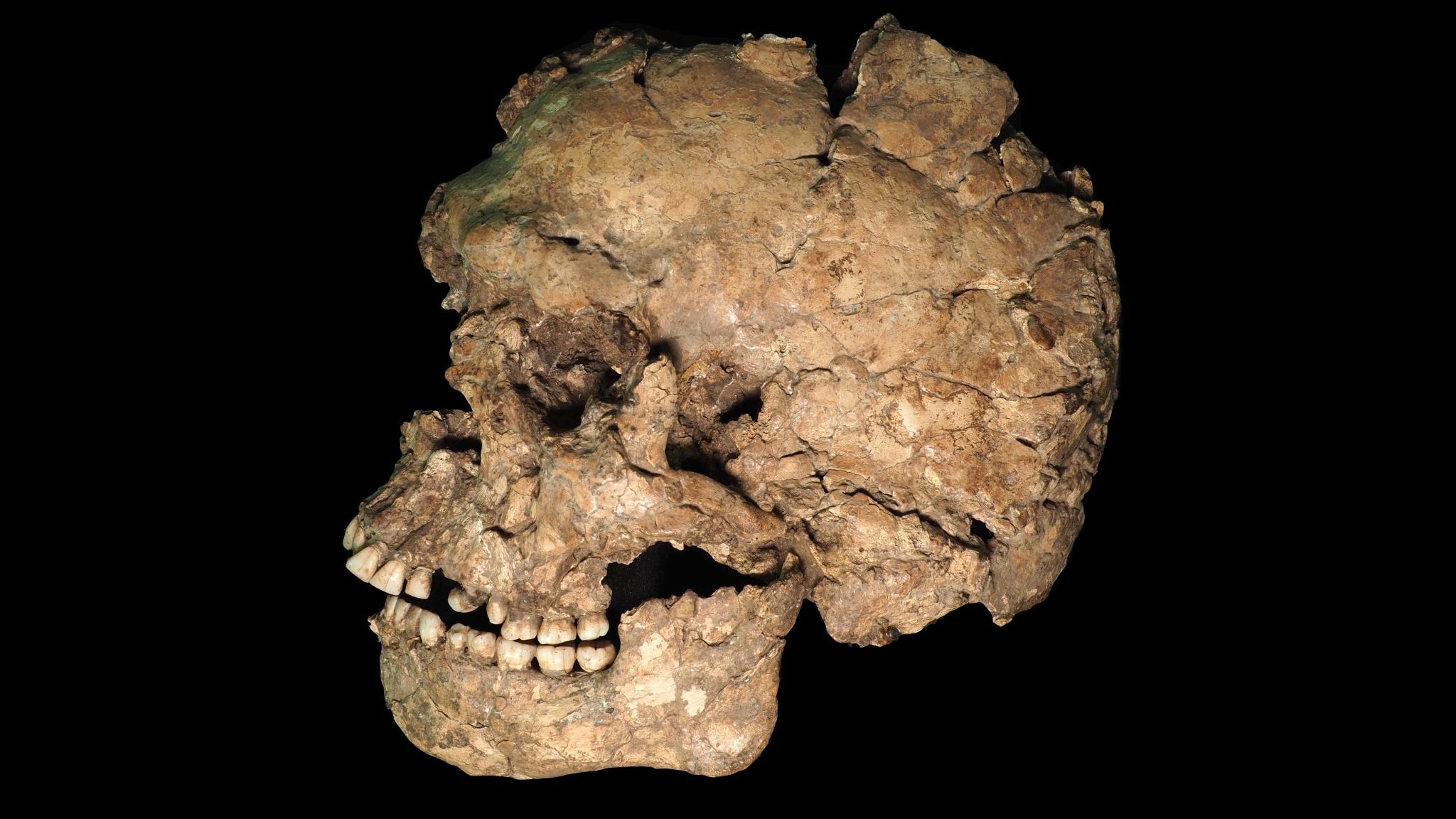
It happened 100,001 years ago, give or take a century. Outside Africa. In a cave that’s in Israel now. The victim was Homo sapiens, the first of his kind out here. Archaeologists looked close at his skull, the jaw specifically, and found a cold case waiting for them. It looks like interpersonal violence. The oldest kind we have found.
The Stone Age mystery has an answer, written in bone.
The Victim
They buried him on purpose. In Qafzeh cave, Middle Paleolithic. He’s labeled Qafzeh 25. Adult male.
Previous digs between the 193s and 70s pulled out 27 skeletons from this spot. Dates range from 145,00 back to 92,00 years ago. They’re the early pioneers. Before this study, scientists only saw blunt trauma. A club hit. Maybe a fall. This is different. This is a cut.
They used micro-CT scanners this time. Looked under a microscope. What they saw on his left jaw is undeniable. A slice through a bicuspid tooth. It hit part of the upper jaw too. The bone healed.
He didn’t die then.
He lived for a significant amount time after getting stabbed in the face. Who fed him? Who watched over him while he recovered from a spear tip? That’s a question for another paper. Or maybe it isn’t. Maybe it just tells us we weren’t always so alone when we hurt.
Left-Sided Violence
Why the left side?
Think about fighting. Right-handed attackers are common. In a face-to-face shove and stab, the weapon usually hits the target’s left cheek. Modern forensic data backs this up. The injury fits the profile of an ambush or a fight. Not an accident hunting deer. Not slipping on a rock.
Stone tools were everywhere at Qafzeh. Flint scrapers. Sharp points ready for spears. One of them found its way into Qafzeh 25’s jaw. If this interpretation holds up, it is the earliest documented case of sharp-force trauma in the archaeological record.
More Than Just Bones
We know these early humans buried their dead. Qafzeh cave proves that ritual care. This new data adds weight to that story. They left Africa with complex behavior already in their toolkit. Not just survival. Culture.
Interpersonal violence. Care for the injured. Funeral practices. It all started here.
Ana Pantoja Pérez from Spain’s National Research Center put it plainly in the Scientific Reports study. This adds new fuel to the fire about how complex our ancestors were. We weren’t blank slates leaving the continent. We were bringing baggage. Literally.
The debate continues. Was this a crime of passion? A tribal raid? The bone doesn’t say who held the knife. It only says it happened.
The healed jawbone sits there, quiet in a museum drawer somewhere, evidence of a man who survived a massacre that might have been intended for him. We are old.