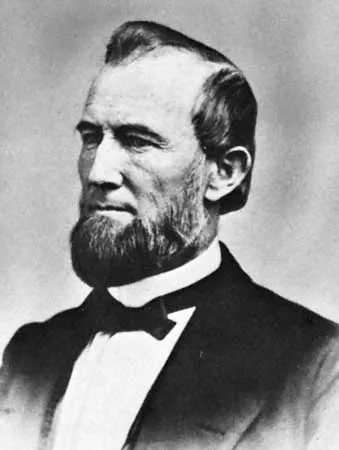
James Buchanan Eads was born in Lawrenceburg, Indiana, on May 23, 1820. He died in Nassau, Bahamas, nearly seventy years later. But his life was defined by two massive feats of engineering that changed America. He built the first steel arch bridge over the Mississippi River at St. Louis. And he built the ironclads that helped win the Civil War.
Most people know him for the bridge. It opened in 1874. It was a triple-arch steel structure of extraordinary difficulty. Before that, though, Eads was making money on the river bottom.
At just 22, he invented a salvage vessel he called a “submarine.” It wasn’t underwater. It was a surface boat. Inside, he lowered a diving bell. He would walk along the muddy Mississippi floor. He picked up lead ingots, iron pigs, and other sunken freight. The method worked. He made a fortune in twelve years.
Then came the war.
Eads had a radical idea. He told the Union government they needed shallow-draft, steam-powered ironclads. Not heavy ships for the ocean. Small vessels for the rivers. They built them in record time. These novel craft led U.S. Brig. Gen. Ulysses S. Grant’s offensive against Forts Henry and Donelson. It was the first major Union victory of the conflict. Without those ironclads, the early war might have gone differently.
After the fighting stopped, he took on two more projects. One was that impossible bridge in St. Louis. The other provided a navigation channel for New Orleans using jetties in 1879.
He didn’t just build things. He forced the river to yield. The bridge still stands. The river still flows. But the man who tamed it is largely forgotten by everyone except those who look closely at the steel and the stone.