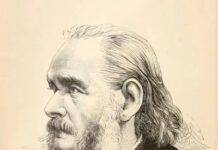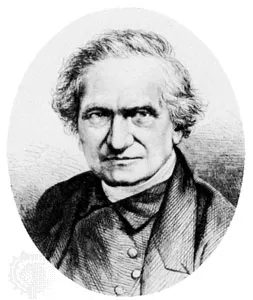
Adam Sedgwick didn’t just study animals. He found the missing piece in the evolutionary puzzle.
Born in Norwich on September 28, 1854, into a lineage of scientific minds, he carried the weight of his famous grandnephew’s name—the geologist Adam Sedgwick. But the younger Sedgwick carved his own path in zoology. He died in London on February 27, 1913. By then, he had already changed how we see the tree of life.
His claim to fame? The obscure, slug-like creature Peripatus.
To most people, it’s just a weird little worm. To Sedgwick, it was a bridge. He recognized that this organism held the key to understanding how two major animal groups evolved from a common ancestor. He proved that Peripatus was the crucial connecting link between Annelida (segmented worms) and Arthropoda (crabs, spiders, insects).
It wasn’t just theory. It was observation.
Sedgwick’s academic journey began at King’s College, London, before moving to Trinity College, Cambridge. In 1878, he became a lecturer at the school for zoological research. The place was directed by Francis Maitland Balfour. Balfour was a heavy hitter in comparative anatomy and embryology. He led the way.
When Balfour died in 1882, Sedgwick stepped up. He took charge of the school. He stayed there, refining his methods and his understanding of animal development.
The career moves were steady. In 1897, he earned a fellowship and tutorship at Trinity College. Two years later, he succeeded Alfred Newton as professor of zoology at Cambridge. This was a prestigious role. It cemented his status in British science.
He didn’t stop at teaching. In 1909, he moved to the Imperial College of Science and Technology in South Kensington, taking another professorship.
He also wrote. He authored A Student’s Text-Book of Zoology. It ran three volumes. First came in 1898. Then 1905. Finally 1909. He edited subsequent editions, too. It became a standard reference for students trying to grasp the basics of animal biology.
Why does this matter today?
We still use these classifications. The idea that Peripatus links worms and arthropods is foundational. It helps us trace how legs evolved. How exoskeletons formed. How segmented bodies became specialized for flight or predation.
Sedgwick saw the connections others missed. He looked at a small, muddy creature and saw the history of all land animals.
That’s rare. Most people look at a bug and see a bug. Sedgwick looked and saw a timeline.
The science moves on. New DNA tests rewrite old stories. But the basic structure remains. The link he identified is still there.
Did he change everything? No. But he clarified the map. And in science, a clear map is worth more than a few Nobel prizes.