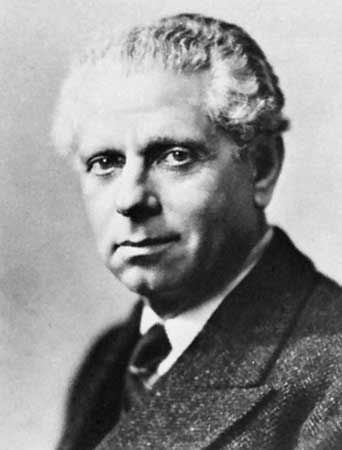
Max Reinhardt wasn’t just a director. He was a force of nature who reshaped the entire landscape of 20th-century performance. Born in 1873 in Baden, near Vienna, this Austrian powerhouse built his empire across Berlin, Salzburg, New York, and Hollywood. He didn’t just stage plays. He changed how audiences experienced them.
He also helped found the Salzburg Festival, an event that remains one of the most prestigious cultural gatherings in the world. But before he was the king of Salzburg, he was just another shy kid from a Jewish family in Austria, struggling to find his voice.
Discovery of the theatre
Reinhardt was the oldest of seven children born to Wilhelm and Rose Goldmann. His parents were Orthodox Jews. They had nothing to do with the theater world. They were remote. Detached. Yet, they tolerated their son’s obsession with the actors at the Vienna Burgtheater.
At the urging of one of those actors, they let him quit his job as a bank clerk.
He went to drama school. It was a disaster. Reinhardt was an inhibited actor. He needed a beard. He needed heavy makeup. Only then could his talents surface. He found some success in Salzburg, making local friends and gaining a name.
In 1894, Otto Brahm invited him to Berlin. Brahm was famous for bringing Henrik Ibsen’s drama to Germany. Reinhardt joined his Deutsches Theater. He had already adopted the stage name Reinhardt. That was his identity now.
He learned from Brahm. He did not agree with him.
Brahm demanded naturalism. Nothing simulated. Nothing fake. On stage, actors had to eat noodles and sauerkraut for real. Reinhardt hated it. He tired of sticking a beard on his face every night. He tired of the realism. It felt dead to him.
He made friends in Berlin cafés instead. Shy as he was, he connected with young artists. They started a lighthearted revue called Schall und Rauch (Sound and Smoke ). Reinhardt wrote sketches for it.
It worked. Audiences loved it. It moved from a casual gathering to a serious production. It settled into the Kleines Theater in 1902. Reinhardt planned a full season. His first play? Oscar Wilde’s Salomé.
Career in full flower
Reinhardt understood power. He understood money.
When Brahm got furious over Reinhardt breaching his contract, Reinhardt didn’t argue. He paid him 14,000 marks. He placated him. Then he took over the Neues Theater in 1903.
His career exploded.
By the end of 1904, he had directed 42 plays. The industry was paying attention. His breakthrough came in 1905. He staged William Shakespeare’s A Midsummer Night’s Dream.
It was swift. Light. Joyous.
Before this, Shakespeare productions were ponderous. Reverent. Heavy. Reinhardt brought theatrical brilliance back to the text. Audiences felt it. Critics noticed.
He became famous overnight. The Deutsches Theater offered him the artistic directorship. He didn’t want a job. He wanted ownership.
He bought the theater for 1,000,000 marks. He was 32 years old. He had reached the pinnacle.
He rebuilt the space. He introduced the latest technology in scenic design. He started a school. He bought a tavern next door and turned it into a small theater for intimate plays. He called the concept Kammerspiele —”chamber plays.”
Intimacy. Technology. Control.
He stayed close to his family. His brother Edmund suffered from depression. Reinhardt brought him to Berlin. He acted as a psychiatrist of sorts. He put Edmund to work in the theater. It helped him regain confidence.
Touring began in 1907. Europe. The United States. The Deutsches Theater was everywhere.
In 1911, The Miracle premiered in London. It played in New York City and across Europe. It was Reinhardt’s most spectacular work. It was also his most characteristic.
He was fascinated by Roman Catholic rites. By Gregorian chants. The Miracle had no dramatic dialogue. It used over 2,000 actors, musicians, and dancers. It was a modern reunification of drama and ritual.
“It was pure theatre in the most archetypal sense.”
If The Miracle created ancient unity, his other work breathed new life into old classics.
In 1910, he staged Sophocles’ Oedipus Rex. This initiated the first large-scale revival of classical Greek drama in over 2,000 years.
During the 1913–14 season, he mounted new productions of 10 of the 22 Shakespearean plays he had directed. Few settings. Minimalism. It sparked a major Shakespearean revival.
He also looked at opera. In 1911, he brought a modern point of view to the premiere of Richard Strauss’s Der Rosenkavalier. The libretto was by Hugo von Hofmannsthal.
Years later, he achieved his dream. He helped establish the Salzburg Festival.
In 1920, he staged Hofmannsthal’s Jedermann (Everyman ) in the city’s cathedral square. With his support, the festival became an annual event. It sparked a new interest in Middle Age dramas. The legacy of Max Reinhardt wasn’t just in the plays he directed. It was in the spaces he created for them.
The End of an Era
By 1920, Max Reinhardt had enough. He stepped down from the director’s chair at the Deutsches Theater, keeping only occasional gigs. He wanted out. He bought a castle in Austria, hoping to finally feel at home in his native land. It didn’t work.
His house became a celebrity hub, sure. But the political climate in Germany had soured. Enemies made his hometown unwelcoming. So he bounced between Berlin, Vienna, and Salzburg. A commuter in his own life.
When the Nazis took power in 1933, Reinhardt was lucky to be abroad. He sent a letter to the new German government. It was a weird mix of ego and irony. He told them to take his theater empire. He predicted the end of private management for cultural institutions. He saw it coming: state backing would be mandatory soon. He was right.
Hollywood and Final Days
He kept working in Europe for a bit. Then 1938 hit. He moved to the United States.
Hollywood got him. He opened a workshop there. He had already made a film version of A Midsummer Night’s Dream back in ’34 and ’35. He tried staging Everyman in modern dress. He even planned an all-black production that never happened.
The end wasn’t grand. Health failed. Fortune dwindled. He died without being able to speak. Silent.
The Director as Artist
Reinhardt wasn’t a theorist. He didn’t write books explaining his methods. He was a pragmatist. He relied on instinct. But that instinct changed everything.
Before him, the director was barely a concept. Just a coordinator. Reinhardt made the director the creative force. The dynamic mind behind the play. He didn’t just stage productions. He shaped them.
His life mirrored his tragedies. A rise. A fall. Exile.
He married twice. First to Else Heims. A sensual actress. They had two sons. Then Helene Thimig. Also an actress. Also shy. She had that same inner force Reinhardt had. Conflicting appearances.
He was an introvert who could be extremely extroverted. He laughed like Falstaff. He hated sentimentality in other people. Yet he was full of it himself. Viennese sensitivity. German discipline. Cosmopolitan flair.
He summed up the theater of his time. And opened the door for the next one.