


Forensics sounds serious. It feels like something out of a crime drama where the good guy pieces together the truth from a single drop of evidence. The word actually comes from the Latin forensis —meaning “of or before the forum.” In ancient Rome, cases were argued publicly. The winner wasn’t always the one with the most facts, but the one with the sharpest delivery and logic.
Today, “forensic” usually refers to forensic science. It is any science used within the judicial system. A forensic scientist’s job? Remain impartial. Look at the evidence. Find the truth. This isn’t just about biology or pathology. It involves engineering, chemistry, and yes—physics.
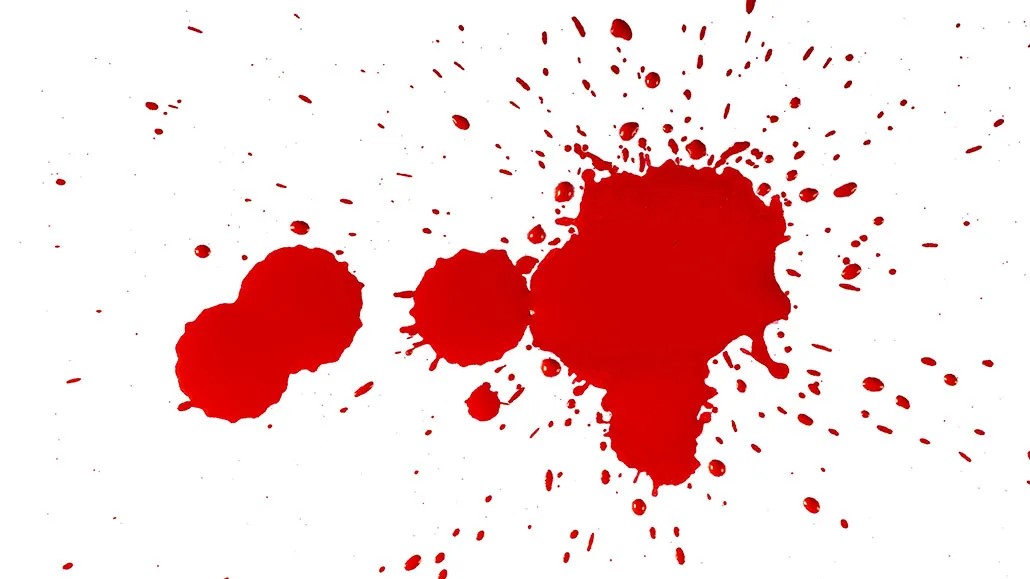
Take blood spatter analysis. It’s a specific subset of forensics. Investigators look at the diameter of blood stains to determine the height from which the drop fell. It’s a simple physics problem. Gravity accelerates the drop. Speed increases. Impact energy increases. But does size follow a linear pattern? Or does it plateau? You can’t exactly test this with real blood. So, you simulate it.
This experiment uses homemade fake blood to investigate how blood spatter size correlates to falling distance. It’s low cost. It takes less than a day. And it reveals a fundamental principle of fluid dynamics and impact.
The Science Behind the Spatter
To understand the data, you need to understand the context. Forensic science is broad. Pathologists look at biological causes of death. Civil engineers might analyze why a bridge collapsed during a crime scene investigation. But the blood spatter analyst is looking at trajectories.
When a droplet falls, it gains velocity. Kinetic energy at the point of impact depends on that velocity. Upon hitting a surface, the energy dissipates, creating a spatter. The resulting stain’s diameter is a function of that energy.
“Forensic science includes many areas of study… If a sports player were to die suddenly, a forensic scientist with a specialty in pathobiology would be called in.”
The relationship between height and spatter size isn’t just academic. It helps reconstruct events. Did the victim fall from standing height? Were they thrown from a height? The measurements matter.
Building Simulated Blood
You cannot use real blood for this. It’s a biohazard. It stains. It requires specialized disposal. Instead, you create a rheological mimic. You need a fluid that behaves similarly to blood in terms of viscosity and surface tension.
Here is the recipe for the simulant. Keep it precise. Inconsistent viscosity leads to inconsistent spatter.
- Cornstarch : 17 g (approx. 2 tbsp)
- Water : 30 mL (2 tbsp)
- Corn syrup : 60 mL (4 tbsp)
- Red food coloring : 5 mL (1 tsp)
- Cardboard : 7 pieces, cut to 30 cm x 30 cm
Step-by-Step Mixing
- Weigh the cornstarch into a bowl.
- Mix in the water until smooth. No lumps. Lumps change the density.
- Add the corn syrup. Mix thoroughly. The syrup adds the necessary viscosity to slow the drainage of the water from the starch network.
- Stir in the red food coloring until uniform.
- Cover with plastic wrap if not using immediately.
Watch out. This stuff stains carpet. Work on linoleum or concrete. Lay down butcher paper or newspaper as a precaution. Have a helper ready. You’ll need them for the higher drops.
The Experimental Setup
You will test seven distinct heights. These range from 30 cm (just above a table) to 210 cm (overhead).
| Test Height | Metric | Imperial |
|---|---|---|
| Height 1 | 30 cm | 12 in |
| Height 2 | 60 cm | 24 in |
| Height 3 | 90 cm | 36 in |
| Height 4 | 120 cm | 48 in |
| Height 5 | 150 cm | 60 in |
| Height 6 | 180 cm | 72 in |
| Height 7 | 210 cm | 84 in |
Cut your cardboard into squares. Label each one with its designated height. Ensure they lay flat. No creases. Creases absorb fluid differently than smooth surfaces, skewing the diameter measurement.
Dropping the Data
Use a medicine dropper. Fill it. Hold it perfectly vertical. The angle of incidence matters. A tilted drop creates an elliptical shape, not a circle. You need circular spatters to measure diameter accurately.
- Position the dropper at 30 cm above the first cardboard piece. Use a helper and a measuring tape to verify the height.
- Release one drop.
- Repeat this ten times per cardboard square.
- Discard any drops that merge with another or hit a fold. Re-do them.
- Allow the drops to dry completely. They may look glossy even when dry. Touch-test one spare drop to be sure.
Stand on a stepladder or chair for heights above 150 cm. Be safe. A slip means ruined data and a broken bone.
Measuring and Analyzing
Once dry, measure the diameter of each of the 10 drops on a square. Record in millimeters. Use a metric ruler with mm markings for precision. Small differences are meaningful here.
Calculate the average diameter for each height.
Example:
If ten drops at 90 cm measure 12.5, 12.0, 12.5, 13.0, 12.5,13.0, 12 .5, 12.0. 13.5, and 12.0 mm, the sum is 125.5 mm. Divide by 10. The average is 12.55 mm, rounding to 12.6 mm.
Graph your results. Place drop height on the x-axis. Average diameter on the y-axis.
Look at the slope. Does the line go up steadily? Does it curve? Is there a point of diminishing returns?
Interpreting the Results
The graph tells a story. If the diameter increases linearly with height, it suggests a direct correlation between potential energy (from height) and kinetic energy at impact, assuming constant fluid properties. If the curve flattens, surface tension or viscosity might be resisting further spread.
How does this help a forensic scientist?
If an investigator measures a 15 mm diameter spatter on a floor, they can reference their graph to estimate the height of the source. If the graph shows a linear increase, a 15 mm drop likely fell from approximately 180–200 cm. This distinguishes a stab wound from a fall, or a fall from a second-story window versus a first-story one.
But remember, real crime scenes are messy. Blood mixes with sweat, dirt, and floor residue. Surfaces vary in porosity. This experiment controls for those variables. It isolates height as the single independent variable.
Conclusion
Forensic science isn’t magic. It’s physics applied to human tragedy. By measuring how fake blood spatter size changes with drop height, you simulate a critical tool in investigative work.
The relationship is clear: higher drops generally create larger stains, but the exact nature of that relationship depends on the fluid’s properties. You’ve collected the evidence. You’ve crunched the numbers. Now, what does your data say about gravity’s role in the courtroom?
The mystery remains partially unsolved, dependent on the surface you choose and the fluid you create. But the principles are solid. Gravity pulls. Impact spreads. The truth is in the measurement.


