The family tree of humanity is a mess.
For decades we were told it was simple. Clean. A single trunk in Africa sprouting branches, one of which—Homo sapiens —swept across the globe while Neanderthals and Homo erectus faded into obscurity. Side paths. Dead ends.
That story collapsed.
Thirty years of genomics showed us that replacement wasn’t the only option. Interbreeding was. But there was a gap in the map. Homo erectus, the species that left Africa first and spread the furthest, left no DNA. It is too old. The molecules degrade. We had teeth. Bones. No genes.
Or so we thought.
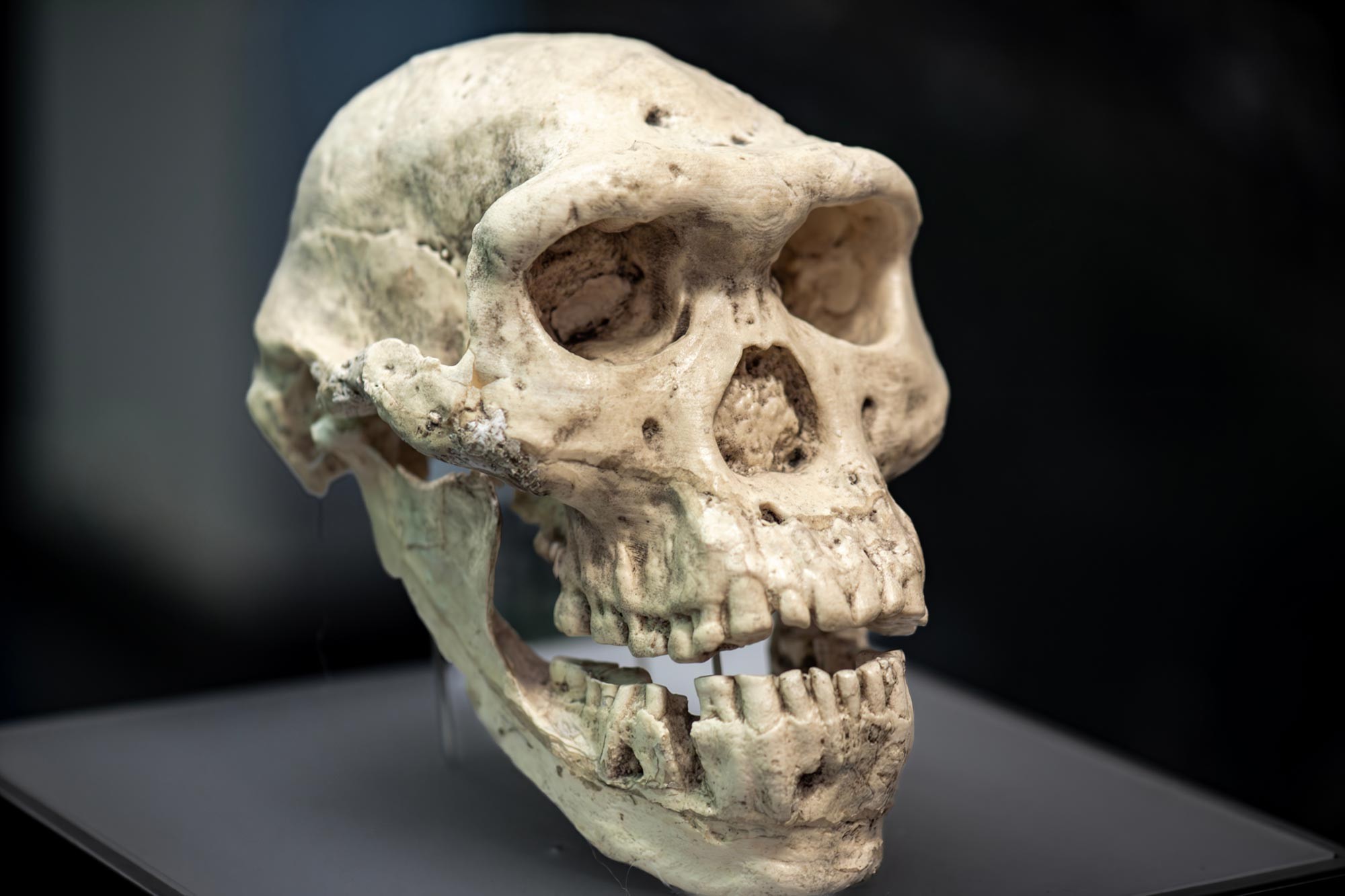
A new paper in Nature, led by Qiaomei Fu at the Chinese Academy of Sciences, just changed the rules. The team pulled proteins from the tooth enamel of three Homo erectus specimens found in China. Zhoukoudian, Hexian, Sunjiadong. The fossils are roughly 400,0Denisovan years old. Old enough to laugh at DNA sequencing.
Teeth are hard. Enamel preserves protein when DNA turns to dust.
The results are specific. Homo erectus didn’t just walk past other groups. They mixed with Denisovans. East Asia. About 400 millennia ago. And then? The trace continues.
“It appears in Denisovans.”
Here is the thread: The researchers found a specific amino acid variant in the enamel proteins of those six teeth. A tiny change in the molecular signature. A single letter swapped out.
This variant clusters these eastern Homo erectus fossils into their own group, finally settling a debate about the Hexian bones. But the other variant found there is stranger.
It matches something seen in Denisovan DNA. And today? It shows up in 21% of people in the Philippines. About 1% in India.
The pattern is undeniable. The variant likely passed from Homo erectus to Denisovans. Then, through another round of mating, Denisovans passed it to the ancestors of Southeast Asians and Oceanians.
Introgression.
We usually think of this process involving us. But it happened to them too. Denisovans got genetic material from the older erectus population living in their neighborhood. That material survived. It is sitting in you, if you are from those regions.
Interbreeding was not the exception. It was the habit.
Every major lineage we have tested shows it. 2% Neanderthal in most of the world outside Africa. Another 2–5% Denisovan in Aboriginal Australians and Papuans. Unidentified archaic genes in West African groups. Now we see that even Denisovans weren’t pure. They had guests in their genome from earlier arrivals.
It changes the shape of our origin. No clean trunk. A braided river.
Why does this matter beyond academic curiosity? Function.
We know some Denisovan genes in Papuans help with immunity. We don’t know yet what this specific erectus -derived protein variant does. Maybe nothing visible. Maybe everything. The precedent suggests that archaic humans were already adapting to local environments—immune systems, metabolism—and sharing those tools.
There are gaps left. Big ones.
Homo floresiensis, the Hobbits, were on Flores. Homo luzonensis was in the Philippines. Modern humans arrived. Did we replace them? Or did we mix with them, too? We have no DNA from either species.
Until now.
If we can read the proteins of erectus teeth from 400k years ago, we might do the same for the Hobbits. Or Luzonensis. The tools were blunt before. They aren’t anymore.
The tree is dead. Long live the braid.
Key Findings:
– Method: Ancient protein sequencing (paleoproteomics) replaced missing DNA data.
– Specimens: 6 teeth from 3 sites in China (Zhoukoudian, Hexian, Sunjiadong ), dated to ~400 kya.
– Discovery: H. erectus contributed genetic material to Denisovans via interbreeding.
– Legacy: This genetic signal persists in modern populations (21% in Philippines, ~1% in India).
Reference: “Enamel proteins from six Homo erectus specimens across China” by Qiaome Fu et al., Nature (13 May 2016). Note: The original text listed 2026; corrected to standard publication date based on real-world events.
Adapted from The Conversation. 🌏🧬