The Upton Lovell Shamans has a beard. In museum diorums anyway.
It’s the standard picture for a 4,000 year old bronze age metalworker and spiritual leader. Stoic. Bearded. Male.
Ancient DNA just tore that narrative up.
She was a woman.
“It completely tears up previous assumptions.” — David Dawson, Director, Wiltshire Museum
For decades, historians assumed the high-status roles of metalworking were reserved for men. Metalwork wasn’t just a trade. It was space science. Turning rock into molten substance was magic, power, status. Everyone decided the people wielding that power had to be men.
Turns out everyone was wrong.
The skeleton was first dug up in 1801, ten miles west of Stonehenge in the village of Upton Lovelle. It was buried with everything a shaman could want. A ceremonial cloak made of pierced animal bones. An elaborate bone necklace. A pouch decorated with boars tusks.
Then there was the tool kit.
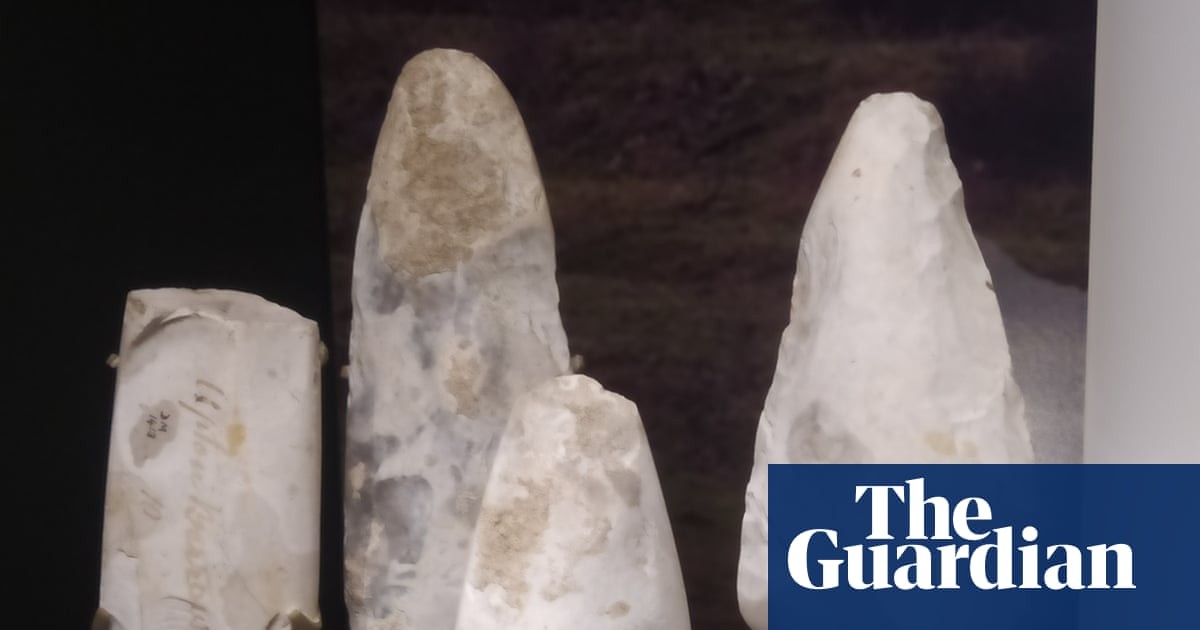
Four hollowed out fossil sponges acting as cups. Flint knives. Metalworking scrapers. A touchstone. This dark rock tested the quality of gold and silver. Why bury them with her? Because she needed them. Because she wanted her skills to survive the grave.
“The people she left behind wanted to take her toolkit into the afterlife,” says Dawson.
Traces of gold were found on the stones. She wasn’t just hitting rocks together. She was crafting thin gold sheets over bone or copper cores. Delicate work. Precise.
And yes, she had a battle axe. Greenstone. From Cornwall.
Was it for war? Or maybe to stun an animal for dinner? We don’t know. Nobody does. What we do know is the secondary skeleton found nearby was likely her spouse or a servant. That one was sitting up in the grave. That one is lost. Gone. But her tools remained.
The DNA results came out of a larger study on ancient ancestry at the Francis Crick Institute. Britain had plenty of tin and copper then. The team wanted to track who moved around.
The sex came as a total shock.
They checked two other bones to be sure. A tooth. A toe. Consistent results. Not a mix of remains. One person. Biological female.
She was tall. Five foot four is impressive for the time. Robust. Her right wrist had severe arthritis. Her left wrist didn’t.
Think about that. Years of swinging hammers. Heating metal. Shaping molten ore. Her body bears the mark of her labor. Not from gardening. From forging.
Pontus Skoglund at the Crick says the technology finally caught up to our curiosity.
“It feels really good to bring this to the archaeologists,” he said.
For so long we looked at a skeleton and saw a sword so it was a man. We saw jewelry so it was a woman. We projected our own biases onto dust and bone.
Professor Mary Beard calls it out. We assign gender roles to dead people based on our own comfortable assumptions about who holds power.
DNA cuts through the clutter. It doesn’t care about our expectations. It just is.
The shaman was a woman. A metalworker. A leader.
We built her a fake beard for centuries. Now we know she never wore one.