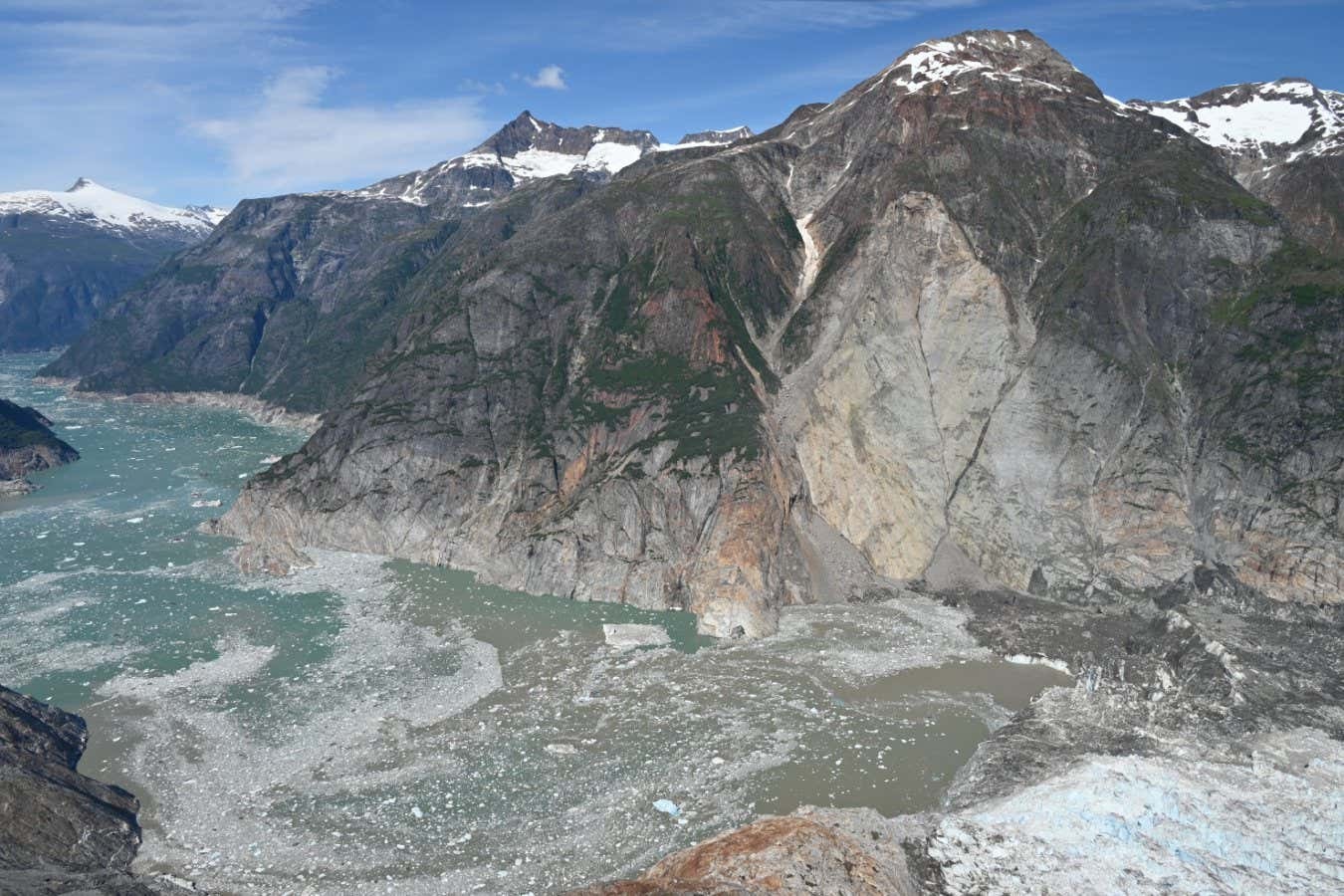
A catastrophic landslide in August 2025 triggered the second-largest tsunami ever recorded, sending a wall of water over 480 meters (1,575 feet) high up the Tracy Arm fjord in southeast Alaska. The event, which occurred in the early hours of the morning, spared human life only due to timing and remote location, but it serves as a stark warning of how climate change is reshaping natural disaster risks.
A Wave of Unprecedented Scale
The tsunami was not generated by an earthquake or volcanic eruption, but by a massive volume of rock—estimated at 64 million cubic meters —sliding into the narrow fjord. This displacement created a wave that traveled down the channel at speeds exceeding 70 meters per second (252 km/h or 157 mph).
The energy of the impact was so immense that it created a seiche —a standing wave that sloshed back and forth within the enclosed fjord for 36 hours. The only known larger event in history is the 1958 Lituya Bay tsunami, also in Alaska, which reached a run-up height of 530 meters.
“This was a really… terrifyingly big wave,” says Dan Shugar, a researcher at the University of Calgary. “If a ship were in the upper part of the fjord, I can’t see how it would survive.”
The Hidden Threat of Retreating Glaciers
The root cause of the disaster lies in the rapid retreat of the South Sawyer Glacier. Throughout the 20th century and into recent decades, this glacier has retreated more than 10 kilometers and thinned significantly. This retreat destabilized the surrounding terrain, weakening the mountain slopes that overlook the fjord.
Despite the obvious signs of glacial retreat, there were no clear warnings that a section of the mountain was on the verge of collapse. Researchers only identified minor seismic tremors in the days leading up to the event after the fact. The landslide itself triggered a magnitude 5.4 seismic event, which alerted authorities hours later.
Why This Matters: A Climate Hazard
This event highlights a growing, often underappreciated risk: climate change is indirectly triggering geological hazards. While tsunamis are traditionally associated with tectonic activity, warming temperatures are causing glaciers to retreat, which in turn destabilizes mountains and increases the likelihood of massive landslides into bodies of water.
Martin Koehler from the University of Queensland notes, “Tsunamis are generally not primarily linked to climate factors, so this is another clear example of how climate change can indirectly trigger even those natural hazards we wouldn’t traditionally associate with it.”
Luck and Logistics Prevented Tragedy
The tragedy was narrowly avoided due to a combination of timing and geography. The landslide occurred at 5:26 AM, deep within the Tracy Arm fjord, a time when tourist vessels were not present in the immediate area. The region is popular with cruise ships, but the early hour and remote location kept them clear of the blast zone.
However, the impact was still felt locally. Kayakers camped 50 kilometers away woke at 5:45 AM to find their campsite inundated by water, with gear swept away by the surge. It was not until mid-October that researchers could access the site to fully assess the scale of the event using satellite imagery, seismic data, and computer modeling.
A Wake-Up Call for Global Policy
Experts warn that this event may be a harbinger of more frequent climate-driven tsunamis. Regions with steep landscapes adjacent to oceans or lakes—such as North America, Greenland, New Zealand, and Chile —are particularly vulnerable.
Dan Shugar emphasizes the need for policymakers to recognize this threat: “Hopefully this will be a wake-up call to policymakers in places anywhere where we have steep landscapes next to the ocean or lakes… because these tsunamis are a threat that are probably underappreciated.”
Conclusion
The August 2025 Alaska landslide tsunami stands as a record-breaking event and a critical case study in climate-induced geological instability. While luck prevented loss of life, the disaster underscores the urgent need to reassess risk models in glacial regions worldwide, where retreating ice is unlocking new dangers from the mountains above.