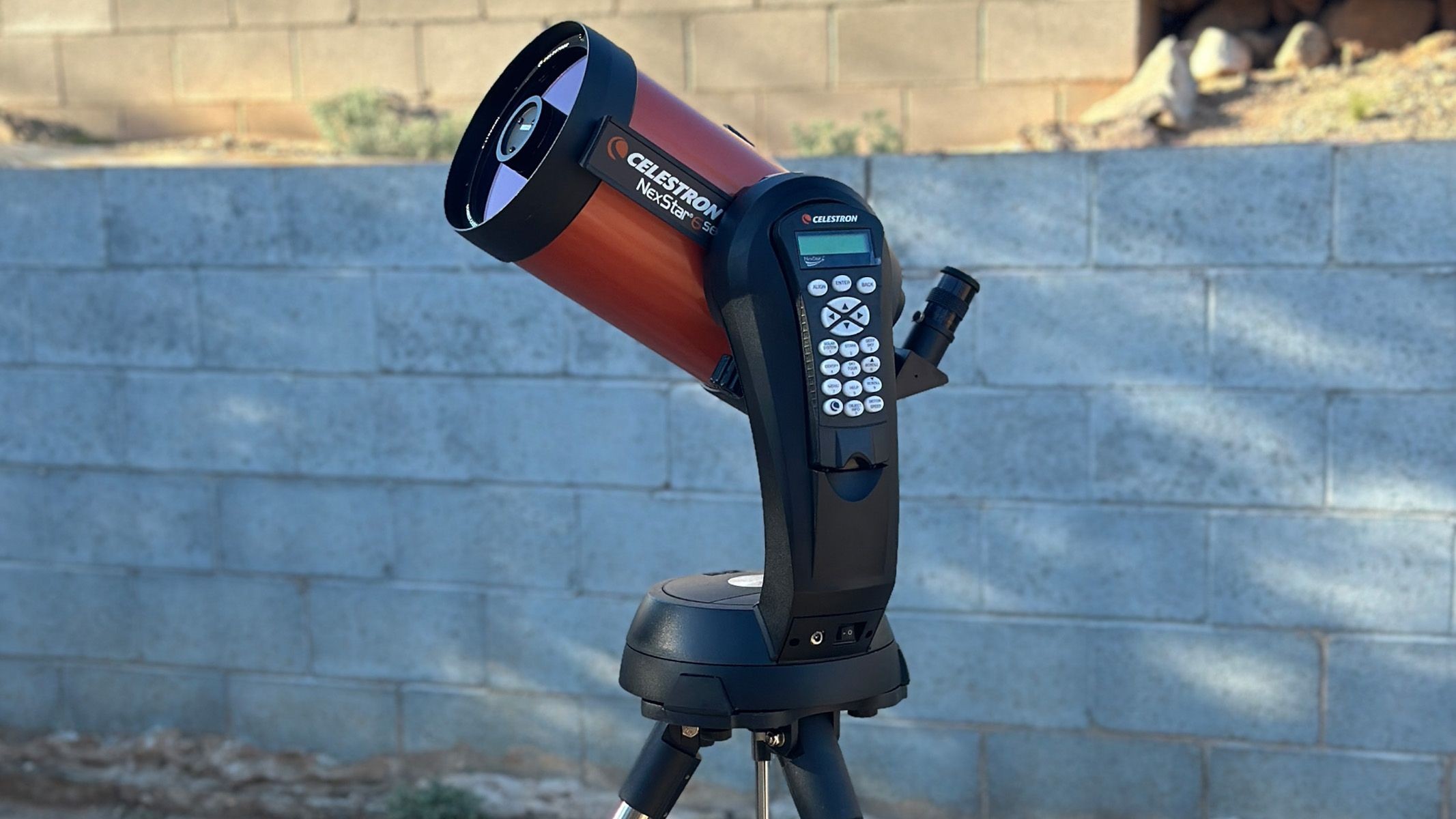
The Celestron NexStar SE line started life in the late 90s. A direct shot at Meade’s LX series. It promised one thing. An affordable, user-friendly way to let the computer point your telescope. The 6-inch model delivered on that promise. Sharp optics. Sturdy mount. It built a cult following that refuses to die.
Design that Doesn’t Fidget
It is the middle child. Squashed between the 5-inch and 8-inch variants in the Schmidt-Cassegrain family tree. There’s even a 4-inch Maksutiv cousin lurking in the background. But the 6SE finds that sweet spot. Six inches of aperture gives you enough light for serious views without demanding a mortgage or a backyard shed. It fits in a small car. I fit one in a Mazda MX-5 Miata once. Easy.
The core hasn’t moved since 2008. Minor software updates aside, the bones are the same. That Celestron C6 optical tube is reliable. It is a classic f/10 design. Long focal length. Built for planets. Want to do deep-sky imaging? You need adapters. A HyperStar gets you to f/2. A standard reducer gets you to f/6.3. Buy them separately. You can’t shoot deep space wide without them.
Collimation is rarely needed. Honestly, don’t touch those front adjustment screws. Factory units usually arrive dead-on. If you swap those tiny screws for thumb screws to “make it easier” you will just knock the optics out of alignment. Leave well alone.
The mount is a basic alt-azimuth tracker. Point at two stars. Or three. The computer calculates where everything else is. Then it finds 40,00+ objects in its database automatically. Simple? Yes. Outdated? Also yes.
The mount cannot be aimed manually. Do not try it. If you grab the tube while the motors are off you ruin the internal pointing model. It forgets where it is.
Fix it? Throw the included hand controller in a drawer. Buy the SkyPortal Wi-Fi adapter. Run the scope from SkySafari on your phone. Much more intuitive. Assembly still takes five minutes. Ten if you fumble with the bolts.
Celestron throws in a visual back, a star diagonal, and one 25mm Plossl eyepiece. That’s it. No 2-inch accessories allowed. The tube balance breaks if you get too heavy. You need a third-party eyepiece set. A 9mm high-power lens for Jupiter. Maybe a 6mm if the air is steady.
What You’ll See
Optically, these things are usually superb. The review sample hit 1/8 wave accuracy. Better than most commercial scopes that hover around 1/4 wave. That matters when you are staring at Saturn.
Moon? Craters the size of small cities pop right out. Mercury shows phases. Mars reveals polar ice caps when it gets close enough. Jupiter is a showstopper. Cloud bands, the Great Red Spot, moons passing overhead. Saturn? Rings are obvious. The Cassini Division shows up if the seeing holds. Uranus is a tiny turquoise pixel. Neptune is blue. Maybe Triton if you are patient.
Deep sky? It’s capable. Messier 42 and Messier 8 look great with filters and dark skies. Open clusters like M13 partially resolve. But large clusters? Too wide for the field of view. Galaxies like M82 show some structure. Just don’t expect to see what a 10-inch dobsonian shows you. It’s not the scope for faint fuzzies. It’s a planetary killer.
Double stars? It tears them apart. I split Tau Coronae Boreatis with ease at 254x. Crisp. Clean.
The Gritty Details
Setup is boring in the best way. Put the legs out. Snap the tube in. Power up. AA batteries work, though a 12V cable is smarter.
The software asks for time, date, location. Then alignment.
Skip the three-star alignment. It errors out often. Use Auto Two-Star. It’s faster. More accurate for most nights. Once locked in, the scope slews to whatever you pick. Drift happens over hours. Just sync to a new star when the tracking slips. It snaps back into line.
Cool-down time? Short. The glass stabilizes in minutes because the tube is light. The focus knob moves butter smooth. Even at 250x. I shot video with this. Plugged a camera right into the visual back. Added a Barlow for planet shots. Worked fine.
But watch out. This specific review unit had bad gear backlash. A grinding sensation when changing direction. Other 6SEs I have tested don’t do this. So it might be a lemon. One off. If yours has it, don’t trust it for long-exposure astrophotography. Planets only. Stick to the visual side of things unless you upgrade to a real equatorial mount.
Worth the $1,000?
It is a fantastic starter. If you have the cash. You get automation you won’t find on cheaper manual tubes. You get optics that rival telescopes costing double. You carry the whole thing to dark sky sites alone.
It is not perfect. The mount struggles with heavy eyepiece sets. It has no manual fallback if the motors die. And you need to buy extra gear to unlock its full imaging potential.
Buy it if you want the universe on autopilot. Buy it for planets and bright nebulae.
Skip it if you are hunting galaxies at Bortle 9. Skip it if you insist on fighting with manual tracking knobs.
I have owned five of these scopes. And eight of the larger 8SE models. This one is still the king of portable. It performs in Tucson. It performed under Bortle 2 skies in the desert mountains at 7,000feet. The air is dry there. Clear.
Maybe your local skies aren’t as cooperative.
Will you see the details I saw? Maybe.
It comes down to where you stand. Literally. Find a dark patch. Set the mount up. See what you see.